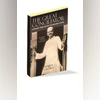
Sanjeev Chopra's book details Shastri's many contributions to nation, party

The 1965 war, Pakistan's second attempt to seize Kashmir, ended in Tashkent with Lal Bahadur Shastri returning the Haji Pir Pass - a gesture that disappointed even his family

The Great Conciliator: Lal Bahadur Shastri and the Transformation of India
Aditi Phadnis Mumbai
4 min read Last Updated : May 21 2025 | 11:04 PM IST
The Great Conciliator: Lal Bahadur Shastri and the Transformation of India
by Sanjeev Chopra
Bloomsbury
370 pages ₹899
  India’s stated policy is that there can be no international intervention to resolve the Kashmir issue — that it can only be done bilaterally. Variations on this theme range from total rejection of any international intervention to tentative acceptance of technical assistance. But the reality is that in past wars (including near-wars/skirmishes/standoffs) with Pakistan, pressure, even direct intervention, from foreign powers has contributed significantly to ending them. The most manifest evidence of this was the 1965 war that concluded with the Soviet Union-brokered Tashkent Agreement in 1966. Sanjeev Chopra captures this in a richly detailed account of Prime Minister Lal Bahadur Shastri’s negotiation of the war and the agreement that ended it. Most Indians will recognise the same words and phrases used by Pakistan then as now, especially during Operation Sindoor. The book ends with a poignant description of the circumstances of Shastri’s death in Tashkent. Mr Chopra does not forward conspiracy theories.
 
The 1965 war was Pakistan’s second effort to reclaim Kashmir after the 1948 attack by tribal raiders. The India-Pakistan border at the Rann of Kutch was undemarcated. Pakistan attacked here, seeking to leverage India’s demoralisation after the 1962 war with China and Nehru’s death in 1964. India reclaimed its territory but Pakistan launched two other operations, Gibraltar and Grand Slam, within months. India retaliated with a surprise offensive that saw tanks at the border of Lahore. Military historians say that the idea was never to hold Lahore, just to divert Pakistani forces from Kashmir. The war came to an end in Tashkent with the Soviet Union acting as midwife to the agreement. The Tashkent Agreement saw India returning the Haji Pir Pass to Pakistan, a staging point for cross-border infiltration. This was Shastri’s grand gesture, though everyone, including his wife and daughters, were disappointed by it. The book describes the conversation with his family after the agreement. In some ways, their criticism broke his heart.
 
The book details Shastri’s political evolution, his tenure as a parliamentary secretary, a UP minister and later Union minister who held a host of portfolios, including agriculture, railways and home. He gave to the Congress ideology and crafted party structures that were insulated from influence, especially monetary. But his greatest contribution was to reconcile personality and factional differences in the party: The most striking being the clash between Jawaharlal Nehru and Purushottam Das Tandon. 
 
The story of how Shastri became Prime Minister is interesting. The Kamraj Plan had just been effected. The men who were challenging him and Nehru’s perceived moves to foist Indira Gandhi on the government included Morarji Desai and Jagjivan Ram. In 1964, Shastri was made minister without portfolio. Using the analogy of a carrom board, Jagjivan Ram noted that an ailing Nehru had used Shastri as a “striker” to drive out unwanted men from the government. Although he had no portfolio, and India had a home minister in Gulzari Lal Nanda, a lot of the home ministry work was done by Shastri, including managing the conflagration that broke out in the aftermath of the “lost” relic, the Prophet’s hair, lodged in the Hazratbal shrine in Kashmir. His role as a crucial troubleshooter was noted.
 
When the resolution to appoint Lal Bahadur Shastri was put to vote in the Congress Working Committee in May 1964, it was acting Prime Minister Gulzari Lal Nanda who proposed his name, and his biggest challenger, Morarji Desai, who supported it. The background support came from K Kamaraj.
 
Shastri had some great political strengths: His background of penury and consequent austerity made him empathise with the last man. He showed that he didn’t just preach but also practiced. His implacable personal and professional integrity — his resignation as railway minister following an accident at Ariyalur — is still held up as an example; and his capacity to listen, which enabled him to reconcile differences, to the extent that pallbearers who carried his remains to the state aircraft to send them to India included USSR Prime Minister A Kosygin and a visibly distraught President Ayub Khan, the very man who had lost to India.
 
Little fault can be found with this engrossing volume but there is a mild complaint: How much research has gone into this book that was five years in its writing is evident from the footnotes and bibliography section that alone runs into more than 60 pages. While the nuances of negotiation, the bargaining over words and phrases, is described in detail, what is missing is the actual text of the Tashkent Agreement that could have been included as an appendix for context.

One subscription. Two world-class reads.

Already subscribed? Log in

Subscribe to read the full story →
*Subscribe to Business Standard digital and get complimentary access to The New York Times

Smart Quarterly

₹900

3 Months

₹300/Month

SAVE 25%

Smart Essential

₹2,700

1 Year

₹225/Month

SAVE 46%
*Complimentary New York Times access for the 2nd year will be given after 12 months

Super Saver

₹3,900

2 Years

₹162/Month

Subscribe

Renews automatically, cancel anytime

Here’s what’s included in our digital subscription plans

Exclusive premium stories online

  • Over 30 premium stories daily, handpicked by our editors

Complimentary Access to The New York Times

  • News, Games, Cooking, Audio, Wirecutter & The Athletic

Business Standard Epaper

  • Digital replica of our daily newspaper — with options to read, save, and share

Curated Newsletters

  • Insights on markets, finance, politics, tech, and more delivered to your inbox

Market Analysis & Investment Insights

  • In-depth market analysis & insights with access to The Smart Investor

Archives

  • Repository of articles and publications dating back to 1997

Ad-free Reading

  • Uninterrupted reading experience with no advertisements

Seamless Access Across All Devices

  • Access Business Standard across devices — mobile, tablet, or PC, via web or app

Topics :Lal Bahadur ShastriIndia-Pakistan conflictKashmir conflictBOOK REVIEWBook readingBS Reads

Next Story