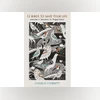
12 BIRDS TO SAVE YOUR LIFE: NATURE’S LESSONS IN HAPPINESS
Author: Charlie Corbett
Publisher: Penguin Random House
Price: Rs 599
Pages: 304
In the past few decades, as we bury our lives in concrete, urban jungles, we have come to associate nature with something distant and foreign. It is a getaway, offering respite from time to time, and not a part of our daily lives. Except it isn’t as inaccessible as we think it to be. Nature exists right outside our windows and doors, and all we need to do is to let it in or take a step outside, as Charlie Corbett affirms in his second book, 12 Birds to Save Your Life: Nature’s Lessons in Happiness.
The book is a meditation on life’s little joys and the fundamental reaffirmations that surround us, only if we take a moment to look or listen. In a moment, the “background noise” turns into an influx of chirping birds of all shapes and colours and the fragrance of leaves and flowers. Author of award-winning business book The Art of Plain Speaking (2018), Corbett spent two decades writing on business and finance from cities across the world, and as a result, lost touch with his home and life in the countryside. He reclaimed his connection to nature, birds and rural landscapes when a sudden tragedy hit his family – his mother’s terminal illness and her death.
Corbett’s journey begins not at the end of his mother’s life but at the beginning of its end. She had spent her life loving Christmas and spring, making a home of their family house with the big oak tree. In her final days, a series of headaches turn into a brain tumour, a Stage-4 cancer, and her happy, healthy image of life slowly fades away with excessive radio- and chemo-therapy. The harsh treatment takes away her spirit. Corbett remembers her fading in his book, one incident at a time. Eventually the loss becomes more permanent with her death. In this abundance of grief, Charlie learns to lean on nature. From the day of his mother’s diagnosis to the day they lose her and after, nature becomes his coping mechanism, a survival hack.
An off-season spotting of a skylark in flight, mid-song, infuses him with an “injection of hope” and the trail of life-saving birds begins. Robins, with the shortest lifespan of all the songbirds, give full measure to their time by singing and breeding all year long – living life all the time. Wrens, the small territorial birds, come together to survive the harsh winter. Their collective warmth becomes their strength. The song thrush – “the living, singing proof that life goes on” – keeps Charlie company in the dead of the night. The British bullfinch, the red-breasted bird to which he compares his father, never leaves, a symbol of attachment and commitment, to self and others. “Notorious” magpies, who steal from others’ nests but build their own at an unreachable height, make him wonder how light and darkness co-exist in life and how we often refuse to notice the latter before the light has disappeared. House sparrows are a part of Corbett’s daily life, his “extended family”, although they are fast vanishing.
He equates his memory of the mysterious house martins with the “traditional Japanese aesthetic” yugen, which translates to “a profound, mysterious sense of beauty of the universe… and the sad beauty of human suffering”. He spots an “olive-green bundle of feathers”, a chiffchaff – whose name resembles the sound it makes – in the first spring after his mother’s passing. And finally, an unexpected spotting of the exquisite barn owl, years after his mother’s passing, gives Corbett a closure and at the same time, opens him to life’s unexpected past and its unplanned future.
In his various manifestations of grief — guilt, regret, anger, loneliness, anxiety and melancholy — Corbett sources his resilience from flying birds, green landscapes and lessons from nature. He compares this “birdsong epiphany” to an ages-old Buddha’s butterfly moment; believing that hope finds us in the darkest, smallest corner of life when we need it the most, especially when we are not seeking it.
At the end of each chapter, he gives a fair idea of the birds he admires, of how they look, how they sound, what they enjoy eating, where one can find them and the chances of spotting them. One step further, he also compiles a gazetteer at the end of the book, putting together a rough “context” of nature. Although his list is not exhaustive and is mainly centred on British landscapes, it is still symbolic of the human-nature bond that is universal.
Nature’s illusion of permanence – to have been there before us and to be here long after we are gone – is reassuring compared to the brevity of our own lives. 12 Birds to Save Your Life encourages its readers to welcome it. In our modern-day hustle, we have lost our life’s compass. For us, “to become grounded” and “move with the rhythms of the natural world”, we must find our way back to nature.
In a big way, 12 Birds to Save Your Life commemorates Wildlife Awareness Week celebrated every year from October 2 to 8. It serves as a fitting reminder that we do not need to be scientists or biologists or academicians to be able to appreciate nature and its elements. Charlie Corbett takes a walk, sits in nature, breathes in the view and looks up in the sky, and he finds not just comfort but meaning. Most importantly, he finds what we lose so easily – hope, flying high.
The reviewer is a freelance writer. Instagram @read.dream.repeat