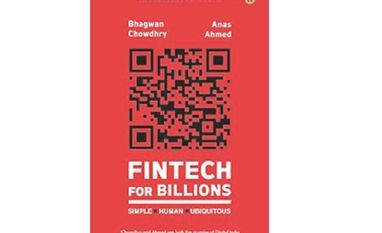
Fintech for Billions: Simple, Human, Ubiquitous
Authors: Bhagwan Chowdhry & Anas Ahmed
Publisher:Penguin Random House India
When one is not particularly elated reading a book that has endorsements from a pantheon of personalities who are widely revered and respected, it leads to serious self-doubts. Is there something that all those people have seen that is not visible to the naked eye? It is understandable that when authors ask for endorsements, they are looking for “advance praise”. It is also natural for people who are endorsing to say a sentence or two about the merits of the book, without any ifs and buts. When we look at the names who have endorsed this particular book: Nandan Nilekani, Raghuram Rajan, Duvvuri Subbarao, Krishnamurthy Subramanian, Viral Acharya, Shawn Cole, Samit Ghosh, Tamal Bandyopadhyay, and many others, it is evident that the authors have adequate convening power. So to say that the book is disappointing amid all this praise is possibly risky, not because saying something negative is dangerous, but because I might be missing something in a book that seems to be so widely welcomed .
The utopia that people from India Stack have been advocating is about having cashless, faceless, paperless and presence-less transactions. This particular book argues that that is still a far cry for a large proportion of the population, and they need a human interface — for assisting in the transactions, for providing assurance and for recourse, if needed. It argues that the customers at the base of the pyramid are technologically challenged, have low literacy and little awareness to carry out these transactions on a self-service mode. This is a point that the book repeatedly makes. This is effectively illustrated by specific instances, transactions that come from the real world.
What are the services that the technology can provide? If you can ride on the information technology highway, it provides a platform for transactions; technology has immense memory power and can remember your transactions, and with some programming also customise financial products that you may need.
What are the limitations of technology? It can replace humans as interfaces in transactions between individuals and institutions and individuals and individuals. It can replace cash, which is the fungible asset, into a secure ledger or wallet and undertake remittances and commercial transactions on a “cashless” basis. It cannot do anything beyond that. While technology provides for ease of exchange of cash or cash equivalents, it does not address the fact that people need real goods and services. This is where fintech shows its limitations.
The authors rightly argue that we need to remove the impediments that the poor may have in accessing the technology that make them included in the mainstream. They argue that this has to be intermediated through a human interface (say, a digital didi ) and the customers should be helped to overcome their diffidence in using the technology. To the extent they talk about micro loans and payments, they are still speaking to the reader. However, the moment they move into savings, targeted savings, insurance, and health- related support, they move to platitudes.
The diagnosis of the problem is specific, emanating from a real life example, with the numbers worked out. The solution to that is not adequately argued. For instance, a digital didi could work on a flexible part-time basis — for an additional income with no incremental investment. If we were to think of a digital didi as a full-time entrepreneur doing just financial intermediation, then the math has to be worked out looking at investments and opportunity costs. The authors are strong on putting the math on the problems, but extremely wishy-washy on telling us the cost of the solution they provide, and who would bear this cost at scale.
The book makes a strong argument for hands-on training on financial literacy. So much so, the authors even pledge the royalty amounts to an organisation undertaking financial literacy. The book is excellent to the extent that it touches the raw nerves of the digital evangelists. But alas, its solutions are not well thought out. It suffers from the same diagnosis they make about the limitations of tech-only solutions.
The reviewer is professor, Indian Institute of Management Bangalore. mssriram@pm.me

 "The potential and limitations of fintech")












 Connect with us on WhatsApp