Home / Book / Nipah, Covid and a teacher's learning curve
Nipah, Covid and a teacher's learning curve
Former Kerala health minister K K Shailaja's book is indescribably heart-warming , highlighting her empathy and tireless-efforts in fighting the Nipah outbreak in the state
premium
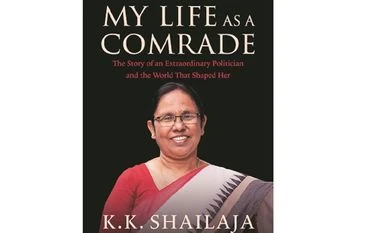
My Life As a Comrade: The Story of an Extraordinary Politician and the World That Shaped Her
5 min read Last Updated : May 10 2023 | 10:37 PM IST
It was a virus few knew about at the time or understood. When in May, 2018, three of a family in Kerala died within hours of getting a high fever, headache and encephalitis, K K Shailaja, health minister of the state, knew terrible times were ahead. The Nipah virus attacks the brain system, causes the onset of encephalitis and therefore has a terrifying 70-100 per cent mortality rate. It manifests in fruit bats but can go to other domesticated animals and from there to human beings. Consuming fruit that might have been bitten by infected fruit bats or coming into contact with secretions of any infected creature can infect an individual. But the incubation period is five to 14 days so it takes a while for the patient to show the range of symptoms. The virus is highly contagious so contact tracing has to be extensive and slippages can be fatal.
The book describes how Kerala managed to prevent the Nipah virus from becoming a full-fledged pandemic before Covid — and the costs this exacted. Ms Shailaja quotes the profoundly moving letter written by the 29-year old taluk hospital nurse Lini, who caught the virus from a patient she was tending. Feeling that her life was slipping away, she wrote to her husband who was working in Dubai: “I’m almost on the way. I don’t think I will be able to see you. Sorry. Take good care of our children. Please take Lavan and Kunju to the Gulf with you. They shouldn’t end up alone like our father did. With lots of love. Kiss”. Lini died shortly after writing this letter. Although she did not need to, Ms Shailaja invested hours in trying to understand the life and background of a family that basically contributed a martyr in the fight against Nipah. She did not delegate the job of telling Lini’s husband that he would not be able to cremate her, that he couldn’t even see her one last time, because of the danger of infection. She did it herself.
Ms Shailaja’s empathy, the book tells us, comes from a grounded upbringing, deeply rooted in values of an Indian family. She was brought up by her grandmother and uncles in a joint family where privations were borne cheerfully. Kerala was as caste-ridden and feudal as the rest of India and her “ammamma” breached many social norms, becoming a “communist” in spirit without the bells and whistles of dogma and ideology. Ms Shailaja did a BEd and became a teacher in a government school, later giving that up for full-time politics. She records that A K Antony as chief minister, though from the Congress, helped her get a VRS, not unaware that he was unleashing a political rival on his party. Ms Shailaja is big-hearted in recalling that generosity, as she is in recounting the support from then Union minister J P Nadda, otherwise a bitter rival, in the struggle to contain Covid.
She took up politics, first as a legislator from Kuthuparamba in 1996 and then as a minister in Pinarayi Vijayan’s Cabinet in 2016 when health was a key social sector for the Left Front government. In an effort to revamp the state’s healthcare system, she began with primary health centres, the staff pattern revision and lessons from the Cuban medical hierarchy when setting up the Aardram Mission (medical centres).
Ms Shailaja’s most disarming confession in the book is: “The biggest lesson from the crisis that I learned was that nobody can do anything alone.” She handled the bureaucracy with calm, and speaks honestly about her reservations —possibly foisted on her — about her right hand man, health secretary Rajeev Sadanandan, her lightning visits to hospitals and the two spells of the public health catastrophe that the state managed to prevent with the help of the bureaucracy. She also speaks of her exertions to get electricity to the remotest parts of Kerala, and how this strengthened her belief in decentralisation, how much local people contributed to build roads and bridges and why, while money was important, it was not the only impetus that propels good governance.
Running like a red thread through the book is her experience of being a woman politician: The struggle to ensure perfection on all fronts, the guilt that every professional woman feels about “neglect” of the family, the extended family that you have to entrust your children to, the nagging feeling that what you think is enough is not enough….
The book is not all gloomy. It has flashes of charm and great sweetness. Ms Shailaja recalls that when she went to England on an official visit for the first time, she requested a visit to Highgate Cemetery where Karl Marx is buried. Very communist. But she writes: “I was very hungry when we left the cemetery; we ended up going to the only nearby restaurant, a burger joint, and so I had a burger for the very first time in my life!” Impossibly decadent!
K K Shailaja, aka Shailaja Teacher may not be a legend all over India but she gets instant recall in Kerala. She won her last election in 2019 by a margin of 61,000 votes, unimaginable in an Assembly election. She skirts the rivalry that exists in a communist party as much as any party — merely noting that her colleague Veena George replaced her as health minister when the Left Front returned to power in Kerala, making history largely on the back of the state’s success in handling Covid. Everything is said simply, the writing is unpretentious and honest — and indescribably heart-warming.




