Award-winning Journalist Liz Hoffman's book explores how major US corporate leaders coped with the pandemic, offering a valuable glimpse into the character of the CEOs and their working styles
premium
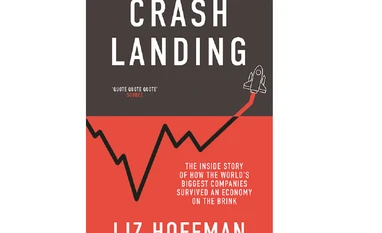
Crash Landing: The Inside Story of How the World’s Biggest Companies Survived an Economy on the Brink
Crash Landing: The Inside Story of How the World’s Biggest Companies Survived an Economy on the Brink
Author: Liz Hoffman
Publisher: Hachette India
Pages: 250
Price: Rs 699
Liz Hoffman, award-winning business journalist with The Wall Street Journal is an excellent story-teller. Crash Landing is a highly engaging tale of how some of United States’ big corporate leaders reacted and navigated through the Covid-19 pandemic with more than a little help from the government.
There have been many books on the effect of Covid-19 and the devastation it caused. Multiple books by authors in different countries have dealt with the havoc it caused in the lives of normal people in their countries. The Great Indian Shutdown by former Business Standard journalist Jyoti Mukul, for example, is a good and detailed account of what happened in India. Another interesting book —The Messenger by Peter Loftus — looked at the pandemic through a different filter. It told the story of the race to create a vaccine for the virus, largely through the tale of Moderna.
Ms Hoffman has taken a completely different story to tell. She primarily looks at the pandemic from the corner offices of firms such as AirBnB, Ford Motors, Hilton Hotels, Morgan Stanley, Goldman Sachs, Delta Airlines and others. She tells the story of how they reacted initially, how many actually saw the troubles coming, and decisions they took, often on the fly, as the pandemic progressed more rapidly than anyone could have anticipated.
For most of the chief executive officers (CEOs) featured in the book, the pandemic was a rude reminder of the old proverb about the best laid plans of mice and men. Many of them had had one or more excellent years of galloping revenues and big profits when Covid-19 left them in a crisis they had no experience handling. For CEOs in manufacturing who were used to lean manufacturing systems, just-in-time inventory and a tremendous dependence on China for inputs, the problems were exceptionally complex. Equally, CEOs of airlines and hospitality businesses found themselves grappling with a crisis that threatened to kill off not just weak players in their sectors but the entire sector. The money men — the hedge fund managers and the investment bank bosses — had more mundane problems.
In Ms Hoffman’s telling, few of the CEOs had actually taken note of the strange virus in China initially. And even when the raging pandemic swept through country after country, many of the CEOs failed to calculate its full impact. When they did, they found themselves looking for handouts from the government to survive.
Some CEOs come off better than the others in her tale. Hilton’s CEO Chris Nassetta, for example, had started worrying earlier than many others. Though the company had over $500 million in cash in the bank, Mr Nassetta moved quickly to draw down on the $1.75 billion credit line Hilton had with banks. The Delta Airlines top team also moved quickly to shore up cash, though it was handicapped by the fact it had just paid out $1.6 billion of profits for the year to employees. Others bumbled about and would continue to react late.
The CEOs had one thing going for them. The government and the regulators were prepared to give billions of dollars to rescue entire sectors provided they got a plan from the CEOs in those sectors. In fact, the US administration actively organised meetings with groups of CEOs in each sector to ask if they needed money to survive the pandemic.
Ms Hoffman offers a valuable glimpse into the character of the CEOs and their working styles. She has a racy style of writing and the book is a very quick read. There are interesting nuggets in the book that provide insights into how some of the celebrated minds in US business reacted when they were asked early in the Covid-19 timeline whether they were worried about the virus in China.
Bill Ackman, the billionaire hedge fund manager who runs Pershing Square Capital, was one of those who started worrying about the virus very early even when it was confined to China. He wrote to investment legend Warren Buffett of Berkshire Hathaway to seek his views. The letter he received gave the impression that the virus was not something that Buffett was even looking at. Mr Ackman then wrote to Bill Gates, the co-founder of Microsoft, who would play a big role in the quest to vaccinate the world along with the World Health Organization much later. He never received a reply.
Crash Landing is a great book to read if you want to understand how some of the celebrated US CEOs acted when confronted with a once-in-a-lifetime crisis that was beyond even the 2008 global financial meltdown. It is not a comprehensive tale of the virus and the pandemic — and, indeed, there can be no authoritative book on the subject. It is a great addition to the library of pandemic-related books and an interesting corporate tale but it is restricted to looking at how businesses were hit and survived through a very narrow filter of how the CEOs behaved.
The reviewer is a former editor of Business Today and Businessworld, and the founder of ProsaicView, an editorial consultancy
Read this article for free
Register to continue reading premium journalism and analysis from Business Standard.

 "US Inc and the pandemic challenge")












 Connect with us on WhatsApp