Sam the brave

As the nation experiences a resurgence of nationalism, a biography of Manekshaw by his aides-de-camp is poised to resonate widely
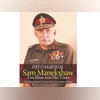
Field Marshal Sam Maneskhaw: The Man and His Times
Ajai Shukla
5 min read Last Updated : Jan 01 2024 | 9:39 PM IST
Field Marshal Sam Maneskhaw: The Man and His Times
Authors: Brigadier Behram Panthaki (Retired) and Zenobia Panthaki
Publisher: Niyogi Books
Pages: 216
Price: Rs 1,495

Despite having a military that has fought across Asia and Europe during the last two centuries — first for the British colonial enterprise and then, since 1947, for our own national aims — there are precious few accounts of the generals, admirals and air marshals who led India’s armies to victory. It is hard to say why there are so few credible biographies of Indian war heroes such as Lieutenant General (Lt Gen) Premindra Singh Bhagat, the first Indian army officer to be awarded the Victoria Cross; or of Colonel Chewang Rinchen, who twice won the Mahavir Chakra, the first when he was aged just 17; or of Lt Gen Zorawar Chand Bakshi, who was twice awarded the Mahavir Chakra for exceptional bravery. This may have something to do with our general indifference to history, or with our obsession for secrecy and our failure to declassify internal records long after they ceased to have any operational value.

Ironically, we know what Arthur Wellesley, 1st Duke of Wellington, remarked as Napoleon’s battered army limped off the Waterloo battlefield. The Iron Duke said, “That was the nearest-run thing you ever saw in your life.” But independent India has no record of what Lt Gen Ranjit Singh Dayal — the hero of India’s capture of the Haji Pir Pass, one of the greatest military feats of the 1965 war — said or did at the moment of victory. All we know is that the capture of Haji Pir pass turned out to be a wasted effort as Indian negotiators agreed to hand back the pass to Pakistan at the discussion table in Tashkent.

This omission is remedied somewhat, with this account of the life of India’s first field marshal, Samji Hormusji Framji Jamshedji (SHFJ) Manekshaw, who led the Indian military to its greatest triumph: The victory over Pakistan in December 1971, which led to the creation of Bangladesh. This account of Manekshaw’s life has been meticulously compiled by one of the field marshal’s aides-de-camp, Brigadier Behram Panthaki (retired), along with his wife and co-author, Zenobia Panthaki.

Schooled and trained in the British tradition, Manekshaw was a colourful soldier, who assiduously cultivated the image of a lovable rogue. By virtue of living for 35 years after retiring as army chief, Manekshaw recounted his story to multiple audiences. A gifted raconteur, his account improved each time he addressed an audience — whether military or civilian. Well into his 90s, Manekshaw was leaving audiences in splits of laughter and nursing the feeling that the government should have utilised his leadership talents to a greater degree, rather than putting him out to pasture in the remote hill station of Coonoor, in Tamil Nadu. This, however, overlooks the interventionist civil-military environment of that period when, in one country after another, Bonapartist generals captured political power. Manekshaw recounts how his Prime Minister, Indira Gandhi, worried that the highly popular chief might supplant her and grab power in India.

Brigadier Panthaki’s account of the 1971 war rebuts a controversy by one of Manekshaw’s ablest generals — Lt Gen J F R Jacob, who served during the 1971 war as chief of staff, Eastern Command. In an autobiography that he wrote in 2011, entitled Surrender at Dacca: Birth of a Nation, Jacob essentially argued that the official history was cockamamie and that he, Lt Gen Jacob, actually masterminded that campaign from Calcutta, including the formulation of the Pakistan Army’s surrender document.

Meanwhile, according to Lt Gen Jacob, the eastern army commander (Lt Gen Jagjit Singh Aurora) and Manekshaw himself were incompetent figureheads who unfairly garnered the credit. Brigadier Brigadier Panthaki rebuts Jacob’s claims head-on, revealing that the document of surrender, which he, Brigadier Panthaki, framed and hung in the army chief’s office, had been personally drafted by Manekshaw and cleared by the defence secretary, K B Lal and the secretary to the Prime Minister, P N Haksar.

Brigadier Panthaki reveals that Manekshaw dictated the contents over the phone to Eastern Command and instructed them to get four originals signed by the Pakistani commander, Major General A A K Niazi. One copy each was given to army headquarters and Eastern Command, while Pakistan would get one copy. The fourth copy would adorn the office of India’s army chief.

Brigadier Panthaki includes a short chapter entitled “Quirks and Humour”, in which he writes about one of Manekshaw’s most endearing qualities: His exceptional sense of what makes a general stand out from the pack. The book reveals that Manekshaw detested umbrellas, declaring that a soldier should not be averse to “a little water down his spine”. He also looked down on the wearing of dark glasses and, once he became senior enough to get away with it, adopted his own dress uniform, which included a jaunty side cap and a grey Mazri shirt instead of the army’s standard olive green.

Brigadier Panthaki recounts an official trip to the UK in 1973, after Manekshaw had been appointed Field Marshal. At a dinner that he hosted for British officers, one of Manekshaw’s former commanding officers walked up to him and asked whether he could address the Field Marshal as Sam. “Please do, Sir,” Manekshaw replied. “You used to only call me a ‘bloody fool’ before. At one time I thought that was my Christian name.”

Manekshaw’s biography, coming as it does at a time of resurgent nationalism, is likely to ride that wave. Bollywood has already produced a full-length feature film called Sam Bahadur, which is packing in the viewers. The book, which has been produced in the “coffee table” format, with lots of photographs, is likely to be widely read.

One subscription. Two world-class reads.

Already subscribed? Log in

Subscribe to read the full story →
*Subscribe to Business Standard digital and get complimentary access to The New York Times

Smart Quarterly

₹900

3 Months

₹300/Month

SAVE 25%

Smart Essential

₹2,700

1 Year

₹225/Month

SAVE 46%
*Complimentary New York Times access for the 2nd year will be given after 12 months

Super Saver

₹3,900

2 Years

₹162/Month

Subscribe

Renews automatically, cancel anytime

Here’s what’s included in our digital subscription plans

Exclusive premium stories online

  • Over 30 premium stories daily, handpicked by our editors

Complimentary Access to The New York Times

  • News, Games, Cooking, Audio, Wirecutter & The Athletic

Business Standard Epaper

  • Digital replica of our daily newspaper — with options to read, save, and share

Curated Newsletters

  • Insights on markets, finance, politics, tech, and more delivered to your inbox

Market Analysis & Investment Insights

  • In-depth market analysis & insights with access to The Smart Investor

Archives

  • Repository of articles and publications dating back to 1997

Ad-free Reading

  • Uninterrupted reading experience with no advertisements

Seamless Access Across All Devices

  • Access Business Standard across devices — mobile, tablet, or PC, via web or app

Topics :BOOK REVIEWIndian ArmysoldiersBangladesh

Next Story



