6 min read Last Updated : Dec 29 2023 | 10:45 PM IST
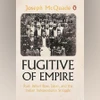
Fugitive of Empire: Rash Behari Bose, Japan and the Indian Independence Struggle
Author: Joseph McQuade
Publisher: Penguin Random House
Price: Rs 999
Pages: 336
Joseph McQuade’s book rescues Rash Behari Bose from relative obscurity. Very few people know of this Bose’s activities, which are perpetually under the shadow of the daredevilry of the other more famous Bose, Subhas Chandra. The lives of the two Boses came to overlap, albeit briefly. And both saw Japan as their safe haven against the onslaughts of the British Empire.
The background of Rash Behari Bose bore none of the marks of privilege and distinction that were so prominent in the career of Subhas Chandra. Born in 1886 in rural Bengal – in Hooghly district and brought up in Burdwan district – Rash Behari did not have a distinguished educational career. He was, however, fascinated by the stories of the great rebellion of 1857 and avidly read V D Savarkar’s The Indian War of Independence published in 1907. His childhood and adolescence were haunted by scarcity of food and malaria, both products of British public policy that neglected the welfare of common Indians.
His youth coincided with the rise of nationalism in Bengal – the Swadeshi movement. One strand of the national movement was inspired by the idea that British rule in India could be overthrown only by armed struggle. This idea captured the imagination of Rash Behari who came to be closely involved with the failed assassination attempt on Lord Hardinge, the viceroy, in Delhi in December 1912. It is still not clear who actually threw the bomb at Hardinge in the course of the progress of his ceremonial procession. Investigations revealed that two Bengali young men carried out the act – one was Basanta Kumar Biswas and the other was Rash Behari. Significantly, both had their origins in rural Bengal.
One of the most fascinating parts of McQuade’s book is his retracing of the steps taken by the colonial police and intelligence officers to track down Biswas and Bose. Like a detective, he reconstructs piece by piece the process of detection. Rash Behari obviously had nerves of titanium since after the assassination attempt, he quietly returned to Dehradun, where he worked as a clerk in the Forest Research Institute. Not only that, when Hardinge went to Dehradun to convalesce two days after the attempt on his life, he was greeted by a group of people, who offered salaams at the railway station. The man who led the salute was none other than Rash Behari!
The manhunt that came in the aftermath of the bomb hurled at the viceroy, considered the “alter ego of the Sovereign’’, utilised all the available methods of surveillance, intelligence-sharing and of emerging forensic science. But they failed to get to Rash Behari. In 1915, when the British administration’s attention was focused on the First World War, Bose and his compatriots planned a series of uprisings across north India replicating the events of 1857. The rebellion was aborted because a double agent revealed it to the colonial officials. Rash Behari was on the run – in McQuade’s words, “the most wanted fugitive in India’’. Rash Behari fled from India aboard a ship to fetch up in Tokyo. A new chapter of his life was about to begin.
In Japan, Rash Behari lived the life of an exile, a part of what the historian Tim Harper has called “underground Asia’’. He was located in Japan where Japanese nationalists made him feel at home but his heart was in India, which he wanted to free from British rule. Within India, the national movement under Gandhi had taken a turn towards non-violent mass mobilisation. Rash Behari, however, remained convinced of the necessity of armed struggle to throw the British out of India. He established networks with like-minded people and groups across Asia and made attempts to smuggle arms into India and get them across to the underground organisations committed to armed insurrection. This was by no means an easy and fruitful enterprise.
Rash Behari set up, as the Japanese forces marched victorious in south-east Asia, the Indian Independence League (IIL) and a fighting force called the Indian National Army (INA). The momentum of Japanese successes had also brought Subhas Bose to Japan and south-east Asia. It was in the Imperial Hotel in Tokyo that the two Boses met for the first time. They spoke to each other in Bengali and Rash Behari told his younger comrade that he intended to hand over the leadership of the IIL and INA to him. Subhas accepted with alacrity. The rest, as the cliché goes, is history even if that history did not exactly fulfil the dreams of either of the Boses. Rash Behari died in January 1945 in a Tokyo that was burning from being pounded by US planes. And the younger Bose, according to all available evidence, died in a plane crash in August the same year.
McQuade also projects Rash Behari as a man of ideas who wrote predictably on internationalism, pan-Asianism, empire and global politics. What is revealing in McQuade’s exposition is the location of Rash Behari’s ideas within far-right Japanese political thought.
This book is a fine study based on assiduous archival research. The analysis is fine-grained and nuanced. But there remain a few unanswered questions. Why were the two Boses attracted to the Japanese? They couldn’t have been unaware of the cruelties the Japanese carried out on the people of south-east Asia and on prisoners of war. McQuade speaks about Rash Behari leaving behind “a revolutionary inheritance”. It is difficult to trace one. And what was revolutionary about someone whose ideas chimed, as McQuade argues, with the views of the far right in Japan? The argument put forward by McQuade that Rash Behari and people like him were important because the colonial authorities thought them to be important is tenuous and it is also to see history through the eyes of the colonial rulers.
The reviewer is Chancellor and Professor of History, Ashoka University. Views expressed are personal