SPLENDID LIBERATORS: Heroism, Betrayal, Resistance, and the Birth of American Empire
By Joe Jackson
Published by Farrar, Straus & Giroux
786 pages $39
Clay Risen In July 1898 the American diplomat John Hay boasted in a letter to his friend Theodore Roosevelt, then the commander of the Rough Riders volunteer cavalry, that their country had benefited quite well from what he called a “splendid little war” against Spain, quickly taking control not just of Cuba, but of Puerto Rico, Guam and the Philippines too.
Though Roosevelt and his men were still in Cuba, Hay was already praising a war “begun with the highest motives, carried on with magnificent intelligence and spirit, favored by that fortune which loves the brave.”
That assessment may have come too soon. As Joe Jackson makes clear in his compelling, thoroughly researched but occasionally exhausting book, Splendid Liberators, the Spanish-American War remains perhaps the most misunderstood conflict in US history.
It was certainly not splendid: More than 4,000 US soldiers died between 1898 and the declaration of peace in 1902 in the Philippines, where an insurgency had drawn the Americans into a brutal guerrilla war. Civilian deaths were well over 500,000 in the Philippines and Cuba, thanks to the horrific tactics employed by the Spanish and the American occupying forces.
And while at the time the war might have seemed “little,” it was in fact world-altering: In a single conflict, the United States captured virtually every Spanish colonial territory; it established itself as a major power along the eastern edge of Asia; and it revealed an enviable capacity to turn its robust industrial and economic base into military might, almost overnight.
Jackson has done a service in uniting the two phases of the conflict into a single, engrossing narrative. Most observers, then and now, did not see the Cuban and Philippine theatres as parts of the same war.
Jackson prefaces the book with 10 pages of dramatis personae. Chief among them is Frederick Funston, about as close to an avatar of America’s swift rise to global power as one could find. Raised in rural Kansas in the decades after the Civil War, he made his way to New York City in the 1890s, where he fell in thrall to the Cuban cause.
He was not alone. America was rapidly becoming a literate, middle-class society, qualities that also made it more aware of the world beyond its borders. With that awareness came a missionary zeal to use America’s power to help the world’s downtrodden. In the 1890s, donations poured into charities like the recently established Red Cross, and protesters demonstrated against the massacre of hundreds of thousands of Armenians by Ottoman troops.
Millions of Americans like Funston also swooned to the cause of “Cuba Libre”. In 1896 he joined the furtive waves of American civilians who smuggled themselves onto the island to enter the fray.
He didn’t last long. Wounded repeatedly and stricken by malaria, he left Cuba after 18 months, only to rejoin the fight after President William McKinley declared war on Spain in 1898.
This time he was sent to the Philippines. Funston soon became an avid participant in the US military’s three-year counterinsurgency. He used many of the same tactics employed by the hated Spanish: His men executed prisoners, tortured people for information and destroyed crops in an attempt to flush out the guerrillas. In 1899, he was promoted to the rank of brigadier general.
Funston’s no-holds-barred methods won him the backing of jingoists like Roosevelt, who became president following McKinley’s assassination in 1901. Roosevelt saw his country as both a force of liberation and an empire, bringing American values to the world whether it liked it or not.
The Americans declared the war over in July 1902. Within a few years, the United States had not only replaced Spain as a world power, but showed itself willing to do all the terrible things that Spain and other European countries had done to maintain control.
Jackson has mastered the material and offers a persuasive interpretation of it. Still, though his account of the US campaign in Cuba makes Splendid Liberators hard to put down at times, elsewhere it drags.
Certain petty annoyances stand out. Jackson has a habit of tacking between tenses, sometimes within the same paragraph, so that action in the past suddenly shifts to the present, then back.
Still, Jackson writes with a sense of urgency about the need for Americans to examine the ease with which their country gets involved in faraway wars, especially when jingoism is once more on the rise.
“It’s easy for moral certitude and blindness to be one,” Jackson writes. “The myth plays out often — in my life, from the Bay of Pigs to Vietnam, Iraq and Afghanistan. The leaders we elect always act surprised when things go awry.”
The reviewer is New York Times reporter on the Obituaries desk and the author of The Crowded Hour: Theodore Roosevelt, the Rough Riders, and the Dawn of the American Century. ©2025 The New York Times News Service

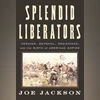 "Splendid Liberators: How America replaced Spain as the world's great power")


 Connect with us on WhatsApp