Teachable moments in unrestrained capitalism

The book is an intriguing study of a company that promised to revolutionise Indian education but ended up dealing a massive blow to the very sector of which it was seen as a leader
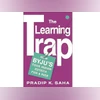
The Learning Trap
The Learning Trap: How Byju’s Took Indian Edtech for a Ride
Chintan Girish Modi
5 min read Last Updated : Dec 25 2023 | 9:48 PM IST
The Learning Trap: How Byju’s Took Indian Edtech for a Ride
Author: Pradip K Saha
Publisher: Juggernaut Books
Pages: 280
Price: Rs 399

If recent Bollywood films like Vidhu Vinod Chopra’s 12th Fail and Varun Grover’s All India Rank impressed you with their critique of India’s broken education system, get ready to be shaken up by a non-fiction book that paints a far gloomier picture than you have seen before. It shows how parents who want to give their children a sound education for a secure financial future and social mobility are fooled by people who know how to prey on their anxieties.
 
The Learning Trap: How Byju’s Took Indian Edtech for a Ride, written by journalist Pradip K Saha, is an intriguing study of a company that promised to revolutionise Indian education but ended up dealing a massive blow to the very sector of which it was seen as a leader. The book has grown out of Mr Saha’s in-depth reportage – based on tips from sources, official data, and interviews with the company’s employees and customers – for The Morning Context portal.
 
How did Byju Raveendran, who grew up in a nondescript coastal village called Azhikode, seven kilometres north of Kannur in north Kerala, set himself up as an edtech pioneer and make a name for Byju’s all across India, West Asia, and the United States? What strategies did Byju’s use to attract investors such as Aarin Capital, Sequoia Capital India, the Chan Zuckerberg Initiative, and the Qatar Investment Authority? How could the company afford to sign up actor Shah Rukh Khan and footballer Lionel Messi as its brand ambassadors, and become so big that “the joke in the industry was that someday Byju’s would buy the Central Board of Secondary Education”? Why did the Enforcement Directorate show up at Byju’s offices? Read the book to get answers to these questions.
 
The protagonist of this book is depicted as a capitalist monster who figured out that “you can make millions of dollars by selling snake oil in the name of education”. His mother was a mathematics teacher, and his father was a physics teacher, in the same Malayalam-medium government school at which he studied. He went on to study mechanical engineering, worked briefly with a shipping firm, and then started Byju’s Classes to
coach students preparing for the Common Admissions Test (CAT) for admission to the Indian Institutes of Management. The shift of focus from offline to online, and CAT to school education, happened over time.
 
It is crucial to understand the context in which Byju’s grew in size, and Mr Saha does a commendable job of explaining this. He writes: “The pandemic-induced lockdown did for edtech what demonetisation did for digital payments.” The sluggish pace at which this sector was growing between 2015 and 2019 changed after the world was hit by the Covid-19 pandemic. As schools were forced to go online, parents had to drop their resistance against online education. Edtech companies like Byju’s “rushed in to fill the learning gap”.
 
“Convincing parents to take a trial used to be an arduous task”, remarks Mr Saha, narrating in detail in the book how underpaid and overworked salespersons weighed down by lofty targets would manipulate vulnerable parents desperate to give their children an edge over others. 
 
“The pandemic gave edtech companies an unbelievable top of the funnel on a scale they could have never imagined and all without spending a dime on marketing,” he adds.
 
The Byju’s story, however, is not simply about being at the right place at the right time or milking a disaster for gain. Going by Mr Saha’s account, it is a saga of cancelled subscriptions, acquisitions, mass layoffs, toxic work culture (including physical, verbal and psychological abuse), shady transactions, lawsuits, discrepancies in accounting practices, alleged violation of foreign exchange laws, delayed submission of financial statements, secret WhatsApp groups —  material that production houses looking for a juicy film script would jump at.
 
Unfortunately, Mr Saha is so passionately driven by stacking up evidence against the founder of the company that he does not really get into how the man who was once a committed teacher got so consumed by the pursuit of scaling up and making money that he lost all his integrity. One cannot help wondering why the edtech giant harmed the people he had set out to serve, and whether he feels any remorse knowing how many families have suffered because of him. The voices of children, the primary target audience of Byju’s, are absent from this book.
 
Mr Saha also misses out on developing one important strand of the narrative. He writes: “The gender ratio in the Byju’s salesforce was around 80:20 in favour of males, until it moved to a telemarketing ‘inside sales’ model, when it changed to around 60:40 M:F.” Did this ratio change because of gender sensitisation programmes within the organisation? When more women were hired, were they being paid the same as men with the same job description? One hopes that other researchers investigating the Byju’s story will look into these questions too.

The reviewer is @chintanwriting on Instagram and X

One subscription. Two world-class reads.

Already subscribed? Log in

Subscribe to read the full story →
*Subscribe to Business Standard digital and get complimentary access to The New York Times

Smart Quarterly

₹900

3 Months

₹300/Month

SAVE 25%

Smart Essential

₹2,700

1 Year

₹225/Month

SAVE 46%
*Complimentary New York Times access for the 2nd year will be given after 12 months

Super Saver

₹3,900

2 Years

₹162/Month

Subscribe

Renews automatically, cancel anytime

Here’s what’s included in our digital subscription plans

Exclusive premium stories online

  • Over 30 premium stories daily, handpicked by our editors

Complimentary Access to The New York Times

  • News, Games, Cooking, Audio, Wirecutter & The Athletic

Business Standard Epaper

  • Digital replica of our daily newspaper — with options to read, save, and share

Curated Newsletters

  • Insights on markets, finance, politics, tech, and more delivered to your inbox

Market Analysis & Investment Insights

  • In-depth market analysis & insights with access to The Smart Investor

Archives

  • Repository of articles and publications dating back to 1997

Ad-free Reading

  • Uninterrupted reading experience with no advertisements

Seamless Access Across All Devices

  • Access Business Standard across devices — mobile, tablet, or PC, via web or app

Topics :BOOK REVIEWLearningBollywoodIndian education

Next Story



