The contours of displacement

A collection of essays intricately weaves the stories of a Kashmiri family and their exodus from the Valley
book
Areeb Ahmad
5 min read Last Updated : Aug 13 2024 | 10:43 PM IST
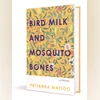
Bird Milk and Mosquito Bones
Author: Priyanka Mattoo
Publisher:  Penguin Viking
Pages: 304
Price: Rs 699

Born in Srinagar, Priyanka Mattoo has lived at 32 different addresses across India, the UK, Saudi Arabia, and the US over the course of four decades. A few years after she was born, her parents decided to relocate abroad for work in order to gain the capital to slowly build their own house in Kashmir. On their trips, the family would collect decorative items and carefully bring them back. This is the context that provides the title to the memoir: “There is a Kashmiri phrase, chhari daud te mahe adij, ‘bird milk and mosquito bones,’ used when someone is describing things so rare and precious that the listener should question their very existence.” The phrase serves as a reminder to Ms Mattoo of the things her family had gathered over time and the fleetingness of those brief years of happiness before the flaring tensions in the Valley forced them to abandon the house.

Bird Milk and Mosquito Bones is billed as a memoir but it is really a collection of personal essays some of which have been published previously. There are reappearing motifs and subjects, but no narrative throughline — chronological or otherwise — that connects the “chapters” to each other. What unites them thematically is wistfulness. The opening essay, “Goddess of Destruction”, focuses on the family’s exodus from the Valley that is coloured by sorrow because it was not a matter of one night — as it was for some of the extended family members who lived there — but a steady dissociation over many years as the house was looted one year, stripped of its fixtures the next, with the roof set on fire the year after. Until that moment, the family — especially Ms Mattoo who had not been to Kashmir in years by that point — had been holding out hope for things to calm down followed by a return. The house’s destruction catalysed the ultimate uprooting.

From there, the book takes on a life of its own and the essays cover a wide-ranging array of topics, each one exploring a particular year or extended time period in Ms Mattoo’s life in connection to the subject. There is the conventional “Such a Nice Face” which retreads the tried and tested narrative about societal expectations from women regarding their appearance and grooming as well as the ways in which they are objectified by the male gaze. But there is also fascinating stuff such as “Dotted Lines” which looks at how universally popular desi music is blurring state lines between India and Pakistan in the context of Ali Sethi and Hasan Raheem, a portion of which was published before in The New Yorker to great acclaim. That said, few essays end where they begin, often going on tangents and jumping from one thought to the next, deftly mimicking the natural flow of daily conversations.

Many pieces reflect on Ms Mattoo’s family and are lovingly written character studies of some of the most important people in her life. In “A Remarkably Self-Assured Debut”, she focuses on her dashing, regal maternal grandfather whose “resourcefulness and showstopping presence would be his genetic legacy.”  He was the patriarch of a large joint family which included his younger siblings and their families where he emphasised education for the girls and forbade them from doing any stereotypically feminine work or domestic labour. As a counterpoint, “I’ll Show You” follows her maternal grandmother and her love for crochet that passed down to Ms Mattoo. Also passed down is the gene that makes one susceptible to dementia, which had “gently bloomed” for her Nani in her waning years.

Continuing this trend, “A Good Match” explores her parent’s loving, enduring marriage and why she considers them soulmates even if they would never admit it, at least not in so many words. Following immediately after it in the collection, “Basherte” looks at Ms Mattoo’s experiences in romance and how though the desire to marry a fellow Kashmiri did not come to fruition, she found a thoughtful and funny partner in the white Jewish man she did end up marrying. Together, all these essays showcase Ms Mattoo’s goal of moving away from narratives that centre “the many [tragic] things that have happened to us” and instead illuminate a community.

The other essays cover anything and everything from late-night sandwiches in Milan during a junior year abroad to mapping out places that work best for an individual’s growth through astrocartography, from teenage rebellion in America to struggles with mental health. The feeling of rootlessness that Ms Mattoo carries pervades all aspects of her life but she also is able to learn to live with it. In the closing essay, she ponders: “I’m starting to suspect that the place I crave, the home I’ve yearned for, is no more than a web of childhood memories suspended in time. They were so long ago that I can’t be certain they were real. Were they something I should question? Bird milk, mosquito bones. But in the end, I don’t think it matters. I might live with this feeling, of hovering between years and places, content in my own space yet craving another, for the rest of my life.”

Ms Mattoo’s memoir poignantly mirrors the contours of loss and displacement as it illustrates the sharp edges of nomadic living and the search for home by turning memory into remarkable colourful curiosities.

The reviewer is a Delhi-based writer, critic, and translator. He is @bankrupt_bookworm on Instagram and @Broke_Bookworm on Twitter/X

One subscription. Two world-class reads.

Already subscribed? Log in

Subscribe to read the full story →
*Subscribe to Business Standard digital and get complimentary access to The New York Times

Smart Quarterly

₹900

3 Months

₹300/Month

SAVE 25%

Smart Essential

₹2,700

1 Year

₹225/Month

SAVE 46%
*Complimentary New York Times access for the 2nd year will be given after 12 months

Super Saver

₹3,900

2 Years

₹162/Month

Subscribe

Renews automatically, cancel anytime

Here’s what’s included in our digital subscription plans

Exclusive premium stories online

  • Over 30 premium stories daily, handpicked by our editors

Complimentary Access to The New York Times

  • News, Games, Cooking, Audio, Wirecutter & The Athletic

Business Standard Epaper

  • Digital replica of our daily newspaper — with options to read, save, and share

Curated Newsletters

  • Insights on markets, finance, politics, tech, and more delivered to your inbox

Market Analysis & Investment Insights

  • In-depth market analysis & insights with access to The Smart Investor

Archives

  • Repository of articles and publications dating back to 1997

Ad-free Reading

  • Uninterrupted reading experience with no advertisements

Seamless Access Across All Devices

  • Access Business Standard across devices — mobile, tablet, or PC, via web or app

Topics :BS ReadsBOOK REVIEWKashmiri Pandits

Next Story



