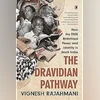
The Dravidian Pathway: Book traces evolution of Tamil identity and politics

This deeply researched book seeks to answer these questions, unravelling methodological challenges and dissecting the various components that go into the making of identity

The Dravidian Pathway: How the DMK redefined power and identity in South India
Aditi Phadnis
5 min read Last Updated : Oct 14 2025 | 12:23 AM IST
The Dravidian Pathway: How the DMK redefined power and identity in South India
by Vignesh Rajahmani
Published by Westland Books
276 pages ₹799
  When does a social movement become a political party? How does ideology translate into practical politics? How does identity shape power politics? Some answers lie in the birth, evolution and growth of the Dravida Munnetra Kazhagam (DMK), a political party founded in 1949 that has endured in Tamil Nadu and beyond. This deeply researched book seeks to answer these questions, unravelling methodological challenges and dissecting the various components that go into the making of identity. 
The work reflects both rigour and passion. The introduction and first chapter discuss research on Tamil Nadu’s identity and caste politics by a range of scholars. The author investigates the work of scholars like M S S Pandian, Arun Swamy, Narendra Subramanian, Sumathi Ramaswamy and many others. Based on archival research and interviews, he contends that the DMK was — and continues to be — “an insurgent force against hegemonic nationalism, with elections not being an end in themselves, but rather a powerful tool to achieve its objectives”. 
And its objectives? The book traces the history of the DMK in the context of all the changing equations in Tamil Nadu from the days it was Madras Presidency, then Madras Province, and later Madras state. The external challenges the region faced were the freedom movement, the place of caste in the movement, and later, the rise of the thought of Ambedkar. The creation of states based on language, the “imposition” of Hindi followed. What remained as an immutable strand was caste. This was — and continues to be — a powerful tool for political mobilisation elsewhere in India but in Tamil Nadu it got salience of a different kind. You are born into a caste. But it remains an ascriptive feature till you choose to assert it by joining a caste group. To turn caste into a political identity, you need groupings. In the case of Tamil Nadu, the DMK undertook the task of transforming caste into Tamil identity.
 
A crucial element in the process was the role played by Periyar. In response to the political disempowerment of lower castes, Periyar advocated suyamariyathai or self respect as central to his vision of the Dravidian-Tamil identity by positioning Hinduism and Brahmins as outsiders and “flattening a hierarchical Dravidian Tamil society, making it inclusive of marginalised communities, embracing those from other religions as well”. The book discusses the divergence and convergence between Periyar and Ambedkar. 
 
Thinking is one thing. But if an ideology is to live, it has to disseminate itself. The author describes the “reading rooms” (padipakkam) that relayed the Dravidian-Tamil ethos. This exposition is the backbone of the book, for the author has gone into reading rooms in Virudhunagar, his region of enquiry, interviewed people who have been using them for years and how the character of these areas has changed over time. These reading rooms exist all over Tamil Nadu and were crucial meeting places, in addition to making available materials especially newspapers.  Murasoli, the DMK newspaper, is counted as a powerful vehicle to disseminate the DMK’s views. But the reading rooms provided not just caste publications but all kinds of periodicals. Thus the overlay was caste but the  publications offered a space for dialogue creating a  democratic space rooted in  equality, social justice, and empowerment.
 
The DMK offered itself as the political vehicle for this empowerment. The book discusses how the DMK managed to mould “identity-related vulnerabilities — stemming from caste, rural-urban mobility, and class inequalities — into political mobilisations, attracting individuals from non-elite, non-Brahmin, lower caste and lower class backgrounds…it created political communities beyond immediate caste/class associations”.
 
Elections, with emphasis on Kamraj’s electoral defeat in Virudhunagar in 1967, gave rise to the DMK’s overarching presence in the state, replacing the then-dominant party, the Congress. The book has an interesting epilogue that discusses the rise of the Bharatiya Janata Party (BJP) – supported by upwardly mobile lower-caste groups like Nadars and Gounders “who once benefited from the Dravidian movement” along with traditional elites like Brahmins and Chettiars. There’s new thinking in town — the Hindu-Tamil, seeking to displace the Dravidian-Tamil identity. It also discusses briefly, the rise of nativist Tamil nationalist groups like the Naam Tamilar Katchi. 
But the book also raises questions: “Does the movement still have what it takes to accommodate the dynamic aspirations of the people? Do the political parties espousing the Dravidian-Tamil vision retain the ability to sustain their electoral viability while aligning with fulfilling those aspirations?” All valid questions. To this another question must be added: Will delimitation and the inevitable reduction of seats from Tamil Nadu (if the delimitation is to be based on population) become the new rallying cry of the Dravidian movement? No doubt, the author will come up with another excellent book that will have the answers.

One subscription. Two world-class reads.

Already subscribed? Log in

Subscribe to read the full story →
*Subscribe to Business Standard digital and get complimentary access to The New York Times

Smart Quarterly

₹900

3 Months

₹300/Month

SAVE 25%

Smart Essential

₹2,700

1 Year

₹225/Month

SAVE 46%
*Complimentary New York Times access for the 2nd year will be given after 12 months

Super Saver

₹3,900

2 Years

₹162/Month

Subscribe

Renews automatically, cancel anytime

Here’s what’s included in our digital subscription plans

Exclusive premium stories online

  • Over 30 premium stories daily, handpicked by our editors

Complimentary Access to The New York Times

  • News, Games, Cooking, Audio, Wirecutter & The Athletic

Business Standard Epaper

  • Digital replica of our daily newspaper — with options to read, save, and share

Curated Newsletters

  • Insights on markets, finance, politics, tech, and more delivered to your inbox

Market Analysis & Investment Insights

  • In-depth market analysis & insights with access to The Smart Investor

Archives

  • Repository of articles and publications dating back to 1997

Ad-free Reading

  • Uninterrupted reading experience with no advertisements

Seamless Access Across All Devices

  • Access Business Standard across devices — mobile, tablet, or PC, via web or app

Topics :Book ReviewsBook Reviews & FeaturesBOOK REVIEW

Next Story