By Constance L Kirker and Mary Newman
Constance L Kirker and Mary Newman’s book Mango: A Global History is part of the Edible Series, which has featured books on items of food and drink ranging from apple to yoghurt. In Mango: A Global History, Dr Kirker and Dr Newman take their readers on a global tour of the fruit and, in the process, they cover various aspects of the fruit’s production, its consumption around the world, and its presence in the life and culture of various regions where the fruit has been cultivated for centuries.
In the introduction, the authors tell readers what every Indian knows: That eating a mango is a “full body experience” and that to savour it, one must get out of one’s “comfort zones and get messy”. Memsahibs of the Raj referred to mango as “bathroom fruit” for precisely this reason.
Evidence suggests that the fruit originated in the Indian sub-continent and has an ancient lineage. It appears to have originated in the Northeast and traces of mango fibre have been found in human teeth in the Harappan valley. The authors trace mentions of the mango in the Vedas and Puranas, the Ramayana and Mahabharata.
The book also shows how mangoes are linked to sacred practices in Hinduism, Jainism and Buddhism. This is visible in the use of mango leaves for auspicious purposes, in the role mango leaves play in Bengali weddings, or in the “mango mala”, a South India bridal necklace. In Thailand, the Buddha is often depicted with a mango in his hand. Mangoes often make appearances in the prose and poetry of the region. Mango blossoms have been used by Kalidasa to symbolise love in springtime, while a festival “Aam aur Ghalib” is organised every year to celebrate the poet Mirza Ghalib and his love for the fruit.
Today, the global fan following is worldwide. From its native South Asia it now has fans — and cultivators —in South Korea, Japan, Australia, Southeast Asia and the South Pacific and is incorporated in international cuisine. In the final chapter, the authors include a number of mango recipes from across the world and include dishes as varied as Mango Curry, Mango Pickles and Chutney.
A chapter towards the end is dedicated to what the future of the fruit looks like, examining the impact of technological advances and climate change. With its detailed research and photographs from across the world, Mango: A Global History is a delightful book for all fans of the fruit. It offers intriguing new facts to those who grew up eating fresh mangoes as well as to those who first encountered it in preserved form.

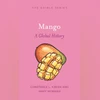 "'Mango: A Global History' explores the global appeal of 'bathroom fruit'")










 Connect with us on WhatsApp