Home / Book / Why the poor don't kill us: A must-read on why India is still Bharat
Why the poor don't kill us: A must-read on why India is still Bharat
The poor attacking the rich is relatively rare in India. Sordid jails and the snail-paced judiciary are effective disincentives for voluntary criminal acts
premium
Some of the author’s conclusions appear exaggerated, such as his view that “inequality cannot be solved.” Yes, greed, a key human driver, will always create an upwardly sloping ladder of income and benefits
5 min read Last Updated : Aug 18 2025 | 12:08 AM IST
Don't want to miss the best from Business Standard?
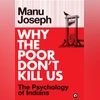
Why the poor don’t kill us: The psychology of Indians
by Manu Joseph
Published by Aleph
2025
266 pages ₹599
This is the author’s fourth book but the first in the non-fiction genre, an innovation from the 1950s, merging responsible journalism and engaging fiction in impactful storytelling. The result is a sparkling flow of thoughts sustained by their own sometimes convoluted logic. The author quit as editor of the Open magazine to write and explore alternative opportunities.
So, why don’t more upper-class Indians get slaughtered in their beds by the numerically overwhelming poor, many of whom serve the former in their homes, know their secrets and have both adequate motive and opportunity? Think of the ultimate luxury — being served bed tea — and the accompanying security dilemma of in-house help. Keeping a dog is a safeguard. But not if walked and fed by the house-help as most upper-class pets are.
The poor attacking the rich is relatively rare in India. Sordid jails and the snail-paced judiciary are effective disincentives for voluntary criminal acts. The resilience of the Indian social order can be attributed to the preservation of “social distance” as
in not eating on the same table, not sitting on the same furniture, and not eating from the same crockery. Oddly, rather than detract, these add to social cohesion albeit of the stratified Indian kind.
The author posits that humans do not hate those significantly better than themselves. They hate the “visible just above” and the “next below.” The former because they could block their social ascent and the latter because they might be pushing them out of a job or a house or even just space on the road. This principle applies uniformly. The result is a stable, social order, tempering social upheavals into ripples on a placid lake rather than tidal waves in a stormy sea.
Not showing off wealth publicly is another practice that blinds the poor to gross inequities. The author comes from a family of gold money lenders of Kerala, though he was raised in Chennai and lives in “Gurugram, Delhi’s richer suburb.” These money lenders dilute the opprobrium associated with their business by presenting themselves as saviours of last resort, do virtuous deeds like rebuffing a drunkard, pawning family jewellery, and sympathising with a widow pawning gold to get by. Like the author’s mother, they remain hyper local — there is a gold money lender every 100 yards in Kerala — donate to religious congregations and practice an austere lifestyle — “We fill our bottle at a water fountain rather than buy bottled water on a cruise ship”. According to the author, ascribing to “moral ideas like the importance of family, religion, nation, putting community before self” favour the rich but also appeal to and bind the poor, in a virtuous compact.
Could India’s urban chaos and dirt be a strategy to maintain a depressing common reality – making cities look poorer than they are— to signal that everyone is in the same boat, creating a common sense of belongingness? So strong is the hold of this chaotic stable but iniquitous social order that even the unimaginable prettiness of defined sidewalks in Europe, the orderly rows of self-regulated traffic, the attractive public spaces for people to meet and relax all begin to pale after a while. Beautiful public spaces where the rich and the poor mingle make India’s well-off uncomfortable. They take away the signs of privilege and prestige that define the Indian middle and upper classes – private transport, gated communities inaccessible to the poor, except as guards, maids, handymen, or drivers. No wonder, once the euros are spent, they are happy to return.
Some of the author’s conclusions appear exaggerated, such as his view that “inequality cannot be solved.” Yes, greed, a key human driver, will always create an upwardly sloping ladder of income and benefits. But inequality is a lower order problem than poverty and a less pervasive one. In wealthy countries state support insulates the young in poor families and provides opportunities, albeit imperfectly.
Similarly, it is over-the-top to assert that the obsession with higher education is an upper-class trick to trap the poor into hoping for better times till it is too late for remedial steps. Barely one third of American children graduate from college. But a decent life exists even outside college if you can identify your talent and act on it – ask Mark Zuckerberg. A competitive economy is the key differentiator between a rentier and an innovator. Wealth can be generated and lost in a single generation. Kerala did
something right in providing good basic education and good public health services for all. No surprise, then, that it has the lowest percentage of poor families at 0.55 per cent.
This is a racy and drolly humorous read, with the folksy irreverence and perceptive insights on human behaviour of stand-up comedians.
It is a must- read for those seeking quick answers to intractable questions on why India is Bharat.
The reviewer is distinguished fellow at Chintan Research Foundation and was previously in the IAS and the World Bank




