'The Identity Project' explains multiple fault lines of India's democracy

Can India, as a democracy, progress without reverting to the fragile, papered-over secularism of the past? Rahul Bhatia explores this question in his book
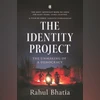
The Identity Project: The Unmaking of a Democracy
Ranjona Banerji
5 min read Last Updated : Oct 15 2024 | 10:17 PM IST
The Identity Project: The Unmaking of a Democracy
Author: Rahul Bhatia
Publisher: Westland
Pages: 449
Price: Rs 899

This is a frightening book to read. Because it describes in detail how difficult it is to survive as a religious minority in India, particularly as an Indian Muslim.

Also Read


The titles of the book may seem needlessly contentious to many. Why should an attempt at a national identity unmake India’s great democracy? What is wrong with giving citizenship to troubled Hindus who belong to other nations? How is India threatened by this? Why should India not document its own citizens and ask for proof that they are indeed Indians?

To ask these questions with naivete or even faked innocence is to deny the birth of India’s democracy and the fragile fault-lines that India has had to deal with since Independence. It is to deny the many “ideologies” that formed in modern India and their influence on contemporary life.

It is into these fault-lines that journalist and author Rahul Bhatia delves. In itself, this is an act of courage. The past few years have shown us how even the most brave, the most politically active, have been unable to question and face up to Indian democracy’s most dangerous reality: The tendrils of insecurity and confusion that swirl around the word “secular”.

These are problems we have always known. They are etched into our beginnings, into the freedom movement and the terrible violence of Partition. Religious divisions, religious politics leading to deaths. We know this. And yet, we chose to create another sort of democracy, to try and overcome our intrinsic weaknesses to look for fairness, equality and justice for all. If we could not create a forced brotherhood, at least the State could ensure that a fractious people could be certain that the State was always on their side.

It is this experiment that Mr Bhatia investigates. He starts with the protests that we have all but forgotten, thanks in part to the Covid-19 pandemic. The attempt by the Centre to push through a Citizenship Act that would allow people of just about all religions but Islam to find refuge in India was coupled with a somewhat controversial national registry in Assam, born of problems in the region, exacerbated by the Bangladesh war and an influx of refugees. One problem always was that it is hard to tell the difference between Bengali-speaking Muslims from India before Independence and after. Add to that an ongoing local problem with “outsiders” —  of all religions — and chaos was ready to be unleashed. Earlier governments had kept hold of this idea but since it tied in well with the thought process of India’s current regime, the “registration” process began with unthinkable consequences. Mr Bhatia explores these, including the fact that several Indian Hindus, for instance, suddenly found themselves stateless, perhaps not a consequence that the rulers wanted.

As Mr Bhatia reminds us, India is not a country where identity papers are easily accessed or owned. Years of colonial rule, an unwieldy and inefficient bureaucracy with impossible processes and widespread illiteracy create their own chaos. Multiple forms of identity already exist, several new ones are under legal scrutiny. The national register was not just deeply discriminatory; it was also a mess.

The citizenship protests in Delhi in January 2020 already appear to exist in a separate universe. Today, it would be very difficult for a group of Muslim women to demand their rights. As India’s farmers, and later women wrestlers, discovered, the Indian state is no longer even remotely sympathetic to popular causes, especially those that threaten grand majoritarian plans.

Mr Bhatia’s conversations with an RSS functionary from Bengal, son of an early RSS functionary, is a must-read for those who are uncertain of how the ideology works. It is also significant that Mr Bhatia picks Partha Banerjee from Bengal, usually seen — together with Kerala — as a bastion of Communism and leftist thought in India. Right-wing thinking is assumed to be anathema here. And thus, by demonstrating the wide spread of right-wing thought, Mr Bhatia also provides a few answers to the questions he investigates.

Partha was indoctrinated into RSS thinking by his father, who was an integral part of the early years of the RSS. The tenets of the RSS were deeply ingrained in the father and by the father into the son. Over the years, however, his father appeared to rethink his ways — his rediscovery of Bengal’s favourite poet, Rabindranath Tagore, disallowed by the RSS, being a significant factor here. For Partha, it was the demolition of the Babri Masjid in 1992 and the Gujarat riots of 2002 that made him reexamine his choices. The two events are 10 years apart; time moves slow in India.

On the face of it, a less favourable showing in the general elections has not really weakened the bigotry of the right-wing. Other political parties are not willing to champion secularism. The majoritarian nature of the State is everywhere, bar a few shows of courage by the judiciary.

Mr Bhatia has meticulously followed the case for “identity” in a country where we all wear multiple identities. His work demonstrates how difficult it is to go back to where we were. What was once seen as taboo has now become mainstream. The fear of minorities is real as is the triumphalism of the majority. He ends on a poignant note, which only underlines how difficult the journey onward will be for India’s democracy. We cannot go back to our fragile papered-over secularism. But we cannot progress as a democracy without it. Mr Bhatia may not have the answers, but he nudges us along with his explorations.

The reviewer is an independent journalist who writes on the media, politics and social issues

One subscription. Two world-class reads.

Already subscribed? Log in

Subscribe to read the full story →
*Subscribe to Business Standard digital and get complimentary access to The New York Times

Smart Quarterly

₹900

3 Months

₹300/Month

SAVE 25%

Smart Essential

₹2,700

1 Year

₹225/Month

SAVE 46%
*Complimentary New York Times access for the 2nd year will be given after 12 months

Super Saver

₹3,900

2 Years

₹162/Month

Subscribe

Renews automatically, cancel anytime

Here’s what’s included in our digital subscription plans

Exclusive premium stories online

  • Over 30 premium stories daily, handpicked by our editors

Complimentary Access to The New York Times

  • News, Games, Cooking, Audio, Wirecutter & The Athletic

Business Standard Epaper

  • Digital replica of our daily newspaper — with options to read, save, and share

Curated Newsletters

  • Insights on markets, finance, politics, tech, and more delivered to your inbox

Market Analysis & Investment Insights

  • In-depth market analysis & insights with access to The Smart Investor

Archives

  • Repository of articles and publications dating back to 1997

Ad-free Reading

  • Uninterrupted reading experience with no advertisements

Seamless Access Across All Devices

  • Access Business Standard across devices — mobile, tablet, or PC, via web or app

Topics :booksBOOK REVIEWBook readingIndian democracy

Next Story



