The Lost Heer: Women in Colonial Punjab
The narratives of Punjab have often been constructed through the prisms of empire, masculinity, and political sovereignty, leaving little space for the textured, and often silenced experiences of its women. In The Lost Heer Harleen Singh undertakes the task of reorienting this gaze, recovering from the margins the unnamed and forgotten heers eclipsed by the dominant masculinist historical imagination. Drawing on archival material, memoirs, periodicals, and lesser-known biographical fragments, Singh assembles a rich mosaic of female subjectivities spanning class, religion, and so on. The result is a polyphonic narrative and portrait of women who lived not just under the duress of British imperialism but within the dense latticework of patriarchy, caste hierarchies, religious orthodoxy, and class constraints. From the latter half of the eighteenth century, well into the cataclysm of Partition in 1947, Singh traces a subterranean trajectory– a counter-narrative of Punjab’s past led not by maharajas and sardars, but by the countless women, who walked the fault lines of gender and empire with an astonishing, if often unacknowledged, fortitude.
Take Rani Nur-un-Nissa of Ludhiana, whose engagements with authority— whether colonial or princely—were marked by political cunning. Or Rani Lachhman Kaur of Firozepur, who, following her husband Dhanna Singh’s death, assumed control of the chieftaincy in the early 19th century. Thrust into the role of ruler amid patriarchal disbelief and political hostility, she sustained her domain for 16 years, grappling with rebellious subjects who, as she bitterly noted, held “little respect for the rule of a woman.” Singh also gives due space to the under-remembered widows of Ranjit Singh.
He also turns his gaze to the shifting ideological terrain within the Indian subcontinent as well, especially as reform movements gained momentum in the shadow of both imperial modernity and indigenous moral anxiety. Zainab Khatun, among Muslim women, stands as a particularly resonant figure — a pioneer who led a deputation to Syed Ahmed Khan demanding access to education for Muslim women. Similarly, Hyat Bibi, a Syed woman, founded her own girls’ school for Muslim children. He carefully distinguishes between the moral energies of indigenous reform and the Victorian ideological residues they often internalised. While women like Leelawati, who organised the Mahila Samaj, created women-only congregations within Brahmo spaces to tell stories of moral heroism, others, like Peero, a fiery poet rejected the very frameworks of respectability these movements promoted. Peero’s verses flay the hypocrisy of organised religion—Hindus, she noted, denied women the sacred thread; Muslims excluded them from circumcision; and Sikhs from baptism—drawing attention to the profound gender exclusions embedded across faith traditions.
The contrast is striking. On one end are reformers conditioned, however subtly, by Victorian ideals of domestic virtue and moral purity; on the other are raw, unsanitised voices like Peero’s. Among the many resonant anecdotes that The Lost Heer unearths, one is particularly emblematic of the cultural astonishment and epistemic rupture that often marked encounters between traditional gendered spaces and /emergent reformist sensibilities. Ramabai, is reported to have been visibly disturbed by the sight of women bathing communally in a tank—without a shred of clothing.
Perhaps one of the most radical texts in the narrative is that of the Seemnatini Updesh, an 1880s book attributed to an anonymous woman writer, in which the author directly asks why women should yearn for offspring who would bear only the father's name. In her critique of the pativrata dharma, the idealised moral code of a wife’s devotion, she urges women to challenge the double standards of male sexual freedom, going so far as to propose that if a husband visits a prostitute, the wife should inform him that she too will seek companionship among men. Such rhetorical inversion is incendiary, especially when contrasted with the rising class of reform-minded, English-educated Indian men of the time. Conditioned by the twin imperatives of colonial morality and nationalist pride, these men sought to construct a domesticated image of Indian womanhood—modest, literate, spiritually noble and so on. In this climate, they scorned the raucous, assertive, and carnivalesque sithnian songs sung by women in the bride’s household—songs which irreverently mocked the bridegroom and his kin. Singh crams into this volume a sweeping constellation of women — Sufi mystics and reformers like Bibi Makhfi, Hardevi also referred to as India’s first Punjabee editor, Manorma Bose, Begum Ashraf-Un-Nisa, doctors like Premdevi, and the countless unnamed women.
The book’s intellectual vitality lies in its refusal to follow rigid categorisations. Singh resists the urge to ossify “Punjabi” as a culturally or ethnically homogenous category. Instead, he conceives of Punjab as a space inhabited by, and shaped through, a rich and mutable mix of actors as fluid and evolving category, capacious enough to include not only the native-born but also the missionary women, diasporic figures, and trans-regional radicals who participated in and were shaped by Punjab’s socio-political landscape. Singh explores the cross-cultural female encounters— introducing us to Emily Eden, the artist, traveler, and sister of Lord Auckland, the Governor-General of India. Eden’s interactions with the women of Maharaja Ranjit Singh’s zenana– though filtered through the orientalist lens of her time– nonetheless constitute important recorded attempts at social exchange between a European woman and the cloistered elite of Punjabi womanhood.

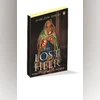 "The Lost Heer: Harleen Singh gives the long-ignored women of Punjab a voice")












