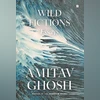
Wild Fictions: Essays
by Amitav Ghosh
Published by Fourth Estate
471 pages ₹799
This is a collection of articles and essays, and “presentations”, which the writer emphasises are something other than the first two. There is an epistolary exchange, there are comments on other writers, and there are lectures. Most have been published in journals. Therefore, it is possible that the reader may have come across some before.
At the outset, a full disclaimer: I am a fan of Amitav Ghosh’s writing, both fiction and non-fiction. The extent of his research and understanding, coupled with his fluid and evocative style of writing, makes him one of India’s greatest in my mind. The book is also dedicated to two of my favourite college lecturers, Supriya and Sukanta Chaudhuri, a double winner for me.
Thus, I started Wild Fictions with great enthusiasm and anticipation. I had not at the time realised that these were published essays, and right up front, I met disappointment.
The first section is about the environment, a subject on which Ghosh has written with scholarship and understanding and which I was keen to begin with. Yet I found that the essays were old and not updated, especially the two about the Nicobar and the Sundarbans. So much has happened since then that these essays from the early 2000s were left hanging in a time warp.
Of course, the publisher and editor should have made provision for updates. A little note at the end would have been sufficient for those with avid interest in these matters. And a positive note, they do provide context even for the present day.
Soon enough, however, you are swept up in Ghosh’s prose and insights, and you forget your minor complaints. You can laugh with his experiences in Egypt in the early 1980s, where he had to worship cows, sing Hindi movie songs, and examine the workings of Kirloskar pumps. You can marvel at the remarkable exchange with writer Dipesh Chakrabarty over definitions and understandings of racism in colonial, European and Indian contexts, taking your thinking in so many directions. You can wander once again in the dense jungle of the Sundarbans, with its mythical and real demons, going so far as to forget your early moaning. You can travel once again to the spice islands of Indonesia, and then return to the revelations of The Nutmeg’s Curse.
In a sense, and in a reversal of my first impressions, Wild Fictions takes one on a journey through Ghosh’s own travels as a writer and thinker. You could venture into his research. You could be sent in a completely different and unexpected direction — the chronicles of Indians in World War I. Ghosh touches on the racism directed at Indians and other non-whites, who were made to fight in the war, through the works of writer Santanu Das. We then travel to two extraordinary works written in Bengali. One is a biography by the 80-year-old grandmother about Captain Kalyan Kumar Mukhopadhyay, a member of the Indian Medical Service, who was in Mesopotamia and Basra, and who died in 1912, which she based on his letters. The other is the secret diary of Sisir Sarbadhikari, who volunteered as a private in an auxiliary medical unit, the Bengal ambulance corps. India’s role in World War I is a history we have only recently discovered, and Ghosh bemoans how these two writers are forgotten even in Bengal.
Readers of Ghosh’s fiction will know how deeply the sea resonates in his writing. One reward here is his research into the language of sailors of various Asian ethnicities, lumped together as “lascars” by the Europeans. From the words they left behind for us, we learn their customs and the joint legacy they have left behind today, even as they will remain nameless and faceless.
It is examining and explaining this intersection of life, nature, colonialism, oral, social, and cultural history that Ghosh does so well. He takes us into worlds we should know but don’t, are self-evident and yet not obvious. It is here that the reader will delight and revel, where familiar patterns are broken and remade to reveal something new.
Often, collections like this can be read in whatever manner the reader desires, without losing any of the essence. You dip in, read what you fancy and then skip to another part. I would not recommend this with Wild Fictions. There is a method of sorts in the planning — despite my original carping. The experience is satisfying in a linear manner because with each essay, you travel a little deeper, you learn and think a little more. Matters that are touched upon early on are expanded later.
You start with his early journey into Egypt which led to the writing of In an Antique Land. Much later in the book, you find his lecture (or “presentation”) on his struggles with the bureaucracy, which impedes research, particularly for him, in Egypt and the area. You get two different perspectives, and the distance between the two reading experiences allows better assimilation.
In all these travels, real and literary, a few themes stand out and need to shake us out of our complacency. The environment is an obvious one but from a human and humane perspective, so that those who are without rights are not forgotten and destroyed in the crusade for “pure nature”. Then there is colonialism, racism, our mixed feelings about both as Indians with our own social segregations and inbuilt cruelties. And tied inexorably into these two are the confusions of liberalism that stare at us so deeply in the face today, as the human world battles with its conscience and the severe lack of it.
The reviewer is an independent journalist who writes on the media, politics and social issues