Women who walk on the wild side

A collection of essays featuring women wildlife scientists, both past and present, serves as a tribute to their contribution to conservation efforts that might otherwise have been lost to history
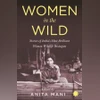
Book
Ranjona Banerji
5 min read Last Updated : Dec 05 2023 | 10:12 PM IST
Women in the Wild: Stories of India’s Most Brilliant Women Wildlife Biologists 
Author: Anita Mani
Publisher: Juggernaut
Pages: 269  
Price: Rs 499

Slowly, the stories of women in science have started emerging. Marie Curie is the rare woman whose pioneering work was acknowledged by not one but two Nobel prizes, in Physics for the discovery of radioactivity which was shared with her husband Pierre, and in chemistry for the discovery of polonium and radium. For every Marie Curie, there is a Jocelyn Bell who, as a PhD student in 1967, discovered pulsars and the Nobel went to her tutor Antony Hewish in 1974. Lise Meitner, now called the “mother of the atomic bomb” is one more example of a female scientist who was denied recognition for her discovery of nuclear fission. As ever, the honours went to the men around her.

Thus, reading Women in the Wild  is an empowering experience. It takes us on a journey across India’s women wildlife scientists and their remarkable work across our geography, environment, flora and fauna. Through the lives of these nine women, and short essays on a few others, we are introduced to the amazing work being done across India in the field of conservation.

The most poignant story remains the first, about ornithologist Jamal Ara. The writer Raza Kazmi had to do some real detective work to locate anything about Ara, who recorded birds in the Chhota Nagpur areas of Bihar and what is now Jharkhand, for the Bombay Natural History Society. India’s foremost ornithologists Salim Ali and Zafar Futehally encouraged her. Tribal freedom fighter and Olympian Jaipal Singh supported her. She also wrote articles, published a book, did talks on the radio, taught in a school —  and then vanished.

Ara’s story is a fascinating tale of courage in the face of adversity, of having a passion and fulfilling it and eventually of illness and a society that forgets all too easily. Our lack of archival material or often, sadly, of the need to archive presents huge gaps in our understanding of our own history, as Ara’s story underlines. Ara died in 1988, and the best of her work was in the 1970s. So, it’s not the distant past that we’re looking at. Thanks to Mr Kazmi’s efforts and to this book, we learn how much this one woman, despite all her societal and familial setbacks, managed to achieve.

The story of J Vijaya, the “turtle girl”,  is also one of the drive to succeed against all odds. It is important to note that these are women venturing into what were seen as male preserves, where space for women was frowned upon: In the wild, working with animals, doing field work. Across the world, from Rachel Carson to Jane Goodall, women have been called names for trying to work in wildlife biology. Recently, an important male name in turtle conservation has been exposed as a sexual predator. Bigger dangers come from humans than any wild animal.

There is so much to learn, however, and that is what makes this book fascinating. Not just that, these women are relatively unknown outside their fields, but that there are so many women who have found their calling here. They have faced angry fisherfolk, the weather and the treacheries of geography, social discomfort and yet managed to put their work first.

The book is enhanced by the literary variety provided by each essay-writer. The essayists themselves represent people involved in environment, wildlife and conservation: Raza Kazmi, Zai Whitaker, Teresa Rehman, Ananda Banerjee, Neha Sinha, Shweta Taneja, Prerna Singh Bindra, and editor and publisher Anita Mani.

From birds in Bihar and turtles along the coasts, we travel to Sikkim to track the once rich varieties of birds with Usha Ganguli-Lachungpa. For Ms Ganguli-Lachungpa, as with Ara, the Bombay Natural History Society was the launch pad. The wealth of the biodiversity in Sikkim is now known thanks largely to her efforts. Vidya Athreya has worked with the leopards from the Nilgiris to the Himalayas. Her pioneering work has led her to overturn accepted beliefs about Big Cat behaviour.

Ghazala Shahabuddin’s concentration on the Himalayan oak has also led to changes in the way the trees of the mountains are seen, and changes in preservation and conservation methods. That one particular tree can have such an impact on a forest, on wildlife, on birds is a lesson on how meticulously Nature organises itself.

Divya Mudappa is part of the Nature Conservation Foundation and studies the forest, working in South India on forest restoration. Agriculture, tea plantations, spreading human habitation have been disastrous for India’s rainforest cover and the health of our planet.

Prerna Bindra introduces us to Usha Ramakrishnan, who studies animal faeces to determine the secret lives of secret animals. This is forensic ecology if you will, how science is used to further lives and understand habitats.

Nandini Velho studies the sparrow from Arunachal Pradesh to Goa, why the sparrow population is shrinking, which has long been evident in urban areas, and what can be done. Divya Karnad works with fishing communities to understand how to push for sustainability and species conservation.

The book ends with a small section on the younger women working in wildlife biology, ecology and conservation. The names of tomorrow are imprinted today so that they will not be forgotten.

This is not a book to be read at one sitting. Nor is it necessary to read it chronologically. It is a fine tribute and salute to women who might well get lost in history without such documentation.

The reviewer is an independent journalist who writes on the media, politics and social issues


One subscription. Two world-class reads.

Already subscribed? Log in

Subscribe to read the full story →
*Subscribe to Business Standard digital and get complimentary access to The New York Times

Smart Quarterly

₹900

3 Months

₹300/Month

SAVE 25%

Smart Essential

₹2,700

1 Year

₹225/Month

SAVE 46%
*Complimentary New York Times access for the 2nd year will be given after 12 months

Super Saver

₹3,900

2 Years

₹162/Month

Subscribe

Renews automatically, cancel anytime

Here’s what’s included in our digital subscription plans

Exclusive premium stories online

  • Over 30 premium stories daily, handpicked by our editors

Complimentary Access to The New York Times

  • News, Games, Cooking, Audio, Wirecutter & The Athletic

Business Standard Epaper

  • Digital replica of our daily newspaper — with options to read, save, and share

Curated Newsletters

  • Insights on markets, finance, politics, tech, and more delivered to your inbox

Market Analysis & Investment Insights

  • In-depth market analysis & insights with access to The Smart Investor

Archives

  • Repository of articles and publications dating back to 1997

Ad-free Reading

  • Uninterrupted reading experience with no advertisements

Seamless Access Across All Devices

  • Access Business Standard across devices — mobile, tablet, or PC, via web or app

Topics :BS ReadsBOOK REVIEW

Next Story



