Economic Survey favours capping subsidised fertiliser bags to check diversion
The Survey said this will be a more effective method of financial inclusion than replacing fertiliser subsidy with cash
BS Reporter New Delhi The Economic Survey 2015-16 tabled in Parliament on Thursday suggested setting a cap on the number of subsidised bags each household can purchase as last-mile financial inclusion in rural India is poor, which would make replacing the fertiliser subsidy with cash difficult. It also called for biometric authentication at the point of sale (POS).
“Through this method, small farmers would still be able to get all their urea at subsidised prices but large farmers may have to pay market prices for some of the urea they buy.”
Further, the Survey states that the fertiliser subsidies are very costly, accounting for about 0.8 per cent of gross domestic product (GDP), which encourages overuse, that, in turn, damages the soil, undermining rural incomes and agricultural productivity.
It suggested a two-point reform package that includes decontrolling urea imports to increase the number of importers, and bringing urea under the nutrient-based subsidy regime and paying subsidy directly to farmers.
"De-canalising imports will ensure timely availability of fertilisers, and universal direct benefit transfer (DBT) to farmers based on biometric identification with physical off-take can reduce diversion of urea," it said.
The Survey said only 35 per cent, about Rs 17,500 crore of the total urea subsidy of Rs 50,300 crore, reaches the intended beneficiaries – small and marginal farmers.
At present, urea is a controlled commodity and government has fixed its selling price at Rs 5,360 per tonne. The difference between its selling price and cost of production is paid as subsidy to manufacturers.
By bringing urea under the Nutrient Based Subsidy program, domestic producers will continue to receive fixed subsidy based on the nutritional content of their fertiliser, while deregulating the market would allow domestic producers to charge market prices.
As the Centre controls fertiliser supply chain, it is a good sector to pursue JAM (Jan Dhan-Aadhaar-Mobile) for direct transfer of subsidy, it said.
The survey said the black market's effects are aggravated by further regulation.
It also mentioned that subsidised urea suffers from two types of leakages – the maximum (41 per cent) is diverted to non-agricultural uses and abroad, while 24 per cent each is spent on inefficient urea producers and large, presumably richer, farmers.
The 75 per cent subsidy on agricultural urea creates a large price wedge that feeds a thriving black market, diverting urea to industries and possibly across the border to Bangladesh and Nepal, it said.
The government budgeted Rs 73,000 crore, about 0.5 per cent of GDP, on fertiliser subsidies in 2015-16.
Nearly 70 per cent of this amount was allocated to urea, the most commonly used fertiliser, making it the largest subsidy after food.
Since 2014, important reforms have been implemented in the fertiliser sector. These include neem-coating of urea, which has likely reduced the diversion of fertiliser meant for farmers.
KEY SUGGESTIONS - Suggests capping the number of subsidised fertiliser bags a household receives
- Says fertiliser subsidies are very costly, accounting for about 0.8% of GDP
- Only 35% of the total urea subsidy reaches intended beneficiaries
- Says urea subsidy suffers from three types of leakages: About 41% diverted for non-agricultural uses and abroad, and 24% each is spent on inefficient urea producers and rich farmers
- Govt budgeted Rs 73,000 crore, about 0.5% of GDP, on fertiliser subsidies in 2015-16
- Advocates JAM (Jan Dhan-Aadhaar-Mobile) for direct transfer of fertiliser subsidy

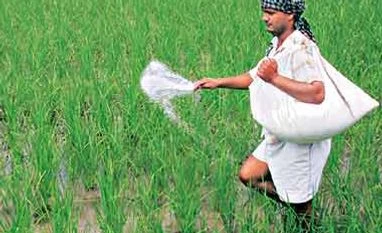 "Economic Survey favours capping subsidised fertiliser bags to check diversion")

