
Economic Survey: Food subsidies grew by 400% to Rs 5.25 trn
The steep rise in food subsidy bill was on account of Pradhan Mantri Garib Kalyan Ann Yojana introduced as part of the Economic Response to Covid-19
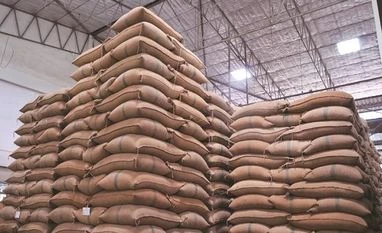 "Economic Survey: Food subsidies grew by 400% to Rs 5.25 trn")
Explore Business Standard

Associate Sponsors
Co-sponsor
The steep rise in food subsidy bill was on account of Pradhan Mantri Garib Kalyan Ann Yojana introduced as part of the Economic Response to Covid-19
Nearly 60 per cent of the increase in revenue expenditure during 2020-21 was due to increase in major subsidies. The major subsidies registered a growth of over 200 per cent in 2020-21 over 2019-20, Economic Survey 2021-22 said.
This increase was driven by almost 400 per cent growth in food subsidies from Rs 1.09 lakh crore in 2019-20 to Rs 5.25 lakh crore in 2020-21. The steep rise in food subsidy bill was on account of Pradhan Mantri Garib Kalyan Ann Yojana introduced as part of the Economic Response to COVID-19, and the pre-payment of around Rs 1.5 lakh crore of outstanding food subsidy related loans of the Food Corporation of India.
The expenditure policy during the pandemic year 2020-21 was focused on prioritisation of expenditure according to evolving situation. In the initial phase of the pandemic, the Government ensured that funds were made available for essential activities and that scarce resources were conserved for re-prioritisation.
With the easing of movement and health-related restrictions later in the year, expenditure was focused in sectors with the most positive effect on the economy, either in terms of re-kindling growth or meeting welfare needs. Second to pandemic relief, the Government placed maximum priority on productive domestic capital expenditure which has a high multiplier effect on the economy, the Survey said.
In the wake of the pandemic, the additional expenditure requirements led to a YoY growth of more than 30 per cent in the revenue expenditure of the Government in 2020-21.
Expenditures on salaries, pensions and interest payments are, by and large, committed in nature and have limited headroom for creation of additional fiscal space. The decline in salaries during 2020-21 PA was largely due to freezing of the additional instalment of Dearness Allowance to Government employees and disruptions in hiring.
(Only the headline and picture of this report may have been reworked by the Business Standard staff; the rest of the content is auto-generated from a syndicated feed.)
First Published: Jan 31 2022 | 6:34 PM IST

