The Budget has something for everyone in the list of nine categories announced by the Finance Minister. With demonetisation, consumption has declined particularly in the informal sector and in rural areas. One expects fiscal stimulus to raise consumption and investment. The measures on infrastructure will improve employment.
The allocation for agriculture and rural development is Rs 1.87 lakh crore — an increase of 24 per cent. Higher allocations have been proposed for MGNREGA, PMGSY, Prime Minister’s Awas Yojna, Swachh Bharat, safe drinking water, and so on. For example, allocation to MGNREGA has been increased from Rs 38,000 crore in 2016-17 to Rs 48,000 in 2017-18. Emphasis has been also given to asset creation under MGNREGA. Under Mission Antyodaya, 10 million people will be pulled above poverty line and around 50,000 gram panchayats will be poverty-free by 2019. All these measures are in the right direction.
One problem with the rural development programmes, as pointed out by the Economic Survey, is that welfare spending in India suffers from misallocation. The districts accounting for the poorest 40 per cent receive 29 per cent of the funds under the rural development programmes. The Sumit Bose committee on the programmes had suggested the use of SECC data and having a social registry that would allow it to monitor the well-being of the beneficiaries.
The Economic Survey has extensively discussed the Universal Basic Income (UBI). Probably, the Budget did the right thing by not mentioning it as India might not be able to afford the cost of 4-5 per cent of GDP.
India’s progress in the social sector has been much slower as compared to the GDP growth. In the Human Development Index, India ranked 136 out of 188 countries in 2015. Improvement in the quality of education and health is important for the sustainability of economic growth, jobs and human development. The Budget mentioned learning outcomes in secondary education and colleges. Recently, the deputy prime minister of Singapore cautioned about school education in India. He said, “Schools are the biggest crisis in India today, and have been for a long time. Schools are the biggest gap between India and East Asia. And, it is a crisis that cannot be justified.” The government has to take this criticism seriously and improve the quality of school education.
On health indicators, the Budget says that an “action plan has been prepared to reduce IMR from 39 in 2014 to 28 by 2019 and MMR from 167 in 2011-13 to 100 by 2018-2020”. For the welfare of women and children, the Budget has stepped up the allocation from Rs 1,56,528 crore in Budget Estimate 2016-17 to Rs 1,84,632 crore in 2017-18. The increase in allocation is an important step. However, recently, Amartya Sen expressed concern over the poor state of healthcare in India. He mentioned that countries like Bangladesh have caught up and surpassed India in many social sector indicators such as infant mortality, life expectancy, schooling of girls, child undernourishment, sanitation facilities, and so on. India spends only 1.4 per cent of GDP on health as compared to 3 per cent in China.
Also, in the social sector, outcomes are more important than allocations. The challenge is in improving the efficiency of the delivery systems. In the past, outlays have not fully translated into outcomes due to poor delivery systems. Using modern technology for the efficient delivery of programmes, simplifying procedures and greater participation of the beneficiaries can help in creating a better delivery mechanism. The use of JAM (Jandhan, Aadhaar and Mobile) would be helpful. India, which is aspiring to be a global power, should achieve higher social sector development. There are significant costs to ignoring human capital and social sector. China took a lead in promoting Millennium Development Goals. Now, India should take the lead in achieving outcomes.
The writer is the director and vice-chancellor of the Indira Gandhi Institute of Development Research, Mumbai
Read this article for free
Register to continue reading premium journalism and analysis from Business Standard.

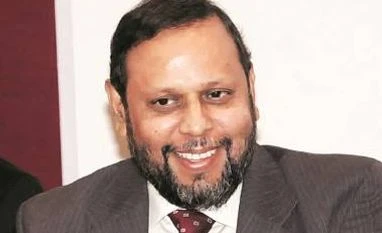 "<b>S Mahendra Dev:</b> Social sector needs more than just allocations")












 Connect with us on WhatsApp