3 min read Last Updated : Jan 28 2022 | 6:08 AM IST
Ahead of the Union Budget, exporters have sought various support measures from the government, including a production linked incentive (PLI)-type scheme for containers, tax refunds in cash, and extension of the Emergency Credit Line Guarantee Scheme (ECLGS) scheme by another year.
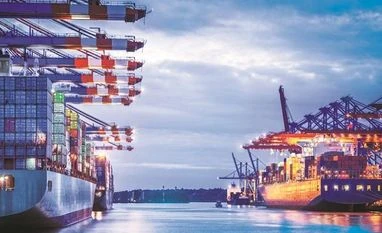
According to the Federation of Indian Export Organisations (FIEO) a PLI-type scheme can encourage domestic manufacturing of containers. Despite a healthy order book across all sectors, exporters are grappling with a bunch of challenges such as shortage of containers, a sharp increase in freight, and space constraints on ships. Such a scheme could benefit exporters, especially at a time when the government has set an ambitious target of shipping goods worth $1 trillion by 2027-28.
“We should develop an Indian shipping line of global repute. We may be remitting over $75 billion or more as freight charges this year. An Indian shipping line, which gets 25 per cent of this business, can save $17-20 billion on a recurring basis annually. This figure will increase as we move towards trillion-dollar merchandise exports. Some tax concessions may be required so that such ships are encouraged to register in India,” FIEO said in a statement.
Apparel exporters have urged the government for cash refunds instead of refunds via duty credit scrips under the Rebate of State and Central Taxes and Levies (RoSCTL), Apparel Export Promotion Council (AEPC) Chairman Narendra Goenka said.
Under the RoSCTL scheme, garment exporters claim rebates for all embedded taxes and levies paid by them. They are issued a duty credit scrip in lieu of these taxes and levies, which they can use to pay tax while importing equipment. Exporters are currently unable to get the full benefit of the scheme owing to certain market distortions.
“The value of some scrips have crashed and we are getting 80 per cent refund of our taxes, if at all we have to sell it. This is because of certain conditions making it less attractive for buyers (transferee of the scrip). Till last year, we were getting 99 per cent of the refund,” Goenka said.
AEPC has taken up the issue with the revenue, commerce, and the textile ministry and is hoping for some resolution. There is also a need to reduce the import duty on cotton, which is 10 per cent currently, said Goenka, adding it has made raw material expensive.
Exporters are also hoping for an extension of the Interest Equalization Scheme (IES) for three-five years. IES helps exporters get credit close to the international benchmark.
The scheme should be extended for one more year for seamless flow of credit to businesses, particularly as the demand for credit has gone up with an increase in input prices, transportation costs, including overseas freight and logistics disruptions. On the contrary, the value of collateral has deteriorated during Covid and thus ECLGS will provide the necessary oxygen to the industry, the industry said.