Home / Companies / News / A 'smog season' discount is another threat to Indian companies' earnings
A 'smog season' discount is another threat to Indian companies' earnings
The total economic cost of air pollution in India could have been as much as $260 billion in 2024, according to an analysis by Dalberg Advisors, which included impacts of reduced worker productivity
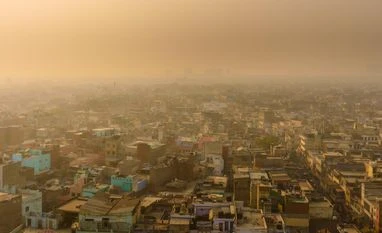
A dense layer of smog covers parts of Delhi-NCR during peak pollution season. (Photo: Adobestock)
3 min read Last Updated : Feb 11 2026 | 10:58 AM IST
By Ishika Mookerjee and Satviki Sanjay
India’s air pollution is adding another threat to company profits along with impacts on public health, with a sweep of companies pointing to the effects of pollution-related disruptions in the country’s most recent earnings season.
Executives and analysts focused on sectors from developers to retail have flagged negative consequences after several cities, including Delhi and Mumbai, grappled with construction halts and reduced footfall over November and December.
“It’s not unreasonable to think of it as being a meaningful drag on the economy,” said David Smith, senior investment director at Aberdeen Investments, which holds Indian equities. The issue can spread across “lost production days for real estate and manufacturing, lost retail demand, sick days and the broader cost of healthcare,” he said.
The term “air pollution” was mentioned in earnings releases, analyst calls or presentations of BSE AllCap Index members 988 times in 2025, the largest number of instances since 2021, according to a Bloomberg analysis. References included discussion of pollution control measures, as well as the impacts of poor air quality.
India’s pollution burden is among the highest in the world, contributing to more than a million annual deaths in the country’s north, the World Bank Group said in a report last year. In many cities, the air quality index routinely crosses into “very unhealthy” and “hazardous” categories, particularly in winter when pollutants from crop residue burning, construction dust and emissions settle closer to the ground. That typically prompts government restrictions on building activity and the movement of people and goods.
Earnings for the MSCI India Index are already projected to trail regional peers over the next year, according to data compiled by Bloomberg.
The total economic cost of air pollution in India could have been as much as $260 billion in 2024, according to an analysis by Dalberg Advisors, which included impacts of reduced worker productivity or absenteeism, premature deaths, healthcare spending and lost consumer revenue. Lower consumer spending accounted for $74 billion of the total, the report said.
In recent weeks, department store chain Shoppers Stop Ltd. said air pollution contributed to a 69% decline in net profit in the December quarter from the same period a year earlier, while quick commerce firm Eternal Ltd. pointed to extended pollution-related restrictions as a factor that slowed store construction and fit-outs.
Investors now need to factor in the impacts of “the Smog Season from Oct-Jan, which could be a revenue headwind for shopping malls and high street retailers,” ICICI Securities Ltd. analysts including Manoj Menon wrote in a Jan. 25 note.
The impact of poor air quality will also “soon affect real estate and thus it can be one of the major risks of investing in Delhi property,” Omaxe Ltd., a property developer, said in a blog post. In Delhi NCR region, Omaxe is focusing on building malls and air conditioned shopping spaces — with inbuilt air purifiers — over open-air high streets to limit the impact of smog.
Pollution restrictions have impacted construction spending in the December quarter for the past four years for real estate developer DLF Ltd., Managing Director Ashok Kumar Tyagi said in an earnings call last month.
“It could be 30 days, it could be 45 days, but effectively between one month to one-and-a-half months in the entire year does get lost,” he said.


 "A 'smog season' discount is another threat to Indian companies' earnings")

