Home / Companies / News / BPSL liquidation: What is Article 142? When can the Supreme Court use it?
BPSL liquidation: What is Article 142? When can the Supreme Court use it?
Article 142 says that Supreme Court, in the exercise of its jurisdiction, may pass such decree or make such order as is necessary for doing complete justice in any cause or matter pending before it
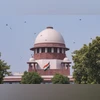
The Article 142 of the Constitution, which gives the apex court the special powers, was enacted by the Constituent Assembly on May 27, 1949. | File Photo
The Supreme Court exercised its special powers under Article 142 to order liquidation of Bhushan Power & Steel (BPSL), directing the National Company Law Tribunal (NCLT) to initiate proceedings against the company.
"In exercise of the powers under Section 33(1) IBC (Insolvency and Bankruptcy Code) and Article 142 of the Constitution of India, the NCLT is directed to initiate liquidation proceedings against corporate debtor BPSL under Chapter III of IBC," the court said.
Section 33(1) of the IBC initiates the liquidation process of a stressed company, while Article 142 of the Constitution empowers the Supreme Court to pass “any decree or order necessary for doing complete justice in any case or matter pending before it” within the country.
Under IBC, only the adjudicating authority, which is the NCLT, is empowered to order liquidation.
When did Article 142 become a part of the Constitution and what does it say?
The Article 142 of the Constitution, which gives the apex court the special powers, was enacted by the Constituent Assembly on May 27, 1949.
It says that the Supreme Court, in the exercise of its jurisdiction, may pass such a decree or make such order as is necessary for doing complete justice in any cause or matter pending before it. Any decree so passed or order so made shall be enforceable throughout the territory of India in such manner as may be prescribed by or under any law made by Parliament and, until provision in that behalf is so made, in such manner as the President may by order prescribe.
How often does the Supreme Court use Article 142?
The apex court had, in another case earlier this week, held that powers to do complete justice under Article 142 can be exercised to modify an arbitral award if it helps put prolonged litigation to an end. The court held that the powers under Article 142 have to be exercised in line with the fundamental rights. Last month, the Supreme Court's landmark ruling directing the President to decide on state bills referred by governors of states within 3 months reignited a debate about "judicial overreach" in the country.
An empirical study by IIM Ahmedabad in May 2024 has shown that the court has mentioned Article 142 or the phrase complete justice in 1579 cases between 1950 and 2023, most of them were civil cases. The study also found that the court has explicitly used its powers under Article 142 in 791 cases.
Criticism of Article 142
There have been several instances where there has been criticism of the use of Article 142. Last month, after the SC prescribed a timeline for the President to decide on matters referred by governors of states within 3 months, Vice-President Jagdeep Dhankhar criticised the judiciary for acting like a "super Parliament" and using Article 142 as a "nuclear missile against democratic forces."
Dhankhar also expressed dismay over the Supreme Court's directive requiring the President to decide on state bills within a fixed timeframe, failing which they would automatically become law.
“So, we have judges who will legislate, who will perform executive functions, who will act as super Parliament, and absolutely have no accountability because the law of the land does not apply to them,” Dhankhar said during an address at the Vice-President’s Enclave.
Former Attorney General K K Venugopal has also written in an opinion piece that while Article 142 had been deployed to do tremendous good to deprived sections, there should be some checks and balances on the use of the provision.

 "BPSL liquidation: What is Article 142? When can the Supreme Court use it?")


