DGCA, IIT audit findings put Terminal 2 on the repair runway: DIAL

Delhi Airport has three terminals: T1 with a capacity of 40 million passengers per year, T2 with 15 million, and Terminal 3 (T3) with 45 million
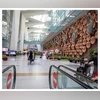
Delhi airport, Airport
Photo: Shutterstock
Deepak Patel New Delhi
4 min read Last Updated : Mar 14 2025 | 12:09 AM IST
Delhi International Airport (DIAL), which operates and manages the airport in the national capital, has halted plans for a new Terminal 4 (T4) and will instead fast-track the refurbishment of the old Terminal 2 (T2) after Directorate General of Civil Aviation (DGCA) and IIT Madras audits flagged issues with its apron and boarding bridges. DIAL Chief Executive Officer (CEO) Videh Kumar Jaipuriar revealed this in a January meeting with aviation stakeholders, Business Standard has learnt. 
These audit findings have come to light just months after the collapse of Terminal 1’s (T1’s) canopy at Delhi Airport, which resulted in the death of a 45-year-old cab driver, Ramesh Kumar, and left at least eight others injured. 
Last month, the newspaper reported that a DGCA-appointed expert committee — comprising two professors from IIT Delhi and one from IIT Jammu — found that flawed design, poor workmanship, inadequate maintenance, and major discrepancies between design and construction were likely key factors in the canopy collapse. Delhi Airport has three terminals: T1 with a capacity of 40 million passengers per year, T2 with 15 million, and Terminal 3 (T3) with 45 million. According to DIAL’s 2016 master plan, T2 was to be demolished and replaced by T4, designed to handle 40 million passengers annually. However, the collapse of T1’s canopy and subsequent investigations have disrupted this plan. 
In March last year, DIAL said T4 was expected to be operational by 2028-29. However, during a January 6 meeting, Jaipuriar said the operator is now prioritising T2’s refurbishment as a short-term solution to meet current demand. In the same meeting, an airline questioned why T4, once central to DIAL’s expansion plans, is now absent from the latest project file. 
Jaipuriar said that the “life” of T2 can be extended by a few years with just a ~120 crore investment before T4 is built, which would require high capital expenditure. 
“Currently, the master plan is under review. Inputs from airlines are being taken. If there is a requirement for T4 development after the current master plan exercise, stakeholders and the regulator will be informed and consulted,” he said. The DIAL CEO mentioned that T2’s refurbishment is not being undertaken to increase its capacity. “The DGCA audited T2 and made observations regarding apron refurbishment and boarding bridges. A structural audit has also been conducted by IIT Madras, which suggested certain improvements. DIAL is planning to continue with T2 instead of constructing a new terminal (T4) with the required refurbishments,” he explained. Jaipuriar said during the meeting that, based on DGCA’s observations and nearly 40 years of operation, T2 requires major refurbishments on the airside and terminal to remain operational. He mentioned that T2 is expected to operate for no more than five years. DIAL, IIT Madras, DGCA, and the Ministry of Civil Aviation did not respond to Business Standard’s queries regarding this matter. 
At a press conference earlier this month, Jaipuriar said renovation work at T1 would be completed by March 15, and, subject to approval from security agencies, operations are expected to begin in April.
 
Once fully operational, T1 will handle its full capacity of 40 million passengers per year. Following this, T2 will be closed for four to six months for repair work, with its entire 15-million-passenger capacity shifting to T1. 
Planned upgrades for T2 include apron refurbishment, new flooring, renovated washrooms, and replacement of boarding bridges, he mentioned. 
T3’s annual handling capacity is currently 45-50 million passengers. Jaipuriar also spoke about the project to convert Pier C of T3 from domestic to international, which will gradually shift 10 million passengers from T3 to T1. 
During the January meeting, Jaipuriar provided more details about the Pier C conversion, which will be carried out at a cost of ~70 crore. T3 comprises four piers — two domestic and two international. 
“After Pier C conversion into international, the domestic capacity of the airport would drop to 70 million (from the current 80 million passengers per year), whereas the international capacity would increase to 30 million (from the current 20 million passengers per year). This would be sufficient to accommodate the 25 million international passengers expected in 2028-29 (FY29),” Jaipuriar said during the January meeting. 
Delhi Airport can currently handle 100 million passengers per annum. However, it is handling about 73 million passengers annually at present. 
According to DIAL, by FY29, actual passenger traffic is expected to reach 95.6 million per annum. “This includes the impact of Jewar Airport’s operationalisation,” Jaipuriar mentioned at the January meeting. 
Along with the refurbishment of T2, DIAL is also upgrading the instrument landing system for one runway (RWY 10/28) by September so it can handle more flights amid low visibility.

One subscription. Two world-class reads.

Already subscribed? Log in

Subscribe to read the full story →
*Subscribe to Business Standard digital and get complimentary access to The New York Times

Smart Quarterly

₹900

3 Months

₹300/Month

SAVE 25%

Smart Essential

₹2,700

1 Year

₹225/Month

SAVE 46%
*Complimentary New York Times access for the 2nd year will be given after 12 months

Super Saver

₹3,900

2 Years

₹162/Month

Subscribe

Renews automatically, cancel anytime

Here’s what’s included in our digital subscription plans

Exclusive premium stories online

  • Over 30 premium stories daily, handpicked by our editors

Complimentary Access to The New York Times

  • News, Games, Cooking, Audio, Wirecutter & The Athletic

Business Standard Epaper

  • Digital replica of our daily newspaper — with options to read, save, and share

Curated Newsletters

  • Insights on markets, finance, politics, tech, and more delivered to your inbox

Market Analysis & Investment Insights

  • In-depth market analysis & insights with access to The Smart Investor

Archives

  • Repository of articles and publications dating back to 1997

Ad-free Reading

  • Uninterrupted reading experience with no advertisements

Seamless Access Across All Devices

  • Access Business Standard across devices — mobile, tablet, or PC, via web or app

Topics :DGCAairlinesAviation industry

Next Story


