In line with the country’s target of reaching net-zero emission by 2070, Indian climate technology, especially the aspect that relates to start-ups in the electric vehicle (EV) space, has cornered a hefty chunk of investment, despite an ongoing funding slowdown.
Given the continued governmental backing and deepening infrastructure, as the ecosystem matures, industry watchers and investors expect EV start-ups to birth India’s next unicorns.
At present, there are 970 home-grown EV start-ups operational in the country. But only one has unicorn status. Ola Electric crossed the $1-billion valuation threshold in July 2019, two years after it was founded.
EV start-ups, as many as 18 of which are in the club of soonicorns (soon to be unicorns), have emerged as potential contenders to join the unicorn ranks. These include companies like Ather Energy, Zypp Electric, Blusmart, Yulu, Log9 Materials, Altigreen, and Hero Electric.
Industry experts and venture capitalists Business Standard spoke to say the growth the industry is witnessing and the fund infusion are creating conditions for the next unicorn to come from this sector.
“Electric mobility will give rise to five or six unicorns over the next two or three years,” said Anup Jain, managing partner, Orios Venture Partners, an early-stage venture-capital firm.
“The sector is growing at a double- and triple-digit compound annual growth rate, in passenger vehicles, public shared mobility, and commercial logistics.”
EV start-ups have raised around $3.4 billion since 2021, according to the data from Tracxn, a market intelligence platform.
So far this year, these companies have raised $738.6 million, across 24 deals. Two were valued at over $100 million, outperforming many other sectors amid the current funding slowdown.
Calendar year 2022 saw investment worth $1.89 billion, across 122 deals, up over 145 per cent from the $771.1 million, through 112 deals, in the previous year.
“The first phase of green tech was focused on solar and now, clearly, EVs are a strong tailwind,” said Swapna Gupta, partner, Avaana Capital, a climate tech-focused venture-capital firm.
“We have seen large OEM (original equipment manufacturer) play as well as incumbents launching their own variants in the market. EVs present an opportunity for across-the-board innovation,” she said.
This affinity for investment has been a result of several factors.
“First, the urgent need to combat climate change has put the spotlight on sustainable mobility solutions,” said Vinay Bansal, founder, Inflection Point Ventures, an angel investment platform.
“Secondly, the global shift towards clean energy and the electrification of transportation have created a conducive environment for EV adoption. Moreover, advancements in battery technology, charging infrastructure, and supportive government policies have further bolstered investor interest in the EV sector,” he added.
Funding is not the only area in which EV start-ups have an upper hand.
“It is difficult for industry leaders who have large internal combustion engine (ICE) products to cannibalise their stuff with EV products. Start-ups that develop EV-native platforms will have advantages over ICE players shifting their platforms to EV,” said P R Srinivasan, founder and managing partner, Xponentia Capital Partners, a mid-market private-equity/venture-capital firm.
Start-up entrepreneurs, he said, have an edge in innovative areas like chips and software.
Climate tech start-ups, including EV makers, are, however, known to have longer gestation periods due to high capex and infrastructure demands, which can impact commercial returns. Regardless, the EV realm has been largely immune to funding pangs.
While a longer gestation period can pose funding challenges, the increasing investor interest and the potential for future returns suggest that funds will continue to flow into the sector.
Although the operating costs of EVs are much lower than those of ICE vehicles, upfront costs remain much higher. To offset this, the government introduced the Faster Adoption and Manufacturing of Electric Vehicles (FAME) scheme in 2019 to provide incentives and subsidies to EV makers.
The Centre, however, last month, announced a subsidy cut under the FAME II scheme for two-wheelers. Consequently, companies like Ola and Ather hiked their prices. Nonetheless, this is not expected to affect long-term growth in the sector.
India’s two-wheeler market presents a significant opportunity for EV adoption. Two-wheelers, which take less time to be charged than four-wheelers do, can drive growth.
“While the subsidy cut may temporarily slow sales, it also incentivises EV manufacturers to focus on cost reduction and innovation to drive long-term growth,” said Bansal.
Despite the progress, EV adoption in India faces barriers.
Limited charging infrastructure, high battery production and costs, range anxiety, and consumer scepticism remain key challenges. Additionally, experts say addressing issues related to grid capacity, power stability, and standardisation will be crucial for the widespread adoption of EVs.

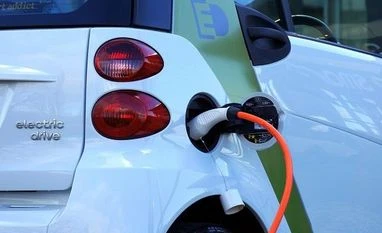 "Climate tech push: EV start-ups set to power India's next unicorn club")












 Connect with us on WhatsApp