India's much-maligned factory floor gets a radical deep-tech makeover

Deep-tech startups target $1.3 trillion manufacturing goal with robotics, AI, and precision engineering, as Indian manufacturing gets a much-needed technological reboot
Robotics
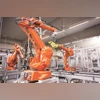
India’s manufacturing ecosystem is undergoing a fundamental shift — from legacy assembly to high-precision. | Representational
Peerzada Abrar Bengaluru
5 min read Last Updated : Aug 06 2025 | 4:57 PM IST

Don't want to miss the best from Business Standard?

Inside a climate-controlled facility in Chennai, a robotic arm delicately places carbon fibre strands with micron-level precision — a process that until recently required the time-lined hands of traditional craftsmen working for hours to achieve the same result. Fabheads' automated manufacturing system guides each fibre into position, eliminating the human error that has plagued composite manufacturing for decades and reducing material waste by 20 per cent in the process.
 
This scene represents a broader transformation sweeping India’s $500-billion manufacturing sector from the low-cost assembly model that has defined Indian production for decades. As the industry races towards a projected $1.3-trillion output by FY30, startups like Fabheads — founded by former engineers from the Indian Space Research Organisation (Isro) — are developing proprietary deep-tech solutions that compete globally on innovation rather than price alone.

A seismic shift in manufacturing identity

India’s manufacturing ecosystem is undergoing a fundamental shift — from legacy assembly to high-precision, IP-led, engineering-first production. This transformation is driven by a confluence of favourable macros, robust policy incentives, and a growing cohort of deep-tech entrepreneurs building for global markets from India.
 
Startups are emerging as specialised players in high-value niches that were previously dominated by global incumbents.
 
According to venture capital firm Accel, which backs several advanced manufacturing firms including Fabheads, India is at the cusp of a manufacturing inflection point shaped by three reinforcing dynamics.
 
The first is strategic supply chain reorientation, as the global China+1 strategy evolves from tactical consideration to strategic imperative. With multinationals seeking resilient and diversified supply chains, India is emerging as a key beneficiary.
 
Second, capital inflows and policy support are accelerating momentum. Over $25 billion in Production Linked Incentives (PLI) and ₹11 trillion in public capex are being directed toward sectors such as semiconductors, precision engineering, and defence electronics. Each rupee of public capital, Accel notes, is catalysing ₹2.5–₹3 in private investment.
 
Third, India’s deep and cost-efficient talent pool is reinforcing its global competitiveness. The country produces over 1.5 million engineers annually, offering talent at 40 per cent lower cost than China and up to 70 per cent below the US — without compromising on global quality standards.
 
India’s manufacturing output, which stood at $471 billion in FY24, is projected to grow to $1.3 trillion by FY30, expanding at a CAGR of 18 per cent. Increasingly, this growth is expected to come from advanced manufacturing, not traditional low-cost assembly, according to Accel.
 
Prashanth Prakash, partner at Accel, said: “India’s next global champions may not be building apps, but precision motors, embedded chipsets, and diagnostics platforms built to export.”

Precision replaces scale

Fabheads, for example, has patented customised automated manufacturing systems that merge traditional craftsmanship with cutting-edge robotics. It is one of only seven companies globally to automate carbon fibre manufacturing — a process so intricate that most manufacturers still rely on manual labour. The company’s robotic systems reduce production costs by 50 per cent and cut rejection rates by 20 per cent.
 
“India’s manufacturing story is no longer just about scale, it’s about precision, defensibility, and design-first thinking,” said Prakash.
 
Fabheads was founded in 2015 by Dhinesh Kanagaraj and Abhijeet Rathore, both former Isro engineers who worked on GSLV Mk-3 launch vehicles and satellite structures. The company recently raised funding to scale operations and plans to open a new facility in Bengaluru, targeting aerospace and international markets.
 
“Having experienced the limitations of manual composite manufacturing firsthand during our time at Isro, we knew an innovative disruption was necessary — not incremental,” Kanagaraj said recently. “We are uniquely positioned to lead innovation in the composite manufacturing space both domestically and globally.”

Advanced innovation across verticals

In aviation, Nabhdrishti Aerospace focuses on propulsion and power generation systems that rival those of established global aerospace suppliers, while Sarla Aviation is targeting urban air mobility and advanced aircraft systems.
 
Founded in 2023 by Rohit Chouhan, Arjun Srivatsa, and Antanu Sadhu, Nabhdrishti is developing indigenous, fuel-flexible propulsion systems for UAVs, hybrid electric VTOLs, urban air mobility platforms, and distributed power systems. The team has over 50 years of combined experience from organisations such as DRDO’s Gas Turbine Research Establishment, GE, and Rolls-Royce, and holds more than 55 US patents in turbine technology.
 
Earlier this year, Chouhan said: “India’s dependence on imported propulsion systems has long constrained our aerospace ambitions. Our aim is to change that paradigm.”
 
In materials science, Scimplify is leveraging artificial intelligence to optimise material formulations, reducing development cycles from months to weeks. The startup raised $40 million in Series B funding earlier this year to expand its global footprint. It currently exports to 16 countries and is growing its presence in life sciences, crop sciences, and industrial chemicals.
 
Founded in mid-2023 by Salil Srivastava, Sachin Santhosh and Dheeraj Dhingra, Scimplify offers global buyers a plug-and-play model that allows access to India’s cost-efficient production base without setting up dedicated infrastructure.

A digital layer for manufacturing

Zetwerk, meanwhile, has built a digitised precision manufacturing network servicing global supply chains in infrastructure, energy, and defence. It has effectively become the operating system for distributed manufacturing. The Bengaluru-based firm was valued at $3.1 billion in its last funding round and is now preparing for a $500 million IPO at a targeted valuation of $5 billion, according to sources.

One subscription. Two world-class reads.

Already subscribed? Log in

Subscribe to read the full story →
*Subscribe to Business Standard digital and get complimentary access to The New York Times

Smart Quarterly

₹900

3 Months

₹300/Month

SAVE 25%

Smart Essential

₹2,700

1 Year

₹225/Month

SAVE 46%
*Complimentary New York Times access for the 2nd year will be given after 12 months

Super Saver

₹3,900

2 Years

₹162/Month

Subscribe

Renews automatically, cancel anytime

Here’s what’s included in our digital subscription plans

Exclusive premium stories online

  • Over 30 premium stories daily, handpicked by our editors

Complimentary Access to The New York Times

  • News, Games, Cooking, Audio, Wirecutter & The Athletic

Business Standard Epaper

  • Digital replica of our daily newspaper — with options to read, save, and share

Curated Newsletters

  • Insights on markets, finance, politics, tech, and more delivered to your inbox

Market Analysis & Investment Insights

  • In-depth market analysis & insights with access to The Smart Investor

Archives

  • Repository of articles and publications dating back to 1997

Ad-free Reading

  • Uninterrupted reading experience with no advertisements

Seamless Access Across All Devices

  • Access Business Standard across devices — mobile, tablet, or PC, via web or app

Topics :ISROIndia manufacturing growthstartups in IndiaRoboticsartifical intelligence

Next Story



