Soon after India and the United Kingdom (UK) signed the free trade agreement (FTA) on Thursday, industry leaders cheered the move. Sunil Bharti Mittal, chairman of Bharti Enterprises and co-chair of the India-UK CEO Forum, and Chandrajit Banerjee, director general, Confederation of Indian Industry (CII), who were in Chequers (near London) for the FTA signing as part of Prime Minister Narendra Modi’s entourage, spoke to Nivedita Mookerji on the various aspects of the deal. Edited excerpts from a Zoom conversation:
Who’s the biggest winner in this FTA?
Sunil Bharti Mittal (SBM): It’s a win win for both sides with a balanced outcome after a very long and hard negotiation…. I think you will now see a lot of British companies getting much more confident about investing in India, working in India, setting up their bases in our country.
The Prime Minister spoke today of taking the bilateral trade from $56 billion to $112 billion in five years—It’s an ambitious target, but achievable, given the way this FTA has been set up. So I would say it's hard for FTAs to be agreed. Your ‘asks’ and their ‘gives’, their ‘asks’ and our ‘gives’--there's always a resistance on both sides…. But over here, you don't see any major resistance, finally, because both have come to an agreement which is balanced.
Chandrajit Banerjee (CB): There are many sectors from the Indian side which will benefit. From both manufacturing as well as services. But if you see some of the critical sectors, like textiles and apparels, that opens up a huge market. In the pharma sector also, we are getting huge opportunities. The small and the mid size companies across the engineering area as well as auto components will also gain. Plus, the labour intensive sectors like leather and footwear will benefit due to the increased access to the UK market.
Will there be a ripple effect of the UK agreement on the US deal that is in the works?
SBM: I think closing of this deal is important for India. It does add strength to India's hand. But the US is altogether different. It’s the largest market in the world,… It's good to have this one out of the way. Now you will have one less trade deal to work on and the negotiators will be able to concentrate more on the next one. The one with the EU is expected to be done in the next few weeks or months.
As for the US, some interim deal should be done. It's easy for you and I to discuss it here, but there are new developments in the US on a daily basis.
CB: In some ways, the UK FTA is a signal to the world that India has been entering into large number of trade agreements with different countries, both in the eastern hemisphere and now in the western hemisphere, and the Indian industry is competitive. It also shows that India provides not just opportunities to companies to come and participate in the Indian economy in terms of investments, but our companies themselves are investing strongly in other economies…. So, this is indicative of balance of power.
Mr Mittal, there’s a full chapter on telecom in the deal. Any significance?
SBM: Well, I'm delighted to see that chapter, as you can imagine. Both countries will be having open doors for telecom in terms of foreign direct investment (FDI). As you know, Vodafone had 100 per cent in India…. What the FTA will do is to take the agreed position to a hard wired position.
Do you think this deal will help in the making of global brands? Hasn’t that been a gap for the Indian industry?
SBM: I would say yes…. You have to have large corporations first, and then you go global. That's been the norm world over. And the western world has had that privilege for decades, because they became rich much before us. I think India is on that path now, and you will start to see Indian MNCs emerging on the global stage. Tatas have already been there with Jaguar Land Rover (JLR) and others. I think we can count ourselves (Airtel) as that. There are a few other companies which are on that path to some extent--Godrej, Mahindras, for example.
For your group, what does this deal mean?
SBM: It validates what we've been doing for so many years in sectors such as telecom, real estate and hospitality. We also have the satellite deal—OneWeb--with the British government.
So this just strengthens our hand to do more between the two countries. Perhaps, we can pick up some technologies here that we can take back to India and use the technology back home in the Indian market, which is much bigger. We remain agile. We are looking at opportunities. But today, I stand in front of you as the co-chair of the Indian business leaders’ delegation, the CEO forum, and my job is to work on the larger piece. In this capacity, I have to see that Indian industry and the British business leadership can combine their minds to take our trade to the level that has been set by the two partners.
What are your thoughts on utilisation of trade deals? In many cases, we've seen that we are not able to utilise the deals that are signed. How can the industry help?
SBM: This is a rare opportunity where both sides can gain from combining strengths of each other. There’s high degree of complementarity between the two nations. And that really makes a very strong, powerful platform, or a bridge, if I may say, between the two countries. You're right that not all trade deals result in tremendous amount of uptick in trade and services or investment. I think this is different. In this case, I feel in the first year itself, as soon as this treaty is ratified, we will see the direction of trade going up in the upwards trajectory.
CB: This trade agreement is designed to work for both countries, be it for bilateral investment or bilateral trade. Whether it’s small or mid-sized companies, technology, education or anything else, we (India-UK business forum) can form different groups and see to it that we are able to identify the enablers. So there should be possibilities of constructive ways of working towards taking advantage of this trade agreement.
Is there anything in this FTA that you think could have been done better? Any gaps?
SBM: Well, there’s always something that one feels could have been better. Some parts of the industry may feel that certain things could have been better handled. But by and large, I don't think there is any reason to complain. There may be somebody unhappy out there, but, you know, in a trade deal of this nature, it is rare to get to a win win situation like the one we are seeing in this one.
What is the overall mood of the industry?
SBM: Very good. Industry is very upbeat.
CB: I think what we have seen is an amazing partnership between the government and the industry. I think that collaborative framework is going to be a key factor as we move ahead, when industry is taken along and consulted. That collaboration should work to see that FTAs are working in a win win way.

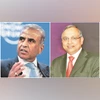 "FTA with UK adds strength to India's hand in other deals: Sunil Mittal")


