NIR BARKAT, Israel's minister of economy, was in India this week to promote bilateral trade. Barkat, a former paratrooper in the Israel Defense Forces, met ministers, chief executives and representatives of industry associations to explore how the two countries' companies could collaborate. Barkat, in an interview with Shivani Shinde and Dev Chatterjee in Mumbai, talked about how Israel promotes business and its target of $1 trillion exports in the next two decades. Edited excerpts:
What steps is Israel taking to make its 10,000 startups successful?
The mentality or DNA of an Israeli is to never lose and that is the DNA of our startups too. When we come up with a new idea, we have to be successful. We will make sure of opening every door to make it happen. And when doors are closed, we will enter via windows or tunnels but we have no other option but to be successful.
What are the main takeaways from your visit to India?
Many businesses in India have very good relations with Israel. One of the companies we met was 63 Moons which is into cybersecurity, and they are collaborating with Israel companies. We have 860 companies in the space of defence and cybersecurity. Israel is well known for cybersecurity innovation and we are looking for collaborations in this field.
How do you plan to do that?
We have been working with Prof. Michael Porter of the Harvard Business School and they have mapped out competitive clusters in Israel. This is not just about companies, but connection and access to research, academic tie-ups and infrastructure. We are accelerating the strength of these clusters to make it work easier for global collaboration.
I am amazed at the scope and scale of the growth of India, and the strength of Indian technology developing. As Israel and India have good relationships and trust, we have big opportunities. We also welcome Indian labour to Israel. At present we have 12,000 Indians working in Israel. We had around 120,000 Palestinians working for us so far. After the October 7 attack (by Palestinian group Hamas), we want to replace Palestine labour with labour from friendly countries. The average salary in Israel is $54,000 compared to $2000 in India. We are looking to hire around 200,000 people in Israel and we would welcome both skilled and unskilled labour from India to work in Israel.
Artificial intelligence (AI) is the world's new buzz word. How are you planning to build on Israel’s capabilities in the IT sector?
We have learned from the cluster approach that we need to create an AI cluster. Israel has 10,000 startups. In the digital world, we are ready to open up our digital records for research and development.
Soon after the Adani Group acquired Haifa Port, war broke out between Israel and Hamas. How do you plan to protect Indian investments in Israel?
There is no difference between an Israeli business and a foreign business in Israel. We have the same level of security for all. In the last quarter, we saw 3.8 per cent growth in trade despite security challenges. Israel is very resilient. Unfortunately we were caught by surprise when Hamas attacked on October 7 last year, but we have regrouped and fought back.
Israel would make Iran and its proxies pay. They, along with Qatar, fund terror all over the world.
How do you look at US President-elect Donald Trump's statement asking Hamas to release all Israeli hostages?
The very clear message sent by President-elect Trump is that we will be bad with the bad guys and good with the good guys. This is the new world order, which is a good thing. We have seen how different countries have aligned to the new order. There is a clear division between countries who support terror and others who are democratic states, and those who want to destabilise countries, and those who support peace and stability.

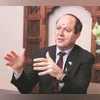 "India and Israel on right side of the US' equation: Minister Nir Barkat")












