Home / Economy / News / Cargo at state-owned ports grew by 4.4% to 855 mmt in FY25, shows data
Cargo at state-owned ports grew by 4.4% to 855 mmt in FY25, shows data
According to the provisional data, Deendayal Port or Kandla Port and Paradip Port in Odisha handled the highest cargo out of all major ports at 150 mmt each
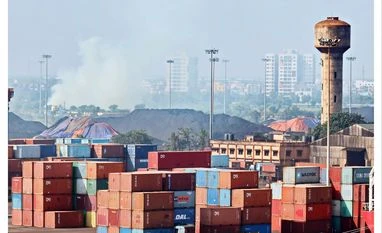
Kandla Port, which had lost a major share of its cargo due to government restrictions on non-basmati rice in 2023-24, recovered sharply, recording the highest growth out of all major ports at 13.4 per cent | Photo: Shutterstock
Amid the government’s infrastructure expansion push, cargo at state-owned ports of India (also called major ports) increased by 4.35 per cent in 2024-25 to 855 million metric tonnes (mmt), officials aware of the data said.
The provisional estimates of the Indian Ports Association show that most of the 12 major ports recorded growth above the average of 4.4 per cent, while the Shyama Prasad Mookerjee Port in Kolkata and Mormugao Port in Goa recorded contractions in their cargo handling.
According to the provisional data, Deendayal Port or Kandla Port and Paradip Port in Odisha handled the highest cargo out of all major ports at 150 mmt each.
Paradip Port, which handles the largest volumes of coastal cargo in India — particularly coal — recorded a cargo volume growth of 3.5 per cent.
Kandla Port, which had lost a major share of its cargo due to government restrictions on non-basmati rice in 2023-24, recovered sharply, recording the highest growth out of all major ports at 13.4 per cent.
Jawaharlal Nehru Port Authority (JNPA), which is seen as the primary gateway to India for container movement, saw a growth of 7.4 per cent in cargo handled to 86 mmt.
The central government has been attempting to improve cargo handling capacity at major ports, with port-related congestion contributing to India’s high logistics costs.
Experts have pointed to a reduction in thermal coal imports at major ports for the subdued volumes, while crude oil cargo imports have primarily taken place via non-major ports.
Meanwhile, container trading prices, which had seen a sharp rise in 2024 and caused the central government to step in to protect importers and exporters from the price impact, have sharply moderated, falling by nearly 50 per cent between January and April to $2,168 per 40-ft container, according to the Drewry World Container Index.

 "Cargo at state-owned ports grew by 4.4% to 855 mmt in FY25, shows data")


