Amid the ongoing talks for a trade deal between India and the United States (US), the marine and aquaculture sector saw two crucial developments in the past few days.
Firstly, the signing of the landmark trade deal between India and the United Kingdom (UK) has opened the door for the lucrative European market for India’s seafood and marine exports.
In the second one, a memorandum of understanding (MoU) was signed with Maldives during Prime Minister Narendra Modi’s recent visit to Male. A major component of the pact deals with joint investments in infrastructure for the marine sector.
The US is India’s biggest destination for seafood exports but shipments to that country have been under a cloud for the past few months due to uncertainty over tariffs.
According to a statement issued by the Department of Animal Husbandry Dairying and Fisheries (DaHD) a few days back, under the India–UK Comprehensive Economic and Trade Agreement (CETA), all fish and fisheries commodities falling under the UK tariff schedule categories marked ‘A’ now enjoy 100 per cent duty-free access from the date of entry into force of the agreement.
Presently, India’s major seafood exports to the UK comprise mainly Vannamei shrimp (Litopenaeus vannamei), frozen squid, lobsters, frozen pomfret, and black tiger shrimp.
These products previously attracted tariffs ranging from 0 per cent to 21.5 per cent, all of which are now removed, substantially improving cost competitiveness in the UK market.
“However, products under HS 1601 (sausages and similar items) remain excluded under staging category ‘U’ and receive no preferential treatment,” the official statement said.
In 2024-25 (FY25), India’s marine exports to the UK were valued at $104 million (₹879 crore), with frozen shrimp alone contributing $80 million (77 per cent).
However, India’s share in the UK’s $5.4 billion seafood import market stands at just 2.25 per cent.
“With CETA now in force, industry estimates project a 70 per cent surge in marine exports to the UK in the coming years,” the government statement said.
“We firmly believe this deal will accelerate rural employment, women’s participation in agri-processing, and value addition in India’s animal protein ecosystem. It is a step forward for inclusive, export-driven agricultural growth,” said Divya Kumar Gulati, chairman, Compound Livestock Feed Manufacturers Association (CLFMA) of India.
Overall, India’s total seafood exports in FY25 reached $7.38 billion (₹60,523 crore), amounting to 1.78 million metric tonnes, the statement said.
Under the MoU with Maldives, the neighbouring country will scale up its fish processing capabilities by investing in cold storage infrastructure and strengthening the aquaculture sector through hatchery development, improved production efficiency, and diversification of cultured species.
“The partnership aims to promote sustainable tuna and deep-sea fisheries, strengthen aquaculture and sustainable resource management, foster fisheries-based eco-tourism, and support innovation and scientific research across both countries,” an official statement said.
According to official documents, the fisheries sector in Maldives relies heavily on tuna, with skipjack tuna (Katsuwonus pelamis) and yellowfin tuna (Thunnus albacares), making up 98 per cent of the total catch.
In 2015, the fisheries sector employed 11 per cent of the labour force in Maldives. By 2021, it contributed approximately 6 per cent to the country’s annual GDP.
Maldives also has one of the highest fish consumption rates globally, with an annual per capita fish consumption of 181 kilograms.
Furthermore, fish and fish products make up more than 90 per cent of the total exports from the country indicating the significant dependence on this resource, an official statement said.

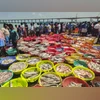 "Fisheries and aqua sector see big boost from UK trade deal, Maldives MoU")











