Gas to biofuels: India's demand sets agenda for global energy business

Country commits to increasing LNG imports as it separately invests in clean energy
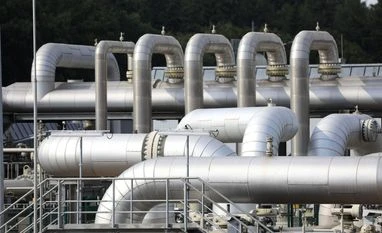
Natural gas, pipework
News agencies reported Qatar plans to sell more gas to India. The country is the world’s largest seller of natural gas and India one of the biggest potential markets | Photographer: Krisztian Bocsi/Bloomberg
Subhomoy Bhattacharjee New Delhi
4 min read Last Updated : Feb 07 2024 | 12:10 PM IST
When Prime Minister Narendra Modi said India will increase its share of natural gas in the primary energy mix to 15 per cent from 6 per cent, it caught attention at the India Energy Week (IEW) conference in Goa on Tuesday.

News agencies reported Qatar plans to sell more gas to India. The country is the world’s largest seller of natural gas and India one of the biggest potential markets. In December, India imported 1.8 million tonnes of liquified natural gas (LNG) – 12 per cent more year-on-year, according to the Petroleum Planning and Analysis Cell of the petroleum and natural gas ministry.

India’s dependence on natural gas is significant as the crisis in the Red Sea has a direct impact on imports. LNG is carried in huge slow-moving vessels that are soft targets for drone or missile attacks in the narrow strip of water. India usually imports one tanker every month to feed its gas economy, but going by Modi’s statement the number would rise. 

It is news like that draws big oil and gas companies to the second IEW which has 900 exhibitors, a 30 per cent increase from the first edition. As many as 350 global companies and ministers of various governments are attending the event. “India Energy Week has become a cornerstone for international energy dialogues in just two years,” said Hardeep Puri, petroleum and natural gas minister, at the start of the event.

While there is no doubt that the global energy sweepstake has shifted to Asia, the event highlights India’s role in the global market as the third largest importer of oil and fourth largest of LNG. All leading importers of energy are in Asia: China, Japan, South Korea and India. All of them have an annual energy conference where India is the new major entrant.

READ: India ranks fourth in the world in Renewable Energy Installed Capacity says PM

For energy majors, India is a rare place to hear good news at. The country’s primary energy demand is expected to double by 2045, surging from 19 million barrels of oil per day to 38 million barrels. In gas, India expects to get around $7 billion in investment in 5-6 years. India’s Adani Group, which runs several city gas distribution networks, plans to focus on energy infrastructure. “The transformation we have seen is incredible in the energy world in India," Simon Flowers, chairman and chief analyst of Wood Mackenzie, UK, told the media at IEW.

India will wish to know the interest among foreign companies to explore for oil and gas in the country. Bids for the ninth round of the Open Acreage Licensing Policy could be extended beyond February if companies need more time to study the data, a government source said.

As India says it will import more gas, it is emphasising on renewables too. The Interim Budget announced measures for rooftop solar and at the IEW Modi spoke about the role of Biofuels Alliance. “Bharat has begun 20 per cent ethanol blending at over 80 retail outlets. Presently, we are replicating this initiative at 9000 outlets nationwide,” he said.

READ: $14 trillion investment needed by 2045 to meet global energy demands: Opec

Sourav Mitra, director – consulting at CRISIL Market Intelligence and Analytics, said ethanol blending will help India in reducing fuel imports. “Financial assistance has been announced for biomass procurement, which will provide impetus to the growth of the biofuels sector. Phased mandatory blending of compressed biogas (CBG) in compressed natural gas (CNG) for transport and piped natural gas for domestic purposes has been mandated, which will further boost the growth of CBG plants in the country. This should enhance production of CBG, thereby saving on imported gas”. Writing on a blog post recently, Gautam Adani noted "The decrease in solar costs can be replicated with green hydrogen. This shift will help India achieve energy security and improve air quality in its cities".

Those are some of the strong spinoffs India expects from the week-long IEW. 

One subscription. Two world-class reads.

Already subscribed? Log in

Subscribe to read the full story →
*Subscribe to Business Standard digital and get complimentary access to The New York Times

Smart Quarterly

₹900

3 Months

₹300/Month

SAVE 25%

Smart Essential

₹2,700

1 Year

₹225/Month

SAVE 46%
*Complimentary New York Times access for the 2nd year will be given after 12 months

Super Saver

₹3,900

2 Years

₹162/Month

Subscribe

Renews automatically, cancel anytime

Here’s what’s included in our digital subscription plans

Exclusive premium stories online

  • Over 30 premium stories daily, handpicked by our editors

Complimentary Access to The New York Times

  • News, Games, Cooking, Audio, Wirecutter & The Athletic

Business Standard Epaper

  • Digital replica of our daily newspaper — with options to read, save, and share

Curated Newsletters

  • Insights on markets, finance, politics, tech, and more delivered to your inbox

Market Analysis & Investment Insights

  • In-depth market analysis & insights with access to The Smart Investor

Archives

  • Repository of articles and publications dating back to 1997

Ad-free Reading

  • Uninterrupted reading experience with no advertisements

Seamless Access Across All Devices

  • Access Business Standard across devices — mobile, tablet, or PC, via web or app

Topics :Narendra ModiBiofuelnatural gasrenewable energy

Next Story



