
India, EU free trade agreement includes model mediation procedures
These FTA texts may undergo further modifications as a result of the process of legal revision/ scrub. The texts will be final upon signing
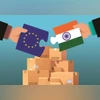 "India, EU free trade agreement includes model mediation procedures")
WebinarsNew
Deep DiveNew
Explore Business Standard
These FTA texts may undergo further modifications as a result of the process of legal revision/ scrub. The texts will be final upon signing
The free trade agreement (FTA) between India and the EU has included an annexure for mediation for a mutually-agreed solution to a dispute through an expeditious procedure with the assistance of a mediator.
According to the text of the FTA, an annexure on 'model mediation procedures' has been included in the agreement, the conclusion of which was announced on January 27.
The pact is expected to be signed after legal scrubbing. It may be implemented next year.
These FTA texts may undergo further modifications as a result of the process of legal revision/ scrub. The texts will be final upon signing.
"A Party (India or EU) may at any time request to enter into a mediation procedure with respect to any measure by a Party alleged to adversely affect trade between the Parties," the text said, adding that the request shall be sufficiently detailed to present the concerns of the requesting side clearly and shall identify the specific measure at issue; and the adverse effects that the requesting party considers the measure has or may have on trade between the two sides.
However, it added that the mediation procedure may only be initiated by mutual agreement of the two sides.
Regarding the selection of a mediator, the text said, if the two sides are unable to agree on the mediator within the specified time period, the request for mediation "shall be regarded as rejected".
"The mediation procedure shall take place in the territory of the party to which the request was addressed, or by mutual agreement in any other location or by any other means," it said.
It added that the two sides shall endeavour to reach a mutually agreed solution within 60 days after the appointment of the mediator.
During the mediation procedure, it said, India and the EU may also consider possible interim solutions.
According to the text, there is a separate chapter on "Dispute Settlement".
"The objective of this Chapter is to provide an effective and efficient mechanism for the avoidance or prompt settlement of any dispute arising between the Parties concerning the interpretation and application of this Agreement, with a view to reaching, where possible, a mutually agreed solution," the text read.
It also said the "Parties may at any time agree to undertake an alternative method of dispute resolution, such as good offices, conciliation or mediation, with a view to facilitating the finding of a mutually agreed solution to a dispute regarding any measure alleged to adversely affect trade between the parties".
India and the European Union (EU) on January 27 announced the conclusion of negotiations for the free trade agreement, described as 'mother of all deals', under which 93 per cent of Indian shipments will enjoy duty-free access to the 27-nation bloc, while import of luxury cars and wines from the EU will become less expensive.
The deal, concluded after negotiations spanning about two decades, will create a market of about 2 billion people across the world's fourth-largest economy, India, and the second-largest economic bloc, the EU. Taken together, India and the EU account for 25 per cent of the global GDP and one-third (about USD 11 trillion) of international trade (about USD 33 trillion).
As per the text, there are 20 chapters in the agreement.
There is also a chapter on digital trade. Specific provisions under this include promoting paperless trading, and cooperation on regulatory and technical issues.
(Only the headline and picture of this report may have been reworked by the Business Standard staff; the rest of the content is auto-generated from a syndicated feed.)
First Published: Feb 27 2026 | 10:16 PM IST


 Connect with us on WhatsApp