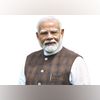
India is a stabilising force in a world marked by geopolitical churn and economic uncertainty, said Prime Minister Narendra Modi in a message to the Global Economic Cooperation (GEC) 2026 conference in Mumbai.
“As the world looks for steady leadership in uncertain times, India stands out as a beacon of hope,” Modi said on Tuesday, citing the country’s high growth and low inflation. India has become “a confident and credible voice of the Global South, shaping global conversations and contributing to a more balanced and inclusive world order.” Digital public infrastructure has enabled India to take welfare “to the maximum number of people, leaving none behind, with transparency and accountability.”
Modi described the GEC platform as an opportunity for cooperation. “The GEC conference can be a vital bridge between economies, connecting ideas, capital and innovation, thereby laying the foundation for a more cooperative and interconnected global economic future,” he said.
Jaishankar’s warning
Such optimism was set against an assessment of how sharply the world is changing. External Affairs Minister S Jaishankar told the conference that the world has entered “a volatile and uncertain era, possibly the most turbulent in living memory” and long-standing assumptions are being questioned across strategic, political, economic and technological domains.
“The established global order is clearly changing before our very eyes,” Jaishankar said. “Replacements are hard to create and we appear to be headed for a long twilight zone. This will be messy, risky, unpredictable, perhaps even dangerous.” In this environment, countries are increasingly witnessing the “weaponisation of production, weaponisation of finance, leveraging of market shares and tightening of export controls”.
Jaishankar argued that de-risking and diversification are no longer optional. “The argument for de-risking across the entire spectrum, from sourcing to production and to markets, is becoming more compelling by the day,” he said, adding that India’s response has been to build national capabilities while engaging partners “from a position of strength.” Economic security is best served through self-reliance combined with trusted partnerships.
Maharashtra Chief Minister Devendra Fadnavis linked global recalibration to India’s economic geography, placing Mumbai and his state at the heart of the country’s strategic ambitions. “Global trade growth is undergoing a major upheaval,” Fadnavis said. “Supply chains are reorganising. Strategic sectors — semiconductors, energy, food, rare earths, AI — are now embedded in national security doctrines. Capital flows are increasingly guided by geopolitical alignment, not just returns.”
“This is the era of economic statecraft,” he said, adding that “in this era India’s rise is not accidental — it is structural.” Maharashtra is central to India’s rise. “If India is a story, Maharashtra is its primary balance sheet,” he said, citing the state’s contribution of about 14–15 per cent to India’s GDP, nearly 20 percent of industrial output, and over 60 per cent of container traffic through ports. Mumbai offers “depth, transparency, regulation and scale” at a time when financial resilience has become critical.
Industry leaders said global business is adjusting to a fractured, risk-conscious world. Baba Kalyani, chairman and managing director of Bharat Forge, said recent global forums have underlined that the world is facing a rupture and it is not merely in transition. “Businesses, governments and societies are staring at uncertainties and some massive changes that are beginning to take shape in the world order today,” he said.
For global manufacturers, stability matters as much as efficiency. “If there is one market, one country that offers stability, growth and resources, it is India,” said Kalyani, echoing the Prime Minister’s message. India, he added, is well placed to act as a “connector economy,” offering scale, speed and resilience as companies look to diversify supply chains rather than concentrate risk.
Across the day’s speeches, a common message emerged: As globalisation gives way to calibrated interdependence, trust is becoming the decisive factor. Whether through diplomacy, capital markets or manufacturing, India is pitching itself not just as a destination for growth, but as a partner that can be relied upon in an increasingly uncertain world.

 "India shifts from growth story to trusted global partner, says PM Modi")

