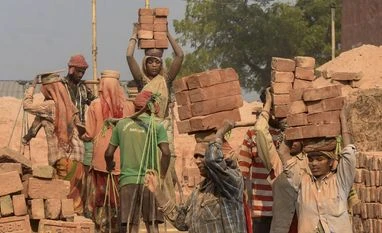
India-Pakistan tensions: Back home, border area workers wait and watch

With tensions now subsiding since the ceasefire between the two countries on May 10, those still posted there are breathing a sigh of relief after an anxious period punctuated by blackouts and sirens

Labourers, Labourer. Labour Day
Since the Pahalgam terror attack, and through the subsequent border skirmishes, the railways, in fact, operated multiple special trains only with sleeper and general coaches
Shiva RajoraDhruvaksh SahaIshita Ayan Dutt New Delhi/Kolkata
4 min read Last Updated : May 15 2025 | 12:29 AM IST
It has been an edgy few weeks for thousands of migrant workers operating in border areas since the Pahalgam attack of April 22, followed by India’s Operation Sindoor strikes that escalated into days of cross-border conflict, spanning from Jammu & Kashmir and Punjab, to Rajasthan and Gujarat.
 
With tensions now subsiding since the ceasefire between the two countries on May 10, those still posted there are breathing a sigh of relief after an anxious period punctuated by blackouts and sirens. However, hundreds of workers had opted to leave for home amid the India-Pakistan conflict and are yet to get back to work.
 
Railway officials aware of the matter told Business Standard that reverse traffic from border states increased in the last week, but crowds at stations have been stabilising since the ceasefire and subsequent restoration of normalcy. Last week, the national transporter had to add multiple completely unreserved special trains to cope with workers’ rushing to the safety of their homes.
 
Since the Pahalgam terror attack, and through the subsequent border skirmishes, the railways, in fact, operated multiple special trains only with sleeper and general coaches. These, according to station control personnel, were in view of the higher than anticipated movement of labour, generally those who do not travel on a reserved ticket. 
 
“There was a fair amount of fear amongst migrant labourers (on contract) — they were wanting to go back wherever they came from. Those are issues we had to deal with and we have,” Tata Steel managing director and CEO TV Narendran told Business Standard about coping with operations in the past couple of weeks. The company, that is constructing an electric arc furnace in Ludhiana, had to stop the activity for a few days because of the blackouts and advisories not to light up construction sites at night.
 
“We were concerned about our teams in some of these cities – many of our distributors operate in the border areas… We took several precautions, but things seem to be getting back to normal,” he averred.  
 
Nirmal Singh Dhaliwal, general secretary, All India Trade Union Congress (AITUC) said that casual workers who work for daily wages as loaders, porters or scrappers were the worst hit as they have no social security net to fall on, and find it impossible to sustain themselves in the wake of any such crisis, thus leaving them with the sole option of migrating. 
 
While many journeyed home, workers in logistics – such as truckers and railway employees —continued to work in these states through the last two weeks even as Pakistan’s attempts to target these areas and its ceasefire violations put them in jeopardy. 
 
With the ceasefire in place, Dhaliwal is hopeful workers who have faced loss of livelihood in the last fortnight or so are able to find work. “The government should have made some provisions for them, especially when people engaged in black marketing and profiteering of essential goods and commodities, putting an additional burden on them,” he remarked.       
 
Ashok Chaudhary, organising secretary, Jammu region, Bhartiya Mazdoor Sangh (BMS) says that workers who have returned are still in wait and watch mode before they begin their journey back to these areas, as it is costly for them to travel back and forth. “Frequent reports of ceasefire violations don't instill confidence in workers and the industry. Since a ceasefire has been announced, the government should ensure normalcy returns sooner than later, and lives and livelihoods of working class people are restored,” he added. 
 
Neeraj Anand, national vice president, Confederation of All India Traders (Jammu region), said the last month has been particularly disruptive for small and medium traders and workers in the border states. 
 
“This started with the closure of the Attari border in April. Conflict is never good for business. As a result, the local market in Jammu and other districts wear a deserted look. Only people engaged in essential trades and services are left working. Nearly 80 per cent of our workforce is sitting idle or has left for their homes in other states. It is a great relief that the hostilities have ceased for now,” he added.

One subscription. Two world-class reads.

Already subscribed? Log in

Subscribe to read the full story →
*Subscribe to Business Standard digital and get complimentary access to The New York Times

Smart Quarterly

₹900

3 Months

₹300/Month

SAVE 25%

Smart Essential

₹2,700

1 Year

₹225/Month

SAVE 46%
*Complimentary New York Times access for the 2nd year will be given after 12 months

Super Saver

₹3,900

2 Years

₹162/Month

Subscribe

Renews automatically, cancel anytime

Here’s what’s included in our digital subscription plans

Exclusive premium stories online

  • Over 30 premium stories daily, handpicked by our editors

Complimentary Access to The New York Times

  • News, Games, Cooking, Audio, Wirecutter & The Athletic

Business Standard Epaper

  • Digital replica of our daily newspaper — with options to read, save, and share

Curated Newsletters

  • Insights on markets, finance, politics, tech, and more delivered to your inbox

Market Analysis & Investment Insights

  • In-depth market analysis & insights with access to The Smart Investor

Archives

  • Repository of articles and publications dating back to 1997

Ad-free Reading

  • Uninterrupted reading experience with no advertisements

Seamless Access Across All Devices

  • Access Business Standard across devices — mobile, tablet, or PC, via web or app

Topics :India-Pakistan conflictborderworkersOperation Sindoor

Next Story