
India's retail inflation surges on food prices in challenge to Modi govt
Food inflation, which accounts for nearly half of the overall consumer price basket, hit a staggering 11.51% in July as compared with a revised 4.55% in June
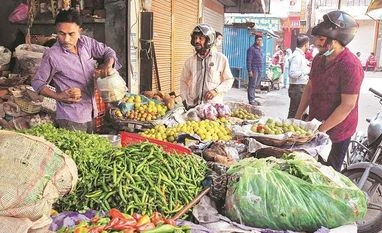 "India's retail inflation surges on food prices in challenge to Modi govt")
Explore Business Standard

Associate Sponsors
Co-sponsor
Food inflation, which accounts for nearly half of the overall consumer price basket, hit a staggering 11.51% in July as compared with a revised 4.55% in June
(This Aug. 14 story has been corrected to say food inflation rose 11.51% in July, not June, compared with revised 4.55% in June, in paragraph 5)
By Aftab Ahmed and Nikunj Ohri
NEW DELHI (Reuters) - India's annual retail inflation in July rose to its highest in 15 months as vegetable and cereals prices skyrocketed, beating all market expectations and putting pressure on the government to take action to bring down prices.
India's annual retail inflation rose sharply to 7.44% in July from 4.87% the previous month. A Reuters poll of 53 economists had forecast a rate of 6.40%. The figure was the highest since April 2022.
The figures breached the upper end of the central bank's inflation band of 2%-6% for the first time in five months.
"The spurt in CPI inflation in July 2023 was on expected lines, however, 7.44% retail inflation was totally unexpected," said Devendra Pant, economist at India Ratings.
Food inflation, which accounts for nearly half of the overall consumer price basket, hit a staggering 11.51% in July as compared with a revised 4.55% in June. Retail food inflation was at its highest since January 2020.
Last week, the Reserve Bank of India (RBI) raised its inflation forecast for the current financial year to 5.4% from 5.1% earlier, citing food prices.
Vegetable inflation rose by a whopping 37.34% after a fall of 1% in the previous month. Prices of some of the most used vegetables in Indian kitchens, including tomatoes, onions, peas, brinjal, garlic and ginger, have more than doubled in the last few months.
The July print raises concerns of more generalized price pressures, IDFC First Bank Economics Research's Gaura Sen Gupta said.
Last week, the RBI held its key lending rate steady and moved to reduce the amount of cash in the banking system as inflation concerns resurfaced.
However, core inflation, which strips out volatile food and energy prices, was estimated to be 4.9% to 4.97% for the month.
POLITICAL HEADACHE
Cereal inflation in July increased to 13.04% from 12.7% in June.
"While the spurt in vegetable prices is seasonal, the worrying trend is the structural nature of cereals inflation," Pant said.
Prime Minister Narendra Modi's government may have to import wheat in the coming months to cool prices, ahead of key state elections and national polls in 2024.
India banned exports of non-basmati white rice last month adding to restrictions on exports of wheat. Now it is considering abolishing import duties of 40% on wheat.
Even a moderate rise in food inflation tends to anger voters and Dhiraj Nim, economist at ANZ Research, said further measures may be required from the government.
"Inflation is a problem that impacts everyone so this is an added headwind to household budgets and, hence, growth. The imperative to act may be stronger ahead of upcoming elections," he said.
(Reporting by Nikunj Ohri, editing by Chizu Nomiyama and Christina Fincher)
(Only the headline and picture of this report may have been reworked by the Business Standard staff; the rest of the content is auto-generated from a syndicated feed.)
First Published: Aug 23 2023 | 4:25 PM IST

