52% agricultural homes rely on non-farm income amid rising volatility

Trend towards diversification reduces risks associated with farm income: PRICE report
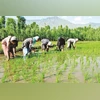
agriculture
Overall, the working paper projects an agricultural household income of ₹7.31 lakh annually in 2024-25
Shiva Rajora New Delhi
3 min read Last Updated : Jun 01 2025 | 11:23 PM IST
As farming becomes uncertain due to market fluctuations and the volatile environment, agricultural households are turning to non-farm income sources, said a working paper by think tank People Research on India’s Consumer Economy (PRICE) on Sunday.
 
The working paper titled ‘Reimagining Annadata Households and Their Livelihoods Beyond the Farm’ showed that around 52 per cent of agricultural households earn additional income from non-agricultural activities.
 
“This trend towards diversification which provides them with more financial resilience is crucial for reducing the risks associated with agricultural income, which can be highly unstable. This is due to factors such as price volatility, weather events, and other external economic shocks,” the paper reads.  
 
Among states with agricultural households reporting additional income from non-farm activities — Nagaland (98 per cent) was at the top. It was followed by Tripura (94 per cent), Meghalaya (85 per cent), Tamil Nadu (83 per cent), Sikkim and Uttarakhand (80 per cent). 
 
Meanwhile, in states like Arunachal Pradesh, 82 per cent agricultural households still report farming as their sole source of income. This is followed by Punjab (78 per cent), Assam (77 per cent), Karnataka and Manipur (73 per cent).  
 
Overall, the working paper projects an agricultural household income of ₹7.31 lakh annually in 2024-25. 
 
However, this figure masks the significant disparities within the farming community with ‘poor farmers’ earning an average annual income of ₹2.03 lakh, while ‘rich farmers’ earn ₹26 lakh. 
 
However, as a share of income, agricultural households still earn nearly 80 per cent (₹5.77 lakh) of their income from farming activities. This constitutes direct farming (67.1 per cent), allied activities like dairy and livestock (7.4 per cent) and agricultural labour (4.4 per cent). 
 
The other earning sources include non-agricultural businesses (7.1 per cent), salaried employment (3.4 per cent), pension (1.4 per cent) and remittances from family members working outside the rural sector.
 
In terms of average annual income of agricultural households, Punjab ranks at the top (₹20.1 lakh) with farming activities alone contributing ₹16.2 lakh. This was followed by Haryana (₹16.7 lakh) and Kerala (₹11 lakh).  
 
On the other hand, an agricultural household in Chhattisgarh (₹3.2 lakh) had the lowest income, followed by Odisha (₹4.15 lakh) and Jharkhand (₹4.77 lakh).
 

One subscription. Two world-class reads.

Already subscribed? Log in

Subscribe to read the full story →
*Subscribe to Business Standard digital and get complimentary access to The New York Times

Smart Quarterly

₹900

3 Months

₹300/Month

SAVE 25%

Smart Essential

₹2,700

1 Year

₹225/Month

SAVE 46%
*Complimentary New York Times access for the 2nd year will be given after 12 months

Super Saver

₹3,900

2 Years

₹162/Month

Subscribe

Renews automatically, cancel anytime

Here’s what’s included in our digital subscription plans

Exclusive premium stories online

  • Over 30 premium stories daily, handpicked by our editors

Complimentary Access to The New York Times

  • News, Games, Cooking, Audio, Wirecutter & The Athletic

Business Standard Epaper

  • Digital replica of our daily newspaper — with options to read, save, and share

Curated Newsletters

  • Insights on markets, finance, politics, tech, and more delivered to your inbox

Market Analysis & Investment Insights

  • In-depth market analysis & insights with access to The Smart Investor

Archives

  • Repository of articles and publications dating back to 1997

Ad-free Reading

  • Uninterrupted reading experience with no advertisements

Seamless Access Across All Devices

  • Access Business Standard across devices — mobile, tablet, or PC, via web or app

Topics :Farmingagriculture economyagricultural income

Next Story



