The RBI commenced operations on April 1, 1935, based on the recommendations of the Hilton Young Commission. Sir Osborne Smith was the first governor of the Reserve Bank, serving from April 1, 1935, to June 30, 1937. A professional banker, he served for over 20 years with the Bank of New South Wales and 10 years with the Commonwealth Bank of Australia before coming to India in 1926 as managing governor of Imperial Bank of India.
The Reserve Bank of India (RBI), which performs the dual role of monetary policymaking and regulating banks, enters its 90th year on Monday. Prime Minister Narendra Modi will join the commemoration at the National Centre for Performing Arts in Mumbai. This is hiafirst visit to an RBI event since April 2015, when he attended the Financial Inclusion Conference of the RBI to celebrate its 80th anniversary at the same venue.
RBI, unlike many other central banks, is a full-service central bank.
The functions of the Indian central bank include:
· Regulating and supervising commercial and co-operative banks
· Regulating the foreign exchange (forex) market
· Supervising payment and settlement systems
· Making monetary policies
· Managing government debt
· Acting as gatekeepers of the external sector
Burma (now Myanmar) seceded from the Indian Union in 1937, but the RBI continued to act as the Central Bank for Burma until the Japanese Occupation of Burma and later until April 1947
After the Partition of India, the RBI served as the central bank of Pakistan until June 1948, when the State Bank of Pakistan commenced operations
Sir Benegal Rama Rau, a member of the Indian Civil Service, was the longest-serving governor of RBI, serving from August 1949 to January 1957
Manmohan Singh, who was RBI governor from September 16, 1982, to January 14, 1985, went on to become the finance minister of the country and then prime minister (2004-2014)
In 2018, Urjit Patel became the first governor to resign in 43 years, possibly over differences with the government regarding the RBI’s surplus distribution
Shaktikanta Das — the 25th governor of RBI — is set to become the longest-serving governor after Sir Benegal Rama Rau once he completes his second term in December this year
Initially, the RBI played a developmental role in a country that had just become independent. While the initial focus was on agriculture, with the start of the Plan period, the RBI pioneered the concept of using finance to catalyse development
It was instrumental in setting up many institutions like the Deposit Insurance and Credit Guarantee Corporation of India, the Industrial Development Bank of India, and the National Bank of Agriculture and Rural Development, among others, to develop the financial infrastructure of the country
With economic liberalisation in 1991, the RBI’s focus shifted back to core central banking functions like monetary policy, supervision and regulation of banks, overseeing the payments system, and developing the financial markets
>>RBI, originally set up as a shareholder’s bank, nationalised
>>In the same year, Indian rupee is devalued for first time. The rupee is again devalued in 1966 and then in 1991
>>RBI starts regulating co-operative banks
>>14 major banks nationalised
>>Foreign Exchange Regulation Act (FERA), 1973, comes into force to conserve forex
>>A new series of money supply introduces the concepts of M1, M2, M3
>>S Chakravarty Committee set up to review workings of the monetary system
>>Maximum lending rate abolished. Banks free to charge customers according to their credit records
>>Amid the Balance of Payments crisis, the RBI pledges gold to shore up reserves
>>Guidelines for private sector banks issued; 10 new banks set up
>>RBI and the Government of India agree to replace the system of ad hoc Treasury Bills with Ways and Means Advances, ending automatic monetisation of fiscal deficit
>>Guidelines on debit card issued, to reduce pressure on cash
>>Foreign Exchange Management Act replaces FERA to facilitate external trade and payments
>>Internet banking guidelines issued
>>Becomes regulator for payments and settlement system
>>Two new bank licences issued after a decade
>>Differentiated bank licence issued for setting up payments bank and small finance banks
>>Monetary policy committee set up with inflation targeting as mandate
>>Central board approves contentious decision of demonetisation to abolish black money invalidating 87% of currency in circulation in one stroke
>>NEFT and RTGS function on a 24x7x365 basis
>>Fails to meet inflation mandate for first time
>>Starts pilot for central bank digital currency

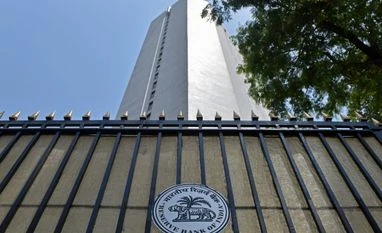 "RBI's journey of 90 years: The building of India's financial fortress")











