Smart foodgrain management helps Centre keep subsidy bill under control

The government has been offloading some foodgrains in the open market at lower rates instead of giving it away for free through the PDS, besides implementing operational efficiencies

Food storage
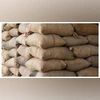
The biggest factor in FCI's financial stabilization, thought, has been increasing sales of foodgrains through the Open Market Sale Scheme in the last two financial years (FY24 and FY25). | Representative Image: Shutterstock
Sanjeeb Mukherjee New Delhi
5 min read Last Updated : Feb 24 2025 | 10:31 PM IST
For the second year in a row, the Union Budget that was presented in Parliament has pegged the food subsidy at about Rs 2 trillion. 
The Budget Estimate (BE) for food subsidy in FY25 was Rs 2.05 trillion, while the Revised Estimate (RE) for the same year was about Rs 1.97 trillion. The BE for FY26 has been estimated at Rs 2.03 trillion, a shade lower than the BE for FY25. 
In fact, ever since the Centre discontinued the extra food grains allotment under the Pradhan Mantri Gareeb Kalyan Ann Yojana (PMGKAY) and merged it with the National Food Security Scheme (NFSA), the additional monthly allocation of 5 kilogrammes of wheat, rice or coarse cereals that was started during COVID-19 as a welfare measure was discontinued and only the NFSA entitlements remained. This has reduced the subsidy burden of Food Corporation of India (FCI) from about Rs 2 trillion to roughly Rs 1.35 trillion.
 
How has food subsidy remained stable?
 
However, there are additional factors beside the discontinuation of additional foodgrain allocation after COVID-19 that have contributed to the reduction in the food subsidy burden. 
According to senior FCI officials, while the discontinuation of additional grain disbursal has been a major factor behind the drop in subsidy, it is not the only one. Their argument is that since over the past few years, particularly since COVID-19, the subsidy release by the Central government towards food has been extremely timely. This has ensured that FCI's reliance on borrowings has gone down which, in turn, has meant that interest costs have been within manageable limits. 
In fact, in FY24, short-term market borrowings, which the corporation used to take from the market to meet its day-to-day expenditure, have been at zero. 
As an example of how quick the subsidy disbursement has been, a senior government official said that in FY25, total subsidy due to FCI for food was around Rs 1.34 trillion of the budgeted Rs 2.05 trillion (the rest is subsidy for decentralised procurement, which is maintained in a separate account). Of the total subsidy accruing to FCI in FY25 till December 2024, around Rs 1.26 trillion or almost 94 per cent has already been disbursed.
 
“The balance Rs 8,000 crore is also in the process of getting released,” a senior official said. 
 
Not only that, the ways-and-means advance for FCI - which it gets annually from the government at the beginning of the year and then has to repay from the subsidy component - has been raised to Rs 50,000 crore from the earlier Rs 10,000 crore. 
“Higher ways-and-means advance means that a significant portion of our day to day expenditure is already secured before even the financial year starts,” the official pointed out. 
In addition, the paid-up equity capital of FCI has also been doubled to almost Rs 21,000 crore from the earlier Rs 10,157 crore in FY25, further contributing to the lowering of its interest costs from borrowings.
 
Earnings and Open Market Sale Scheme
 
The biggest factor in FCI's financial stabilization, thought, has been increasing sales of foodgrains through the Open Market Sale Scheme in the last two financial years (FY24 and FY25). 
In FY24, per some reports, at least Rs 25,000 crore was earned through open market sales of wheat and rice, while in FY25, a targeted revenue of Rs 17,000 crore has been earmarked from such sales. 
Though open market sales are conducted at rates much lower than the economic cost - which gets added to the subsidy - it is still better than nothing, considering the same grains would otherwise be distributed through the Public Distribution System for free. 
For example, in FY24, the economic cost of wheat was around Rs 27 per kg while the rate at which the Centre offloaded around 10 million tonnes (MT) of the grain in the market was around Rs 22-23 per kg. Thus incurred a subsidy of around Rs 5-6 per kg. 
However, if the same wheat was sold through the PDS, the subsidy incurred would have been around Rs 27 per kg as, under new rules, it is to be distributed for free to PMGKAY beneficiaries for the next five years. 
There is a similar operation for rice, whose FY24 economic cost was around Rs 38.83 per kg while the grains were sold through the open market scheme at lower rates but not for free.
 
Operational Efficiencies
 
Besides smart management of subsidies, sources said that FCI has also improved its operational efficiencies over the last few years, including cutting down on the number of departmental labourers and capping the amount of commission that it used to pay to procurement societies. 
Additionally, while one part of the food subsidy accrued to FCI, a significant portion is also transferred to the Decentralised Procurement (DCP) states, or those who undertake the procurement operations for central pool on behalf of FCI and get paid the difference amount as subsidy. For example, in FY24, out of the total food subsidy of Rs 2.11 trillion, around Rs 1.4 trillion accrued to the FCI and the balance to DCP states. Though this has been merged since FY25, and Budget documents do not show the two under separate heads, the expenditure remains divided. 
Officials said processes have been streamlined for DCP states, too, and funds are not released and cost sheets not finalised unless old dues are cleared. “This has also ensured that surplus or wasteful expenditure is curtailed,” the official explained.
On the whole, a combination of factors has ensured that food subsidy remains within limits for the government and discontinuation of additional grain allocation under PMGKAY is just one of them.

One subscription. Two world-class reads.

Already subscribed? Log in

Subscribe to read the full story →
*Subscribe to Business Standard digital and get complimentary access to The New York Times

Smart Quarterly

₹900

3 Months

₹300/Month

SAVE 25%

Smart Essential

₹2,700

1 Year

₹225/Month

SAVE 46%
*Complimentary New York Times access for the 2nd year will be given after 12 months

Super Saver

₹3,900

2 Years

₹162/Month

Subscribe

Renews automatically, cancel anytime

Here’s what’s included in our digital subscription plans

Exclusive premium stories online

  • Over 30 premium stories daily, handpicked by our editors

Complimentary Access to The New York Times

  • News, Games, Cooking, Audio, Wirecutter & The Athletic

Business Standard Epaper

  • Digital replica of our daily newspaper — with options to read, save, and share

Curated Newsletters

  • Insights on markets, finance, politics, tech, and more delivered to your inbox

Market Analysis & Investment Insights

  • In-depth market analysis & insights with access to The Smart Investor

Archives

  • Repository of articles and publications dating back to 1997

Ad-free Reading

  • Uninterrupted reading experience with no advertisements

Seamless Access Across All Devices

  • Access Business Standard across devices — mobile, tablet, or PC, via web or app

Topics :foodgrain salesFood subsidyFCI

Next Story