
Testing of energy storage systems needed for transition: NITI Aayog member
He called for authorising third-party testing and certification till the time the government sets up storage certification agencies
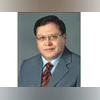 "Testing of energy storage systems needed for transition: NITI Aayog member")
WebinarsNew
Deep DiveNew
Explore Business Standard
He called for authorising third-party testing and certification till the time the government sets up storage certification agencies
India must establish nationally accredited testing facilities for battery energy storage systems to support its ambitious clean energy transition goal, suggested NITI Aayog member V K Saraswat on Thursday.
According to a statement, speaking at FICCI's Energy Storage Conference 2024, he highlighted the significant gap in testing and certification infrastructure as India aims to deploy over 238 gigawatt hours of battery storage capacity by 2030 to balance its expanding renewable energy network.
He called for authorising third-party testing and certification till the time the government sets up storage certification agencies.
Saraswat underlined that India requires a universal standard for all types of energy storage systems.
While the Bureau of Indian Standards has developed 17 specifications for energy storage systems, with more under development, he pointed out, the country lacks adequate facilities to verify compliance with these standards.
He also underscored that coal will have a substantial presence in India's energy mix despite aggressive renewable energy targets, with a projected capacity of 150 gigawatts in 2047, down from the current level of 218 gigawatts.
At the same time, solar capacity is expected to expand substantially by 2047, requiring extensive storage integration.
Saraswat outlined various storage technologies under consideration, including pumped hydro which has identified the potential of 100 gigawatt capacities across 60 sites.
Flow batteries, sodium-sulphur systems, and emerging technologies like aluminium-air batteries are being evaluated alongside conventional lithium-ion solutions, he said.
The government is exploring multiple pathways to address these challenges, including promoting domestic manufacturing of critical components and developing technology-agnostic standards.
Nuclear power, including small modular reactors, is considered a long-term solution for hard-to-abate sectors currently reliant on coal-based power.
Speaking at the event, Ghanshyam Prasad, Chairman, Central Electricity Authority, noted that India will need to accelerate its pumped hydroelectric storage capacity to 51 gigawatts by 2032.
The revised target represents a significant increase from the original goal of 22 GW, driven by the need to manage evening demand when solar generation, which now contributes about 56 GW to the grid, is unavailable.
Prasad outlined several practical implementation approaches, including mandating storage components for solar and wind projects, integrating storage with coal plants operating at technical minimums, and optimising transmission infrastructure through time-stamped connectivity.
Shivanand Nimbargi, Chair, FICCI Renewable Energy CEOs Committee and MD & CEO, Ayana Renewable Power, emphasised that while the government's Production Linked Incentive (PLI) scheme for battery cells was welcome, further steps were needed to develop local manufacturing capabilities.
He called for an enhanced focus on research and development, proposing collaborations between premier institutions like IITs and IISc.
Nimbargi advocated for dedicated testing facilities and laboratories supported by an energy transition levy, suggesting this could help India transition from being a technology follower to an innovator.
He also highlighted the need for uniform policies across states for pumped storage development, recommending that the Central Electricity Authority take a leading role in resource mapping and capacity planning.
(Only the headline and picture of this report may have been reworked by the Business Standard staff; the rest of the content is auto-generated from a syndicated feed.)
First Published: Nov 28 2024 | 7:17 PM IST

