UK trade deal likely to serve as model for India's FTAs with EU, US

The long-pending deal with the UK was finalised on Tuesday
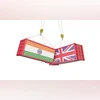
UK INDIA, INDIA UK TRADE, TRADE INDIA UK
The finalisation of the social security agreement with Britain may also give more bargaining power to New Delhi to have a dialogue with the US for such an agreement, which has been pending for two decades now.
Shreya Nandi New Delhi
4 min read Last Updated : May 08 2025 | 7:10 AM IST
The conclusion of an ambitious trade deal between India and the UK could serve as a model for New Delhi’s ongoing free trade agreement (FTA) talks with major trade partners, including the US and EU. The long-pending deal with the UK was finalised on Tuesday.
 
While the specifics of the agreement with the UK is not yet known, the fact that India has agreed to slash import tariffs on automobiles from 100 per cent to 10 per cent coupled with a cap on imports, is a clear signal that New Delhi is gradually shedding its protectionist stance.
 
In the case of items such as automobiles, the India-UK agreement's approach could set a precedent and influence negotiations with the EU, as New Delhi may use a similar formula to make an offer. To be sure, the EU has time and again reiterated that its key offensive interests include cars.
 
Biswajit Dhar, distinguished professor at Council for Social Development, said there's distinct possibility that in the case of the FTA with the EU, a tariff cut along with quota will be adopted, although it is important to know how large the quota will be and the pace at which it will be enhanced over a period of time.
 
“The government has been under tremendous pressure to open up the market. The transition period and the quotas are enabling kind provisions that have been given to the industry. Such phased entry will ensure Indian markets don't get flooded with imported cars, while giving time to the industry to become competitive,” Dhar said.
 
In the deal with the UK, India has also excluded sensitive items such as dairy products, apples, and cheese from any duty concession to protect its farmers, suggesting that New Delhi is unlikely to give in to the pressure to allow greater market access for agricultural products. India has been under immense pressure from the US, EU, New Zealand, and Australia to lower agricultural tariffs, especially on dairy products. 
 
Arpita Mukherjee, a professor at the Indian Council for Research on International Economic Relations (Icrier), said that this is likely to be the most comprehensive FTA that India has signed to date. India is also sending a strong signal that it is ready to liberalise, negotiate, and close trade agreements.
 
“While we need to wait for the nitty gritty, India has shown a good response to liberalisation in areas such as automobiles and alcohol, which can set the stage for India quickly signing other trade deals,” she said.
 
Under the India-UK trade deal, New Delhi has committed to give access to its large government procurement market. This will allow UK businesses access to around 40,000 tenders, with a value of at least 38 billion pounds a year.
 
“Apart from agriculture, till now, government procurement was being treated as a sensitive area (by India). India has been cautious about offering concessions as it wanted to protect small enterprises and jobs. In the case of the EU and the US, government procurement has been a sticking point. Depending on the details, it is a green light even for the EU that it will also gain access to the government market in India,” Dhar said.
 
New Delhi and Britain have also concluded a double-contribution convention, or a social security agreement, that will give Indian employees working in that country a three-year exemption from social security payments. This has been India’s longstanding demand, which will not only protect cross-border workers, but also lead to significant financial gains for Indian service providers.
 
The finalisation of the social security agreement with Britain may also give more bargaining power to New Delhi to have a dialogue with the US for such an agreement, which has been pending for two decades now.
 
Mukherjee cautioned that it is important to keep in mind that each of the trading partner’s demands are different. For instance, one has to see what are the real demands of the Americans. 
Trade Talks
 
* India’s decision to slash import tariffs on automobiles from 100% to 10% signals a shedding of the country’s protectionist stance
 
* India-UK agreement’s approach could set a precedent and influence negotiations with the EU
 
* EU has reiterated that its key offensive interests include cars
 
* India has been under immense pressure from the EU, US, New Zealand, and Australia to lower agricultural tariffs
 

One subscription. Two world-class reads.

Already subscribed? Log in

Subscribe to read the full story →
*Subscribe to Business Standard digital and get complimentary access to The New York Times

Smart Quarterly

₹900

3 Months

₹300/Month

SAVE 25%

Smart Essential

₹2,700

1 Year

₹225/Month

SAVE 46%
*Complimentary New York Times access for the 2nd year will be given after 12 months

Super Saver

₹3,900

2 Years

₹162/Month

Subscribe

Renews automatically, cancel anytime

Here’s what’s included in our digital subscription plans

Exclusive premium stories online

  • Over 30 premium stories daily, handpicked by our editors

Complimentary Access to The New York Times

  • News, Games, Cooking, Audio, Wirecutter & The Athletic

Business Standard Epaper

  • Digital replica of our daily newspaper — with options to read, save, and share

Curated Newsletters

  • Insights on markets, finance, politics, tech, and more delivered to your inbox

Market Analysis & Investment Insights

  • In-depth market analysis & insights with access to The Smart Investor

Archives

  • Repository of articles and publications dating back to 1997

Ad-free Reading

  • Uninterrupted reading experience with no advertisements

Seamless Access Across All Devices

  • Access Business Standard across devices — mobile, tablet, or PC, via web or app

Topics :India UK relationFTAIndia-UK Free Trade

Next Story



