
If Hindus still at risk after BJP rule, it shouldn't return to power: Azad
BJP MP-turned-TMC nominee from West Bengal's Bardhaman-Durgapur Lok Sabha seat, also said the issue of the Uniform Civil Code (UCC) was a ploy to communalise the polls
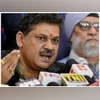 "If Hindus still at risk after BJP rule, it shouldn't return to power: Azad")
Explore Business Standard

Associate Sponsors
Co-sponsor
BJP MP-turned-TMC nominee from West Bengal's Bardhaman-Durgapur Lok Sabha seat, also said the issue of the Uniform Civil Code (UCC) was a ploy to communalise the polls
TMC candidate and former India cricketer Kirti Azad sought to poke holes in the BJP's Hindu nationalism plank, saying if the saffron party persists in using the "Hindu Khatre mein" (Hindus in danger) narrative despite being in power for ten years, it raises doubts about the party's necessity to return to power.
The former BJP MP-turned-TMC nominee from West Bengal's Bardhaman-Durgapur Lok Sabha seat, also said the issue of the Uniform Civil Code (UCC) was a ploy to communalise the polls since the saffron camp lacks an impressive report card to present before the masses.
In an interview with PTI, Azad highlighted India's diversity and argued against the feasibility of implementing UCC in such a varied cultural landscape while stressing that history belies BJP's claims of Hindu insecurity under previous regimes.
During the Mughal rule, Hindus were not under threat; they were not in peril during British rule; even under multiple governments post-Independence, Hindus never faced any perceived danger. So how come Hindus are suddenly in danger when a Hindu nationalist party is in power for the last 10 years? he argued.
If a Hindu party cannot save Hindus, they should be thrown out of power, Azad added.
"The fact is that the BJP has nothing to show on its 10-year report card. That's why they resorted to the rhetoric of Hindu Khatre mein hain' and created fear psychosis about other communities, he said.
Azad, a member of the 1983 World Cup-winning cricket squad, said communal harmony formed the team's backbone in that historic campaign.
When we won the Cup, we had Hindu players in the team, a Muslim in Syed Kirmani, a Sikh in Balwinder Sandhu, and a Christian - Roger Binny. All of us fought together and won the first World Cup for India. All these religions were fighting together against the British for the country's Independence. And the BJP speaks about Hindus under threat, he said.
Azad questioned the BJP's failure to implement the UCC during its tenure despite promising it in multiple election campaigns and dismissed the BJP's push for the Code as politically motivated and impractical in India's diverse socio-cultural fabric.
The BJP has been saying since its inception that they will bring UCC. They made this promise in 1998 and 1999 too. In 2014 also, UCC was in their poll agenda. What stopped the BJP from implementing UCC in the last decade when they had an absolute majority in government? It's nothing more than a political rhetoric, he said.
Azad asserted that UCC can be implemented in countries like Germany which was formed by a single race but not in nations like India.
"Here you have people from diverse communities, backgrounds, and religions. You go to any part of the country, and you will have festivals celebrated in different manners, he said.
The BJP, in its campaign, has promised to implement the UCC in the country if it is voted to power for the third consecutive term.
Responding to BJP's attempts to associate saffron with Hinduism, Azad countered, "The Sanatan Hindu dharma has many colours from red, blue and black to saffron. The BJP's attempt to project saffron as the only colour is absurd."
Regarding BJP's criticism of Congress on inheritance law, Azad labelled it as another ploy to communalise the elections and divert attention from governance issues.
During a recent election rally in Rajasthan, Prime Minister Narendra Modi said that if the Congress came to power, it would redistribute people's wealth to those who have more children and to the infiltrators.
Speaking about the INDIA bloc not gaining traction in states like Punjab and Bengal despite the AAP and the TMC being part of the opposition front on the national level, the former cricketer said, Ground-level alliances were not possible in some states due to state-level political equations.
Some may have moved out of the bloc. But if BJP fails to grab 200 seats, you'll find leaders like Nitish Kumar and others shifting back. We have seen this before, and this might happen again, he said.
Azad, however, blamed the Congress in Bengal for the opposition bloc not fructifying in the state.
It didn't happen in Bengal because the Congress delayed it. You go for seat-sharing based on your number of seats or percentage of votes. In Bengal, Congress has two MPs, zero MLAs and just 3.8 per cent votes. Yet they chose to sit over seat-sharing discussions, he said.
He, however, disagreed that the BJP-led NDA is in a better position in the polls.
The BJP has borrowed candidates from other parties. They are talking of crossing 400 seats and surprisingly they are not even contesting in as many seats, he said.
Azad, a former BJP MP from Bihar's Darbhanga constituency and son of former Bihar Chief Minister Bhagwat Jha Azad joined the saffron party in the late 90s during the Atal Bihari Vajpayee-LK Advani era.
The three-term MP later walked out of the party over differences with the present leadership and joined the Congress ahead of the 2019 Lok Sabha polls.
He later switched to TMC in 2021 and was made in charge of the party for the Goa assembly polls in 2022.
In the Bardhaman-Durgapur seat, Azad is up against BJP's Dilip Ghosh and LeftCongress alliance candidate Sukriti Ghoshal.
Asked about being branded as an outsider by the BJP, Azad said, If I am an outsider, then the BJP should first answer why Narendra Modi, who was then Chief Minister of Gujarat, contested elections from Varanasi in 2014.
Being an Indian, I can contest elections from any part of the country, he added.
(Only the headline and picture of this report may have been reworked by the Business Standard staff; the rest of the content is auto-generated from a syndicated feed.)
First Published: May 01 2024 | 10:36 AM IST


