Praveen Khandelwal is the traders’ face and voice in a constituency that overwhelmingly represents trade and business. Khandelwal, who’s founder and general secretary, Confederation of All India Traders, and now the Bharatiya Janata Party (BJP) candidate for Delhi’s Chandni Chowk constituency, spoke to Nivedita Mookerji amid back-to-back rallies and meetings. Edited excerpts:
What is your main promise as the BJP's Chandni Chowk candidate?
I aim to develop the entire Chandni Chowk constituency as a model, balancing development with preservation of its rich history and culture, which has been grossly neglected by the state government for the past 25 years. I will establish trade associations to develop markets and resident welfare associations. This will act as a catalyst, making these groups partners in development, aligning with Prime Minister Narendra Modi’s vision of participatory governance.
Many traders are talking about business being down. What are your thoughts on what the government at the Centre can do about reviving demand?
The PM is emphatic on ease of doing business, and I will craft policies to support trade and industry, simplify and rationalise the tax structure, and develop new business avenues. I also plan to set up a startup incubation centre to help innovative ideas so that the younger generation can benefit. Additionally, I will revitalise the industrial areas of my constituency, significantly advancing trade and industry.
You have argued all along that foreign e-commerce companies are a hurdle for small and medium traders. Is there anything that you are planning to cope with it?
Foreign e-commerce companies are grossly violating laws and policies, creating unhealthy competition that disadvantages local traders. The e-commerce policy and rules are reportedly ready, and I will strive to ensure their speedy implementation, aligning with PM Modi’s vision of Aatmanirbhar Bharat.
How will the new e-commerce policy help small traders?
The new e-commerce policy, as I understand it, will end the malpractices of foreign e-commerce companies, such as predatory pricing, loss funding, deep discounting, and owning inventory, which are prohibited under the foreign direct investment (FDI) policy. The policy will create fair competition in the market, allowing local traders to make optimal use of e-commerce.
Traders feel cash transaction should increase for businesses to do better. Do you agree?
Until traders seamlessly adopt digital payment systems, cash transactions can continue to some extent. However, traders must adopt digital payments as soon as possible within a set timeframe, as the nation is moving rapidly towards digitisation. Ignoring digital systems is not an option for strengthening trade.
Quick commerce is competing with kirana stores. How do you think traders can be protected from the disruption that quick commerce may bring?
Once the policy and rules are in place, an era of fair and healthy competition will begin. Kirana stores may also adopt quick commerce as one of their business verticals, and I am confident they are competent enough to face any challenge.
Retail business in India is largely unorganised at this point. How do you propose to mainstream this business so that retail becomes organised?
The retail trade in India is wrongly classified as "unorganised"; it is actually self-organised. Bringing reforms and changes to the current retail trade format is essential. I believe that adoption of digitalisation and modern business tools will drive the future business. Therefore, traders across the country should adopt and accept these changes. While retail trade in India is already mainstream, understanding consumer purchasing behaviour and taking appropriate steps accordingly is crucial.

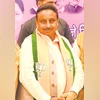 "Ignoring digital systems is not option for strengthening trade: Khandelwal")

