5 min read Last Updated : Feb 15 2026 | 11:01 AM IST
On 12 September 1943, German paratroopers and Waffen-SS commandos raided the Hotel Campo Imperatore on the remote plateau of Gran Sasso d’Italia in northern Italy, and rescued Benito Mussolini. The former dictator had been removed from his position as the country’s prime minister on 25 July 1943, after the Allies invaded Italy in World War II. The Nazis set up the rescued Duce as the puppet head of a mini-state in German-occupied northern Italy, with its administrative offices in the small town of Salò, which would give its name to the short-lived Republic of Salò.
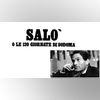
The republic lasted for a year and a half, till the spring of 1945, when the Germans in Italy surrendered to the Allies; Mussolini was captured and executed on 28 April 1945. Thirty years after the fall of Salò, Italy’s most provocative film director, Pier Paolo Pasolini, set his last film, ‘Salò, or the 120 Days of Sodom’, in the last days of the doomed fascist republic. An adaptation of the French classic, ‘120 Days of Sodom’ (1785), written by the notorious Marquis de Sade, who gives his name to sadism, the film was released on 23 November 1975 — 20 days after Pasolini’s assassination.
It tells the story of four fascist men of power — the Duke, the Bishop, the Magistrate and the President — who retreat to an isolated estate, with 18 kidnapped teenagers, whom them subject to brutal torture, sexual perversion and murder. It is often considered to be a precursor to body horror films of David Cronenberg or John Carpenter, the ‘Hostel’ series (2005 to 2011), or popular snuff videos. Yet, as British novelist Olivia Liang, writes in a piece for The Guardian: “No horror film in all the intervening years has come close to Salò (1975), no hacked up torture porn approaches its icy formal perfection or anguished moral intent.”
Liang’s second novel, ‘The Silver Book’ (2025), fictionalises the making of ‘Salò’ and Pasolini’s assassination. “(I)t is a terrifying masque about fascism and compliance, an accounting of both sides of the totalitarian coin,” Liang writes. Pasolini knew a thing or two about totalitarianism — he was born in 1922, the same year that Mussolini seized power, and he grew up in the years leading to World War II. As an adult, he often found himself in trouble with the law because of his homosexuality. Liang writes Pasolini “knew fascism was not over… [he] saw that capitalism would corrode into fascism, or that fascism would infiltrate and take over capitalism.” The current democratic backsliding in the world confirms the bleak dystopia of ‘Salò’.
In recent weeks, as the horrors perpetrated on helpless child victims by the coterie of elites around former American financier and sex offender Jeffrey Epstein have come to light, ‘Salò’ has re-entered the public discourse. Several online cinephile communities have pointed out the similarities between the revelations of Epstein files, released by the US Department of Justice on 30 January, and some of the episodes in the film. Rob Salkowitz, a senior contributor to the Forbes magazine, writes: “In ‘Salò’, the child sex slaves are deprived of all agency, mirroring reports we have heard from Epstein survivors.”
Salkowitz also writes that fascism uses propaganda of “national aggrandisement, purification and efficiency” but “Pasolini shows that its real roots are in the more primal drive to transcend all moral boundaries, dominate and degrade for its own sake.” This echoes the opinions of American critic Susan Sontag on fascist art, in her essay ‘Fascinating Fascism’, which is an extended review of a book of photographs by German actress and filmmaker Leni Riefenstahl, at times referred to as Adolf Hitler’s favourite film director. “Fascist aesthetics… flow from (and justify) a preoccupation with situations of control, submissive behaviour, extravagant effort and the endurance of pain; they endorse two seemingly opposite states, egomania and servitude.”
By the end of the film, as the victims are tortured and murdered on the grounds of the estate, the libertine antagonists witness the spectacle through binoculars. By collapsing the distance between the PoV of the audience and the libertines, Pasolini implicates the audience in the act. The audience members cannot claim to have no responsibility for the horrors they have witnessed on the screen, like the horrors they witness in their contemporary society. Their incapability to protest against either makes them culpable to charges of collaboration.
On the night before his murder, he had given an interview, reports Liang, in which he had said: “I go down into hell, and I discover things that don’t disturb the peace of others. But be careful. Hell is rising towards the rest of you.” There has hardly been a more prescient warning for our times.
Uttaran Das Gupta is an independent writer and journalist

 "The fetish of fascism: How Salò exposes the aesthetics of domination")


