Reports claim Bangladesh halts demolition of Satyajit Ray's ancestral home

The Ministry of External Affairs said it would be willing to coordinate with Bangladesh to preserve the site
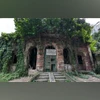
Satyajit Ray
Satyajit Ray ancestral home demolition halted | Credit: X
Vasudha Mukherjee New Delhi
3 min read Last Updated : Jul 17 2025 | 10:06 AM IST
The demolition of iconic filmmaker Satyajit Ray’s ancestral home in Mymensingh, Bangladesh, has been paused following protests from India and cultural advocates, The Week reported on Wednesday evening. According to the report, Bangladeshi authorities have now formed a committee to assess the possibility of reconstructing the dilapidated structure, which once belonged to Ray’s grandfather, the eminent Bengali writer and publisher Upendrakishore Ray Chowdhury.  Business Standard could not independently verify these reports.
 

Historical site long abandoned and unsafe

Located behind the historic Shashi Lodge, the property had reportedly remained abandoned for over a decade. It previously served as the premises of the Mymensingh Shishu Academy, a government-run children's institution, until its operations shifted to a rented facility due to the deteriorating condition of the building.
 
Demolition work on the home had begun earlier this month after citing structural instability and safety concerns, particularly for children who gather in the area.  Md Mehedi Zaman, the district’s Children Affairs Officer, said the decision had been approved by a committee chaired by Deputy Commissioner Mofidul Alam and included officials from the Public Works Department.
 

New school building planned at site

Bangladeshi officials, cited in the report, added that a new building in its place would be used for a school that has been running from rented premises nearby. The new building was intended to continue the academy’s activities in a safer environment, adding that the controversy around the demolition stemmed from a "misunderstanding". 

India offers help in restoration efforts

News of the demolition, however, triggered strong reactions in India with the Ministry of External Affairs (MEA) issuing a statement expressing “profound regret” over the demolition. The MEA spoke of the site’s “landmark status” and called for its repair and conversion into a museum. The ministry further stated that India would be willing to cooperate with Bangladesh to facilitate restoration efforts on the house as “a symbol of the shared culture of India and Bangladesh”.
 
“This house, built by Upendrakishore Ray Chowdhury, is not only part of Satyajit Ray’s legacy but also a symbol of the Bangla cultural renaissance,” the MEA said in its statement. “Given its historical value, repair and reconstruction would be preferable to demolition.”
 
West Bengal Chief Minister Mamata Banerjee also described the reports of the demolition as “extremely distressing.” In a statement on X, she wrote, “The Ray family is one of the foremost bearers and carriers of Bengali culture. Upendrakishore is a pillar of Bengal’s renaissance. Therefore, I believe this house is intricately tied to the cultural history of Bengal.”
 

Satyajit Ray’s ancestral home significance

The building, situated on a 36-acre compound, was constructed over a century ago by Upendrakishore Ray Chowdhury, a zamindar originally from Masua in present-day Kishoreganj. Aside from being a towering figure in 19th-century Bengali literature, Chowdhury was also a painter and the founder of Sandesh, a children’s magazine launched in 1913. He was the father of renowned writer Sukumar Ray and the grandfather of Satyajit Ray, one of India’s most celebrated filmmakers and cultural icons.
 
Following the Partition in 1947, the house came under the ownership of the Government of Bangladesh. In 1989, it was officially designated as the site of the Mymensingh Shishu Academy. Years of neglect, however, left it in a serious state of disrepair.
 
The controversy comes shortly after Mamata Banerjee wrote to Prime Minister Narendra Modi in June, calling for action against the reported vandalism of poet Rabindranath Tagore’s ancestral property in Sirajganj, also in Bangladesh.
 
*Subscribe to Business Standard digital and get complimentary access to The New York Times

Smart Quarterly

₹900

3 Months

₹300/Month

SAVE 25%

Smart Essential

₹2,700

1 Year

₹225/Month

SAVE 46%
*Complimentary New York Times access for the 2nd year will be given after 12 months

Super Saver

₹3,900

2 Years

₹162/Month

Subscribe

Renews automatically, cancel anytime

Here’s what’s included in our digital subscription plans

Exclusive premium stories online

  • Over 30 premium stories daily, handpicked by our editors

Complimentary Access to The New York Times

  • News, Games, Cooking, Audio, Wirecutter & The Athletic

Business Standard Epaper

  • Digital replica of our daily newspaper — with options to read, save, and share

Curated Newsletters

  • Insights on markets, finance, politics, tech, and more delivered to your inbox

Market Analysis & Investment Insights

  • In-depth market analysis & insights with access to The Smart Investor

Archives

  • Repository of articles and publications dating back to 1997

Ad-free Reading

  • Uninterrupted reading experience with no advertisements

Seamless Access Across All Devices

  • Access Business Standard across devices — mobile, tablet, or PC, via web or app

More From This Section

Topics :BangladeshIndia-BangladeshIndia-Bangladesh tiescinemasfilm industryBS Web Reports

First Published: Jul 17 2025 | 8:49 AM IST

Next Story