
Denmark to expand conscription, draft women into military in rare move
The goal of the updated strategy, according to Danish Prime Minister Mette Frederiksen, is to boost the proportion of young people enlisting in the military
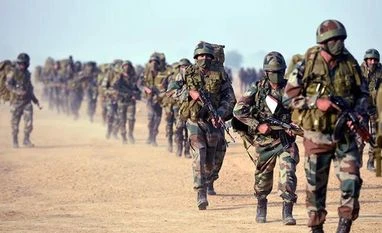 "Denmark to expand conscription, draft women into military in rare move")
Explore Business Standard

Associate Sponsors
Co-sponsor
The goal of the updated strategy, according to Danish Prime Minister Mette Frederiksen, is to boost the proportion of young people enlisting in the military
In response to the shifting security landscape in Europe, Denmark is expanding conscription and will call up women in addition to men to enlist in the military, according to Al Jazeera.
The goal of the updated strategy, according to Danish Prime Minister Mette Frederiksen, is to boost the proportion of young people enlisting in the military.
Additionally, conscripts will be expected to serve 11 months in the military, as opposed to the current period of only four months.
"We are not rearming because we want war, destruction, or suffering. We are rearming right now to avoid war and in a world where the international order is being challenged," Frederiksen told reporters on Wednesday.
Over the next five years, Denmark, a founding member of NATO, intends to increase its defence expenditure by 40.5 billion Danish crowns, which is roughly USD 5.9 billion, according to Al Jazeera. According to Frederiksen, defence spending will surpass NATO's aim for member states and reach 2.4 per cent of GDP this year and in 2025.
After the Cold War ended in the early 1990s, the nation reduced its military might, but Russia's full-scale invasion of Ukraine has raised new worries about security on the continent.
President Vladimir Putin announced on Wednesday that Russia will send troops to Finland's border. Finland joined NATO last year in response to the invasion of Ukraine, and Prime Minister Petteri Orpo of Finland warned Moscow was preparing for a "long conflict with the West."
The situation in Europe "has become more and more serious, and we have to take that into account when we look at future defence," country's Defence Minister Troels Lund Poulsen said, according to Al Jazeera.
As per the official figures, according to the Al Jazeera report, Denmark currently has as many as 9,000 professional soldiers in addition to 4,700 conscripts undergoing basic training.
The amended draft calls for conscripts to serve six months in operational service with additional training after five months of basic training. Laws will need to be changed in order to implement the new system, and Poulsen predicted that this would happen in 2025 and take effect in 2026.
(Only the headline and picture of this report may have been reworked by the Business Standard staff; the rest of the content is auto-generated from a syndicated feed.)
First Published: Mar 14 2024 | 8:32 PM IST


