HAL's R&D capabilities set for a boost with new manual, global benchmarks

HAL's new R&D manual to be unveiled Monday; Rs 17,000 crore in internal funds already earmarked for R&D investment over the next few years
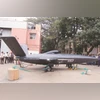
HAL conducted the first engine ground run of full-scale demonstrator of CATS Warrior in January  (Photo: X/HALhqblr)
HAL conducted the first engine ground run of full-scale demonstrator of CATS Warrior in January (Photo: X/HALhqblr)
Bhaswar Kumar New Delhi
4 min read Last Updated : Nov 09 2025 | 7:12 PM IST

Don't want to miss the best from Business Standard?

Hindustan Aeronautics Limited (HAL), India’s largest defence company by revenue, order book, and market capitalisation, is set to enhance its ability to design and engineer military aerospace systems with the rollout of a new research and development (R&D) manual.
 
Aimed at aligning HAL with global aerospace standards, the manual will be officially unveiled in New Delhi on Monday in the presence of Defence Minister Rajnath Singh.
 
HAL has been benchmarking its annual R&D spending — currently around ₹2,500 crore — against global aerospace majors, which typically invest 7–8 per cent of their revenues, company sources said, requesting anonymity.
 
They added that this could be increased to 10 per cent in the coming years, depending on the volume of projects secured. HAL’s board has earmarked approximately ₹17,000 crore from internal resources for R&D investment across multiple programmes over the next few years.
 
“HAL has already taken the necessary steps and will fully implement the manual’s directives immediately after its unveiling,” said one of the sources.
 
The manual is the result of an exercise, undertaken at the initiative of the Department of Defence Production (DDP), that benchmarked HAL’s existing practices against global aerospace standards, they explained. The new manual is aimed at improving HAL’s flexibility and speed in executing R&D projects, while also enabling more effective risk assessment and budget allocation.
 
“The manual is expected to enable process standardisation and optimise research activities,” one of the sources said, emphasising that HAL would “definitely benefit” from its implementation. 
 
The new manual comes at a time when the defence public sector undertaking (DPSU) is stepping up investment in R&D and prioritising the development of its own platforms, amid growing signs that its monopoly in combat aircraft manufacturing may not go unchallenged, and the government’s broader push to establish a level playing field between DPSUs and private firms.
 
HAL has not been entrusted with any major fighter aircraft design and development project since the HF-24 Marut, which made its maiden flight in 1961. Constituted in 1984 to manage the indigenous Light Combat Aircraft (LCA) Tejas project, the Aeronautical Development Agency (ADA) now leads the design and development of all Indian manned combat aircraft programmes — including the Tejas Mark-1A (Mk1A), Mark-2 (Mk2), Advanced Medium Combat Aircraft (Amca), and a proposed carrier-based naval fighter. HAL is responsible for manufacturing the Tejas family of jets and is competing with a clutch of private-sector contenders to qualify for building the Amca prototypes. Delays in delivering the Tejas Mk1A have also drawn criticism for HAL from the Indian Air Force (IAF).
 
However, HAL has found success in the design and development of helicopters. As of late 2024, over 335 units of the military variants of its Advanced Light Helicopter (ALH) Dhruv were in service. It is also in the advanced stages of completing the Light Utility Helicopter (LUH) for the armed forces, while work is underway on the heavier Indian Multi-Role Helicopter (IMRH). Its Light Combat Helicopter (LCH) Prachand was formally inducted into service in October 2022, with 156 on order under a contract valued at ₹62,700 crore.
 
HAL is also working on the Combat Air Teaming System (CATS) programme, which envisions a manned fighter serving as the ‘mothership’ to a suite of autonomous assets, including an unmanned combat aerial vehicle (UCAV) that will function as a loyal wingman. In January, HAL conducted the first engine ground test of the UCAV, named CATS Warrior, using a full-scale demonstrator.
 
In parallel, HAL is executing two engine development programmes — the Hindustan Turbo Shaft Engine, intended to power an ALH-class platform, and the Hindustan Turbo Fan Engine, designed for training aircraft and larger drones. The company has invested close to ₹700 crore in these projects.
 
The role of manufacturing based on transfer of technology will diminish going forward, and HAL’s balance sheet will increasingly depend on what it designs in-house, a company executive had told Business Standard previously. To date, HAL has manufactured 14 types of aircraft that are licence-produced, foreign-designed platforms.

One subscription. Two world-class reads.

Already subscribed? Log in

Subscribe to read the full story →
*Subscribe to Business Standard digital and get complimentary access to The New York Times

Smart Quarterly

₹900

3 Months

₹300/Month

SAVE 25%

Smart Essential

₹2,700

1 Year

₹225/Month

SAVE 46%
*Complimentary New York Times access for the 2nd year will be given after 12 months

Super Saver

₹3,900

2 Years

₹162/Month

Subscribe

Renews automatically, cancel anytime

Here’s what’s included in our digital subscription plans

Exclusive premium stories online

  • Over 30 premium stories daily, handpicked by our editors

Complimentary Access to The New York Times

  • News, Games, Cooking, Audio, Wirecutter & The Athletic

Business Standard Epaper

  • Digital replica of our daily newspaper — with options to read, save, and share

Curated Newsletters

  • Insights on markets, finance, politics, tech, and more delivered to your inbox

Market Analysis & Investment Insights

  • In-depth market analysis & insights with access to The Smart Investor

Archives

  • Repository of articles and publications dating back to 1997

Ad-free Reading

  • Uninterrupted reading experience with no advertisements

Seamless Access Across All Devices

  • Access Business Standard across devices — mobile, tablet, or PC, via web or app

Topics :Rajnath SinghHALHindustan AeronauticsDefence ProjectsaerospaceDefence news

Next Story



