
India tests submarine-launched ballistic missile with 3,500 km range
The K4 missile was tested from submarine INS Arighaat off the coast of Visakhapatnam on Wednesday, they said
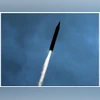 "India tests submarine-launched ballistic missile with 3,500 km range")
WebinarsNew
Deep DiveNew
Explore Business Standard
The K4 missile was tested from submarine INS Arighaat off the coast of Visakhapatnam on Wednesday, they said
India has tested a nuclear-capable ballistic missile with a range of around 3,500 km from a nuclear-powered submarine in the Bay of Bengal, in a major boost to its nuclear deterrence and strategic capabilities, people familiar with the matter said on Thursday.
With the test, India became part of a small group of nations having the capability to fire a nuclear missile from land, air and undersea.
The K4 missile was tested from submarine INS Arighaat off the coast of Visakhapatnam on Wednesday, they said.
It was the first test of the submarine-launched ballistic missile (SLBM) from a submarine, the people said.
The solid-fuelled missile was tested at least five times in the last few years from submersible platforms.
The people cited above said the missile was tested for almost its complete range. The second Arihant-class submarine INS Arighaat was commissioned into the Indian Navy on August 29 with an aim to strengthen India's nuclear deterrence.
It has the distinction of having the indigenous systems and equipment that were conceptualised, designed, manufactured and integrated by the Indian scientists, industry and naval personnel.
In the last few years, India has been enhancing its overall military capabilities and test-fired a range of missiles with varying ranges.
Over 10 days ago, India successfully flight-tested a long-range hypersonic missile off the coast of Odisha. The weapon can strike with extreme speed and evade most air defence systems.
Generally, hypersonic missiles, capable of carrying conventional explosives or nuclear warheads, can fly in the range of five times the speed of sound (Mach 5 which is roughly 1,220 kilometres) per hour at sea level.
However, some advanced versions of hypersonic missiles can even fly at the speed of over 15 Mach.
At present, Russia and China are way ahead in developing hypersonic missiles while the US is in the process of developing a range of such weapons under an ambitious programme.
Hypersonic missiles are considered highly manoeuvrable and agile as they can change course mid-way. The ballistic missiles, which can also fly at Mach 5, have limited manoeuvrability in view of predetermined trajectories.
India is focusing on bolstering its combat capabilities against the backdrop of China's aggressive military muscle-flexing.
(Only the headline and picture of this report may have been reworked by the Business Standard staff; the rest of the content is auto-generated from a syndicated feed.)
First Published: Nov 28 2024 | 8:25 PM IST


 Connect with us on WhatsApp