
No amnesty for heinous crimes committed during Maoist conflict: Nepal PM
Oli emphasised the importance of two transitional justice bodies the Truth and Reconciliation Commission and the Commission of Investigation on Enforced Disappeared Persons
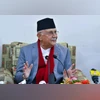 "No amnesty for heinous crimes committed during Maoist conflict: Nepal PM")
WebinarsNew
Explore Business Standard
Oli emphasised the importance of two transitional justice bodies the Truth and Reconciliation Commission and the Commission of Investigation on Enforced Disappeared Persons
Prime Minister KP Sharma Oli on Thursday asserted that individuals responsible for heinous and inhuman crimes committed during Nepal's decade-long Maoist insurgency will not be granted amnesty, as he emphasised the need to uphold justice and expedite the transitional justice process.
Inaugurating the Sixth National Convention of the National Ex-Army and Police Organisation of Nepal (NEAPON) here, Oli, who also chairs the ruling Communist Party of Nepal-Unified MarxistLeninist (CPN-UML), said transitional justice mechanisms must ensure justice for victims of the conflict that lasted from 1996 to 2006.
Oli emphasised the importance of two transitional justice bodies the Truth and Reconciliation Commission (TRC) and the Commission of Investigation on Enforced Disappeared Persons (CIEDP) in investigating conflict-era crimes and delivering justice. He acknowledged the delay in their effective functioning but asserted that further postponement would not be tolerated.
He said these two panels would work towards providing justice to the conflict victims.
Asserting that there will be no further delay in the formation of these commissions, Oli said, "Any acts of murder, violence, activities that disturb religious harmony and anarchy would not be acceptable." He reiterated that such crimes are incompatible with the democratic system Nepal has embraced after years of political struggle and the fall of authoritarian rule.
The Maoist insurgency sought to overthrow the monarchy and establish a people's republic. The violent conflict resulted in the deaths of more than 17,000 people, including civilians, Maoist combatants, and security forces, before culminating in the signing of the Comprehensive Peace Accord in 2006.
This agreement formally ended the conflict and paved the way for Nepal's transformation into a democratic republic.
We have a history of nation-building and unity. We are committed to handing over a prosperous, undivided Nepal to the next generation. We will not allow our borders to shrink and our national pride to be harmed. Our goal is to move forward while preserving our civilised and cultured society, the prime minister said.
The transitional justice process in Nepal has faced criticism from conflict victims, human rights organisations, and the international community for its slow pace and alleged political interference.
(Only the headline and picture of this report may have been reworked by the Business Standard staff; the rest of the content is auto-generated from a syndicated feed.)
First Published: Apr 17 2025 | 8:29 PM IST


