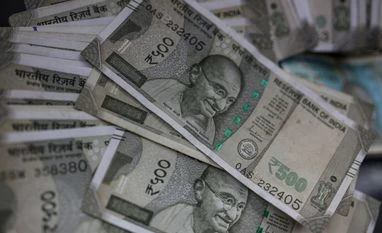
Volume of Rs 500 fake notes detected up 14.6% on-year in FY23, says RBI
The number of counterfeit currency notes of Rs 500 denomination detected by banking system, rose by 14.6 per cent to 91,110 pieces in 2022-23 compared to last year, according to RBI's annual report
IANS New Delhi/Chennai The number of counterfeit currency notes of Rs 500 denomination detected by the banking system, rose by 14.6 per cent to 91,110 pieces in 2022-23 compared to last year, according to the Reserve Bank of India's annual report released on Tuesday.
At the same time, the number of counterfeit notes of Rs 2,000 denomination detected by the system, fell by 28 per cent to 9,806 pieces during the same period.
Although the total number of Fake Indian Currency Notes (FICNs) detected in the banking sector declined to 2,25,769 pieces in 2022-23 from 2,30,971 pieces in the previous fiscal year, it is noteworthy that it had surged in 2021-22.
The RBI's annual report also highlighted an 8.4 per cent rise in counterfeit notes detected in the denomination of Rs 20, and a 14.4 per cent increase in Rs 500 (new design) denomination.
On the other hand, counterfeit notes detected in Rs 10, Rs 100, and Rs 2,000 denominations fell by 11.6 per cent, 14.7 per cent, and 27.9 per cent, respectively.
According to RBI, during FY23 the number of fake notes detected in the denominations of Rs 10 were 313 pieces, Rs 20- 337 pieces, Rs 50 - 17,755 pieces, Rs 100 - 78,699 pieces Rs 200 - 27,258 pieces, Rs 500- 91,110 pieces, Rs 500 (specified banknotes - 6 pieces), Rs 1,000 (specified banknotes -482 pieces).
The total expenditure incurred on security printing during 2022-23 was Rs 4,682.80 crore as against Rs 4,984.80 crore in the previous year.
"The Reserve Bank is actively taking forward the process of introduction of new/upgraded security features for banknotes," the annual report notes.
During the year, the Indian central bank will focus on the following:
- Preparation of an implementation programme based on the recommendations of the report on currency network design, mechanisation and automation, and scheduling and inventory management, for achieving higher efficiency in currency management;
- Establishment of a state-of-the-art facility for conducting cutting edge research on banknotes;
- Conducting survey on quality of notes in circulation;
- Developing cash usage indicators;
- Implementation of recommendations of the Committee for review of extant mechanism of cash dispensation and related issues in
- ATM ecosystem; and
- Institutionalisation of the process of certification of note sorting machines in alignment with the prescribed sorting standards.
--IANS
vj/shb/
(Only the headline and picture of this report may have been reworked by the Business Standard staff; the rest of the content is auto-generated from a syndicated feed.)


 "Volume of Rs 500 fake notes detected up 14.6% on-year in FY23, says RBI")

