
Scrub typhus may be under-recognised cause of fever hospitalisation: Study
Scrub typhus is caused by the bacterium 'Orientia tsutsugamushi', which belongs to the rickettsia family
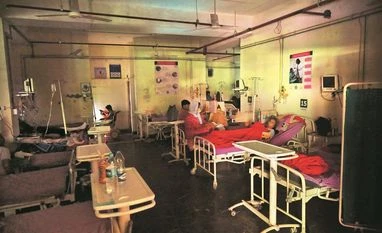 "Scrub typhus may be under-recognised cause of fever hospitalisation: Study")
WebinarsNew
Deep DiveNew
Explore Business Standard
Scrub typhus is caused by the bacterium 'Orientia tsutsugamushi', which belongs to the rickettsia family
Affecting around a tenth of rural populations in India every year, 'scrub typhus' infection, spread by the bite of an infected larval mite (chigger), could be an "under-recognised" leading cause of hospitalisations for fever, a study has suggested.
The study, conducted by the Christian Medical College, Vellore, and London School of Hygiene and Tropical Medicine (LSHTM), looked at over 32,000 people from across 37 rural villages in Tamil Nadu, with its results published in the New England Journal of Medicine.
Chiggers are found on grass, plant litter and bare soil across rural areas of Asia, and usually feed on small mammals such as rats and shrews.
Scrub typhus is caused by the bacterium 'Orientia tsutsugamushi', which belongs to the rickettsia family. Severe illness due to the infection can lead to Acute Respiratory Distress Syndrome (ARDS), shock, meningitis and kidney failure.
Rural areas in India are among the most affected by the potentially life-threatening infection, along with those of southeast Asia, Indonesia, China, Japan.
"Infections typically occur between August and February," Wolf-Peter Schmidt, principal investigator of the study and clinical assistant professor at LSHTM, said.
Symptoms, such as fever, headache, body aches and rash, usually begin around 10 days after infection, he said.
Lead author Carol Devamani, from the Christian Medical College Vellore, said, "After COVID-19, scrub typhus was the most important cause of fever in our study, accounting for almost 30 per cent of fever hospitalisations." "Despite cases being very common and treatable, scrub typhus is often overlooked as a possible cause when patients present with a fever. Diagnostic tests are available at major hospitals but not in the community," Devamani said.
For the study, blood samples of people who reported fever were collected every six to eight weeks from August 2020 to July 2022. The samples were then tested for scrub typhus infection.
Among those infected, 8 to 15 per cent of the people, developed fever which often required hospitalisation and intensive care due to the severe infection.
"Over a period of two years, we found a high incidence of asymptomatic and symptomatic infection, with some people getting infected twice in as many years. It is not clear why some infections become severe or even life-threatening," Schmidt said.
While five cases in our study population died of scrub typhus, it did not record any deaths from malaria, dengue or typhoid fever which are usually thought of as the main causes of severe fever in India, the author added.
Devamani said that communities need to be informed about the possible dangers of scrub typhus infection, along with improve diagnostic capabilities for timely treatment.
"Only by doing so will we reduce the number of unnecessary hospitalisations and fatal cases," the lead author said.
(Only the headline and picture of this report may have been reworked by the Business Standard staff; the rest of the content is auto-generated from a syndicated feed.)
First Published: Mar 13 2025 | 7:00 AM IST

